iAspirants
Tibetan Elections Reflect Global Politics
Published on:
Share this post
Article Summary
Exam-Focused Notes on Central Tibetan Administration Elections
Overview of Central Tibetan Administration (CTA)
- The CTA serves as the government-in-exile for Tibetans, based in Dharamshala, Himachal Pradesh.
- It was democratically established under the guidance of the Dalai Lama and operates independently of Chinese governance in the Tibetan Autonomous Region.
- Consists of three branches: Executive (Sikyong as leader), Legislative (Tibetan Parliament-in-Exile), and Judiciary (Tibetan Supreme Justice Commission).
Elections
- Current elections occur in two phases:
- Preliminary stage: February 1, 2026
- Final stage: April 26, 2026
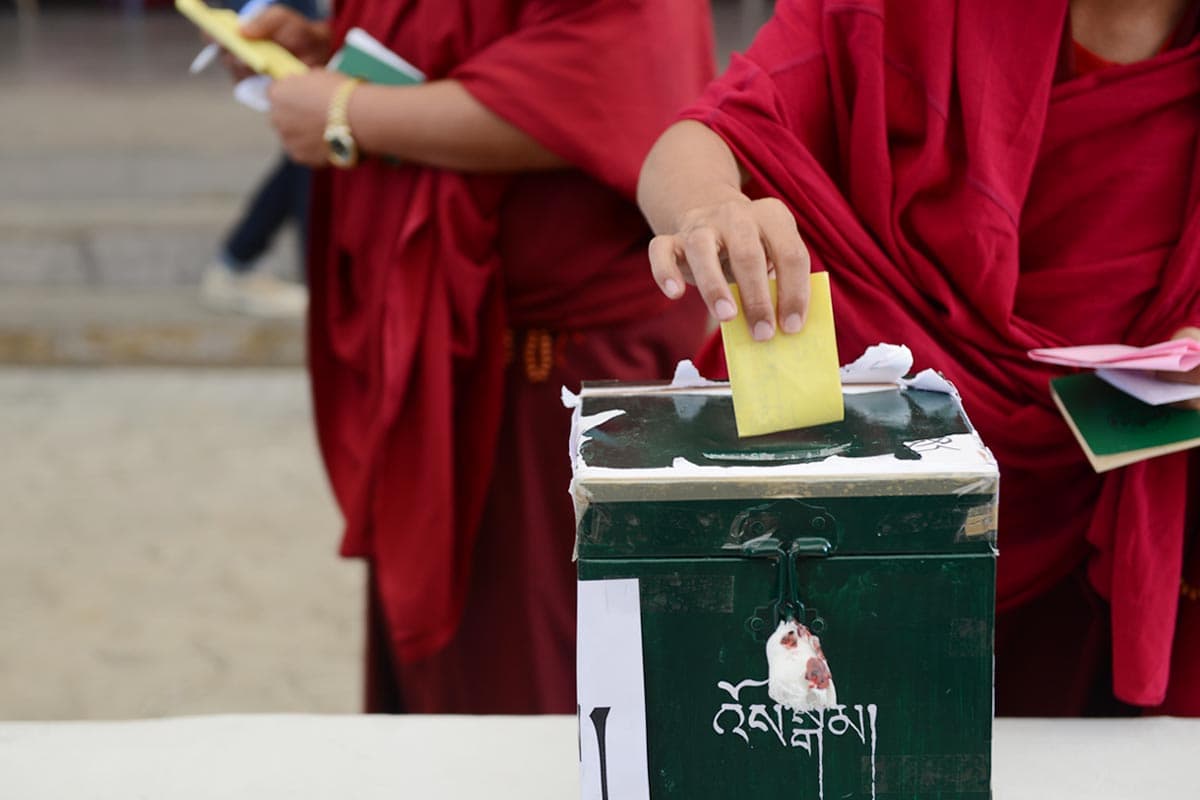
- Elections determine the Sikyong (political leader) and the composition of the 18th Tibetan Parliament-in-Exile (TPiE).
Eligibility and Voting
- Voting is open to Tibetan exiles aged 18 or older, registered with the CTA, and current with Green Book contributions.
- Approximately 91,000 Tibetans worldwide are registered to vote (regions include India, Nepal, Bhutan, Europe, North America, Australasia, and parts of Asia and Africa).
Key Contenders for Sikyong
Penpa Tsering (Incumbent Sikyong)
- Former Speaker of the TPiE and Representative of the Dalai Lama to North America.
- Campaign focuses on continuity and sustaining CTA missions.
Kelsang Dorjee Aukatsang (Kaydor)
- Former representative of the Dalai Lama in North America and founder of Asia Freedom Institute.
- Emphasizes unity and global advocacy for the Tibetan cause.
Election Process
- Follows a two-round election system:
- Preliminary election: Determines candidates who advance to final voting; any eligible Tibetan can be voted for.
- Final election: Voters choose between the top two Sikyong candidates and shortlisted parliamentary candidates.
Parliament Structure
- Composed of 45 members with representation from:
- Traditional provinces (Ü-Tsang, Kham, Amdo): 10 seats each.
- Religious traditions (Nyingma, Kagyu, Sakya, Gelug, Bon): 10 seats.
- Tibetan diaspora: 5 seats (distributed across North/South America, Europe/Africa, and Asia/Australasia).
Election Oversight
- Conducted by the Central Tibetan Election Commission, an independent body responsible for scheduling, eligibility rules, and code of conduct.
- Campaign violations (e.g., using Dalai Lama's image, Tibetan flag, personal attacks) can lead to disqualification.
Significance of Elections
- Represents a functioning democratic system without a sovereign territory.
- Elected leaders address human rights, cultural preservation, education, and advocacy internationally.
- Voting acts as political participation for the Tibetan diaspora, asserting identity outside Tibet.
Geopolitical Context
- India hosts the largest Tibetan exile population and allows the CTA to operate, despite China's criticism and claims of CTA being illegal.
- Elections coincide with India-China border tensions, impacting political dynamics in the region.
- Future shifts in CTA leadership could influence policies regarding refugees, international advocacy, and succession of the Dalai Lama.
Constitutional References
- CTA elections function without direct constitutional support from any nation-state.
- Reflect democratic principles even in exile, highlighting rights to self-governance and political representation.
Conclusion
The CTA elections signify not only a governance process for Tibetans in exile but also serve as an important symbol of Tibetan political identity and advocacy on global platforms amidst Chinese territorial control.
Key Terms & Concepts
| Central Tibetan Administration (CTA) | Government-in-exile of Tibet |
| Sikyong | Political leader of CTA |
| Tibetan Parliament-in-Exile | Legislative body of CTA |
| February 1, 2026 | Preliminary election date |
| April 26, 2026 | Final election date |
| 91,000 | Registered voters for elections |
| Tibetan Supreme Justice Commission | Judiciary of CTA |
| Green Book | Civic participation record |
| Dharamshala | CTA headquarters location |
| India-China border tensions | Geopolitical context for elections |
| Dalai Lama | Cultural and spiritual leader |
| Tibetan national flag | Symbol of Tibetan identity |