iAspirants
Current AffairsPrelims PYQsUPSC CSE SyllabusUPSC CSE StrategyBlogsPricing
Login
iAspirants

Your AI-powered companion for UPSC preparation.

Quick Links

  • Home
  • About Us
  • Current Affairs
  • Prelims PYQs
  • UPSC CSE Syllabus
  • UPSC CSE Strategy
  • Blogs

Company

  • Pricing
  • FAQs
  • Contact Us
  • Login

Legal

  • Privacy Policy
  • Terms & Conditions
  • Return Policy

© 2025 iAspirants, Inc. All rights reserved.

  1. Blogs
  2. Art and Culture

Tributes to Social Reformers in India

Published on: 28-Aug-2026

Share this post

Tributes to Social Reformers in India

Article Summary

  • Tributes to Social Reformers:

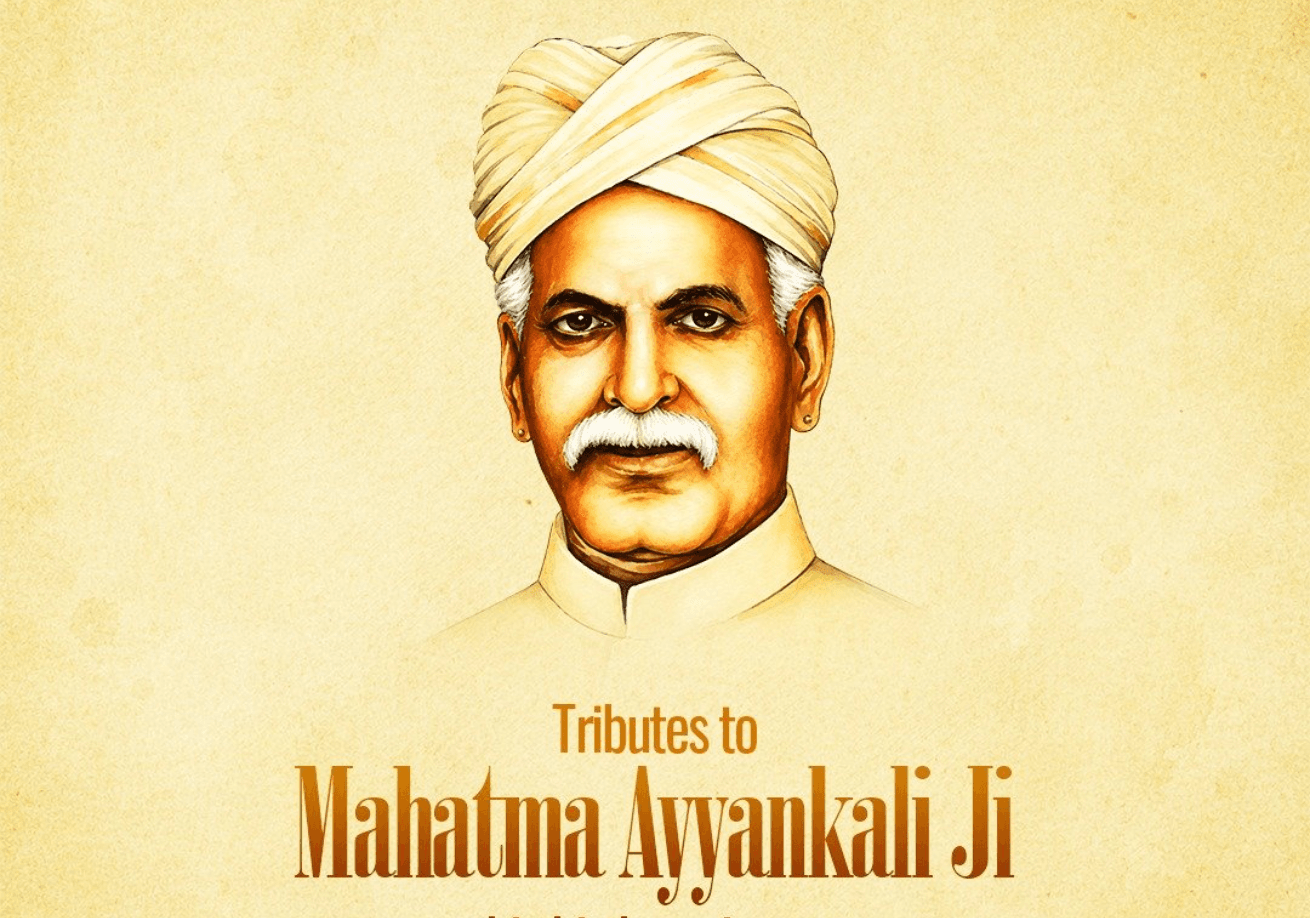
    • Union Home and Cooperation Minister Amit Shah paid homage to Sree Narayana Guru and Mahatma Ayyankali on their respective Jayantis (birth anniversaries).
  • Sree Narayana Guru:

    • Promoted the establishment of a harmonious, just, and benevolent society through spirituality.
    • His principles emphasize knowledge, compassion, equality, and spiritual freedom, which are seen as guiding tenets for India's greatness.
  • Mahatma Ayyankali:

    • A pioneering social reformer who significantly contributed to social transformation in Kerala through education.
    • Advocated for social justice and equality, laying the groundwork for a unified and strong society that upholds these values.
  • Cultural Significance:

    • Both figures are recognized for their contributions to societal reform and the promotion of education as a means to achieve social justice.
  • Government Recognition:

    • The tributes reflect the government's acknowledgment of the contributions of these reformers towards nation-building and social progress.

This summary encapsulates the essence of the homage paid to these historical figures, emphasizing their contributions and the enduring relevance of their principles in contemporary society.

Key Terms & Concepts

Sree Narayana Guru JiPromoted harmony and justice
Mahatma Ayyankali JiPioneered social reform in education
KeralaLocation of Ayyankali's reforms
JayantiCommemoration of reformers
Principles of knowledge, compassion, equalityGuiding values for society

Mind Map for UPSC Civil Services Revision

Turn UPSC Civil Services Current Affairs Into Exam-Ready Notes

Reading Art and Culture current affairs is half the work. Revise them with ready-made notes and test what actually stuck.

  • Daily UPSC Civil Services current affairs analysis
  • Revision notes, mind maps & MCQs
  • Prelims mock tests with instant results

Related UPSC Civil Services Current Affairs Articles

Power of Literature in History
Art and Culture29-Aug-2026

Power of Literature in History

  • Literature and History: Su. Venkatesan, a Sahitya Akademi award-winning writer and MP, argues that literature, when intertwined with history, has a profound impact on society. He emphasizes that historical narratives can resonate more powerfully through literary forms than through straightforward history writing.

  • Notable Works:

  • Kaval Kottam: Venkatesan’s debut novel, which won the Sahitya Akademi award, is set against the historical backdrop of Madurai.
  • Veerayuga Nayagan Velpari: His second novel incorporates extensive knowledge about the Sangam era, including elements like astronomy and maritime wisdom, creating a holistic representation of that period.
  • Artistic Freedom vs. Historical Accuracy: Venkatesan believes that while historical truths should not be completely altered, artistic interpretation allows for different representations of events. He asserts that the essence of history should remain intact, but the portrayal can vary in scale and emphasis.

  • Literature as a Tool for Social Change: He contrasts the roles of a writer and a public representative, stating that literature has a lasting impact and addresses broader societal issues, whereas political representation deals with immediate concerns.

  • Cultural Reclamation: Venkatesan stresses the importance of reclaiming and recreating historical narratives to reflect contemporary experiences. He views this as a vital aspect of cultural and political discourse.

  • Political Dimensions of Literature: He describes the act of storytelling, especially of historical figures and events, as a form of politics that engages with cultural narratives and adversaries.

  • This summary highlights the intersection of literature and history, the significance of storytelling in social change, and the cultural responsibilities of writers as emphasized by Su. Venkatesan.

    National Conference on Tribal Heritage
    Art and Culture27-Aug-2026

    National Conference on Tribal Heritage

    Exam-Focused Notes on the National Conference on Tribal Languages and Museums

    Objective:

    • Preservation of tribal cultural heritage through authentic storytelling and community participation.

    Key Participants:

    • Experts, officials, and community representatives discussed the preservation and promotion of tribal languages and heritage.

    Major Discussions:

    1. Tribal Museums and Tribal Freedom Fighters Museums (TFFM):

      • Focus on preserving tribal history, identity, and cultural heritage through contemporary museum practices.
      • Importance of not just preserving objects, but also the stories, context, and meaning associated with them.
    2. Role of Museums:

      • Addressed by T. Rumaun Pait, Joint Secretary, Ministry of Tribal Affairs.
      • Museums serve as repositories of history, documents, artifacts, and photographs.
    3. Importance of Tribal Museums:

      • Presented by Deepali Masirkar, Director, Ministry of Tribal Affairs.
      • Emphasized on showcasing tribal heritage and cultural identity in engaging ways to preserve community uniqueness.
    4. Expert Lectures:

      • Prof. Virginius Zaksza (IHDS) discussed authentic representation of tribal narratives in museums and their connection to the national freedom movement.
      • Vinod Daniel (India Vision Institute) highlighted museums as living institutions for memory, identity, and community heritage preservation.
      • Amitabh Pandey (IGRMS) explained the museum planning process, including narrative development and spatial planning.
      • Nataraj Dasgupta (former director, CRTL, NCSM) focused on contemporary display techniques and the integration of digital technologies in museums, including AR/VR and interactive storytelling.
      • Shriram Tiwari (Veer Bharat Nyas) shared experiences on community participation in museum creation, emphasizing sustainable management.

    Recommendations for Museum Development:

    • Community engagement in the development of museums.
    • Revenue generation through light shows, guest house facilities, and weekend programs.
    • Establishment of cafes featuring tribal cuisines, including tribal coffee, to enhance visitor engagement and ensure museum sustainability.

    Conclusion:

    • The conference emphasized the need for improved coordination among historians, designers, and implementing agencies.
    • A shift towards story-based rather than technology-driven museum experiences was advocated.

    Importance:

    • Reinforces the constitutional commitment to preserving cultural heritage, aligning with Article 29 (Protection of interests of minorities) and Article 51A (Fundamental Duties) that encourages the promotion of the cultural heritage of the nation.

    This conference serves as a significant platform for discussing the preservation of tribal languages and heritage, highlighting the role of museums in this endeavor and the need for community involvement and innovative practices in museum management.

    Valmiki Ramayana and Valmiki's Life
    Art and Culture27-Aug-2026

    Valmiki Ramayana and Valmiki's Life

    • Literary Work: The Valmiki Ramayana is identified as the sole literary work that specifically addresses the Rama avatara, termed "adi kavya" (first poetic work) as it follows the Vedas, which do not have an identifiable author.

    • Comparative Avatara Analysis: Other literary works like the Srimad Bhagavatam and Vishnu Purana also discuss Krishna avatara, but these are not exclusively centered on Krishna:

      • Srimad Bhagavatam: Primarily focuses on various subjects, with only the tenth skanda dedicated to Krishna.
      • Vishnu Purana: Contains five amsas, with only the fifth centered on Krishna; other amsas include Varaha and Narasimha.
    • Valmiki's Life and Penance:

      • Valmiki underwent rigorous penance through eight stages:
        1. Yama (moral discipline)
        2. Niyama (self-discipline)
        3. Pranayama (breath control)
        4. Pratyahara (withdrawal of the senses)
        5. Asana (posture)
        6. Dharaṇa (concentration)
        7. Dhyana (meditation)
  • Samadhi (state of oneness with the object of meditation).
  • His extensive penance led to the formation of a termite hill around him, which is the origin of his name "Valmiki."
  • Valmiki's Encounter with Rama:

    • Valmiki began writing the Ramayana during the reign of Rama in Ayodhya, specifically before the banishment of Sita.
    • Through a dialogue with Narada, Valmiki sought to identify the ideal man of his time, recognizing that only Rama embodied the 16 great qualities described.
  • Cultural Significance: The Ramayana, as the first narrative post-Vedic texts, holds significant cultural and historical value in Indian literature and spirituality, demonstrating themes of morality, idealism, and devotion.

  • These notes capture essential facts and teachings from the discourse on Valmiki Ramayana while emphasizing its significance in literary and cultural history.