iAspirants
Trust Deficit in Indian Democracy
Published on:
Share this post
Article Summary
Summary of Key Points
Institutional Trust and Democracy
- Trust in democratic institutions is crucial for the functioning of democracy.
- Recent actions by the parliamentary Opposition (no-confidence motion against the Lok Sabha Speaker and notice to impeach the Chief Election Commissioner) indicate a growing concern over institutional integrity.
- Citizens' trust in institutions is foundational for successful democratic politics, where power is exercised with accountability and restraint.
Trust Deficit
- A severe trust deficit is observed within various institutions, affecting their neutrality and performance.
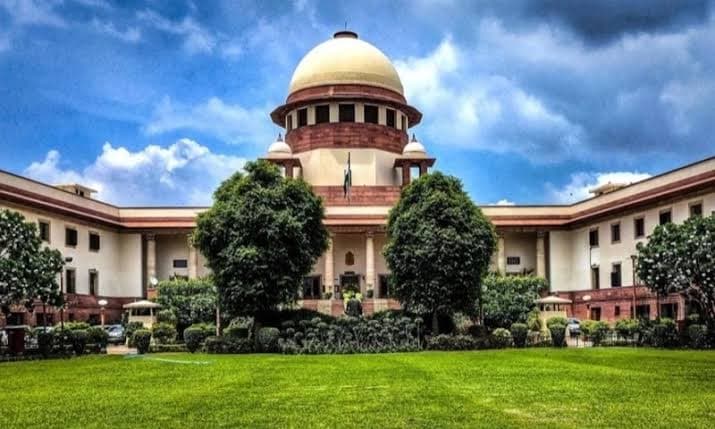
- Institutions designed as constitutional watchdogs are allegedly experiencing a crisis of legitimacy and function.
- Miscarriages of institutional autonomy have raised concerns about the effectiveness and impartiality of investigative agencies and the judiciary.
Recent Criticisms of Institutions
- Critiques of institutions are viewed as essential for accountability, albeit they may contribute to a decline in public trust.
- Accusations against the Opposition for undermining institutions reflect a misunderstanding of the necessary role of dissent in democracy.
BJP Governance and Assumptions
- The ruling party's strategy, particularly the BJP, is characterized by a perceived arrogance and belief of being the sole custodian of national interest.
- Historical interpretations suggest that victories in elections have been misconstrued as a mandate for a transformative political culture rather than an endorsement of existing democratic processes.
- There is a notable conflation of the state apparatus with party objectives, diluting the boundaries necessary for institutional autonomy.
Long-term Implications
- A consistent erosion of institutional trust could lead to a truncated democracy where dissent is viewed as an assault on national interest.
- The current political landscape may be moving toward a regime characterized by prevailing suspicions toward opposition and diminishing respect for institutional integrity.
Economic and Institutional Context
- The importance of reliable data and analysis in understanding citizen trust and institutional performance is cited.
- A survey titled “State of Democracy in South Asia” suggests that low trust correlates with institutions directly interacting with citizens, underscoring potential systemic issues.
Cultural and Political Dynamics
- The ruling dispensation's dominance fosters an environment of mistrust between the government and opposition.
- The narrative of complete control over societal discourse leads to a further alienation of public opinion from political processes.
Conclusion
- Acknowledging the ongoing trust deficit in institutions and the significance of critique is crucial for preserving the health of democracy.
- The need for institutional integrity and the balance of power is emphasized to prevent long-term democratic deterioration.
Implications for Political Science
- This analysis of trust and institutional integrity reflects fundamental concerns in political science related to governance, democratic accountability, and authority legitimacy.
- Scholars and analysts must rigorously evaluate the shift in political dynamics to foster a more resilient democratic framework.
Future Monitoring
- Continuous observation of judiciary and investigative bodies is required to ensure accountability and impartiality.
- Ongoing civic engagement and critical discourse are essential to maintain a balance between trust in institutions and the scrutiny of their functions.
Key Terms & Concepts
| Lok Sabha Speaker | Position involved in no-confidence motion |
| Chief Election Commissioner | Target of impeachment notice |
| BJP | Ruling party's influence on democracy |
| State of Democracy in South Asia | Study on trust in institutions |
| Judiciary | Allegations of judicial abdication |
| Electoral outcomes | Misreading impacts on trust |
| Constitutional democracy | Framework for democratic institutions |
| Trust deficit | Central issue in democracy |
| Regime change | Shift in power dynamics |