iAspirants
Current AffairsPrelims PYQsUPSC CSE SyllabusUPSC CSE StrategyBlogsPricing
Login
iAspirants

Your AI-powered companion for UPSC preparation.

Quick Links

  • Home
  • About Us
  • Current Affairs
  • Prelims PYQs
  • UPSC CSE Syllabus
  • UPSC CSE Strategy
  • Blogs

Company

  • Pricing
  • FAQs
  • Contact Us
  • Login

Legal

  • Privacy Policy
  • Terms & Conditions
  • Return Policy

© 2025 iAspirants, Inc. All rights reserved.

  1. Blogs
  2. National and International Importance

UN Committee Reviews India's Discrimination Issues

Published on: 31-Aug-2026

Share this post

UN Committee Reviews India's Discrimination Issues

Article Summary

  • International Commitments: India ratified the International Convention on the Elimination of All Forms of Racial Discrimination in 1968.

  • Concerns from U.N. CERD: In its first review since 2007, the U.N. Committee on the Elimination of Racial Discrimination (CERD) expressed "grave concern" regarding:

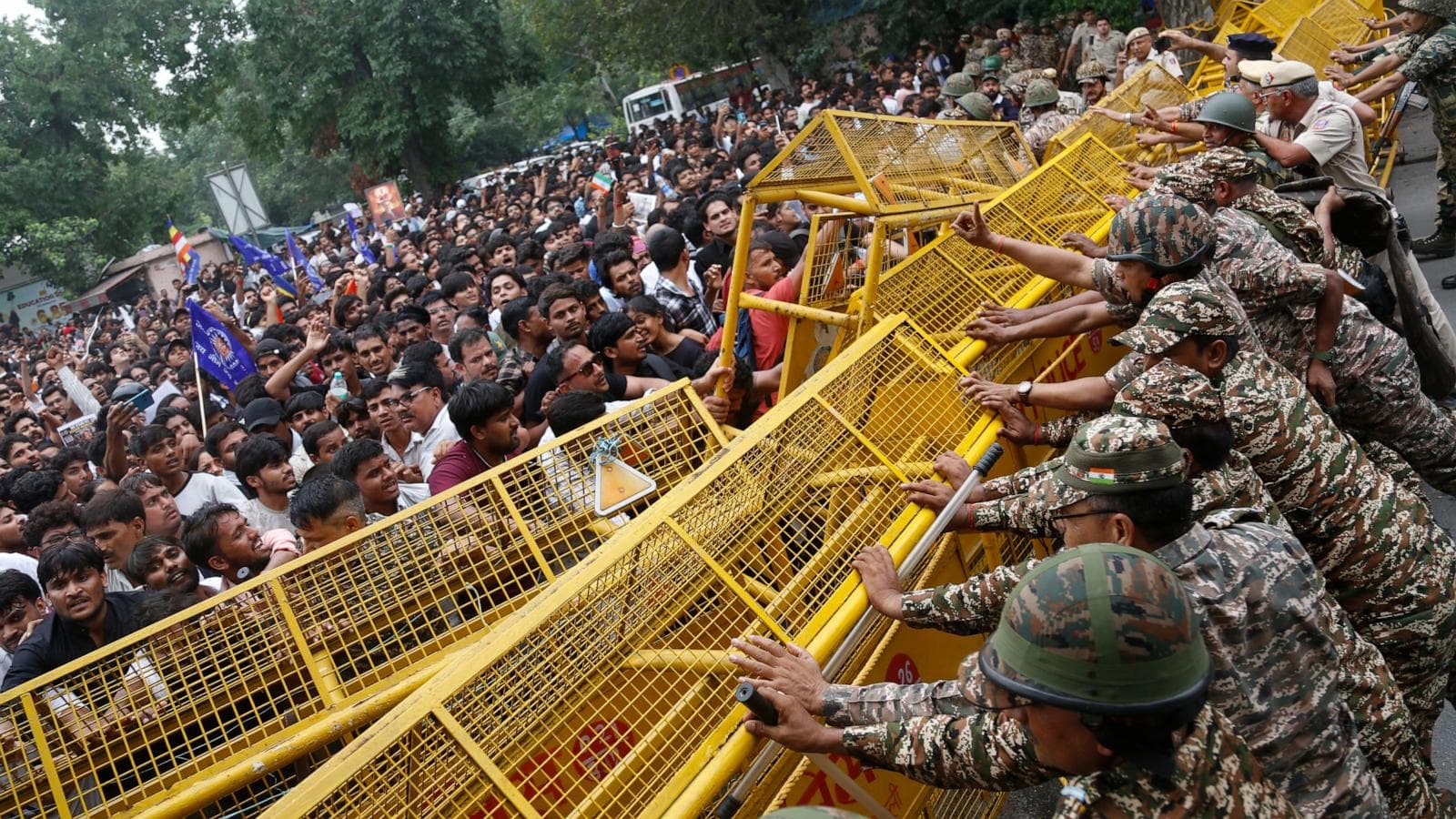
    • Violence Against Minorities: Reports of law enforcement using violence against minority ethnic groups, Dalits, and non-citizens.
    • Caste Discrimination: The Indian government's assertion that caste bias does not fall under Article 1 of the convention has been countered by CERD, which recognizes various forms of discrimination based on inherited status.
  • Legal Framework Issues:

    • Concerns about the practice of manual cleaning of sewers despite existing legislation banning it.
    • The absence of explicit criminalization of racist hate speech under the Bharatiya Nyaya Sanhita.
    • The Forest (Conservation) Amendment Act, which allows exemptions for "national security" projects from consultative decision-making processes.
  • Rights of Rohingya Muslims: Issues surrounding poor living conditions, hate speech, and mass refoulement of Rohingya Muslims were highlighted.

  • Census and Data Issues:

    • The delay in conducting a Census and slow release of NCRB data has hindered independent checks on India’s claims regarding caste- and faith-based discrimination.
    • The government’s reliance on 2011 Census data could obscure the socio-economic regression of Scheduled Tribes and Adivasis.
  • Recommendations for Improvement:

    • Restoration of National Human Rights Commission (NHRC) independence.
    • Criminalization of hate speech.
    • Supportive affirmative action measures.
    • Collection and publication of disaggregated data.
    • Improvement of transparency regarding electoral roll revisions.
  • Government's Stance:

    • The government attempted to classify the issues affecting 200 million Dalits as domestic matters to circumvent international accountability.
    • Dismissal of CERD’s concerns as politically motivated suggests a trend towards minimizing international oversight on human rights issues.
  • Civil Society Role: The responsibility for advocacy and maintaining pressure on the government has largely fallen to civil society groups, especially in multilateral platforms to address discrimination practices.

  • Legislative Tools Cited:

    • FCRA: Foreign Contribution Regulation Act.
    • UAPA: Unlawful Activities (Prevention) Act.
    • AFSPA: Armed Forces Special Powers Act.
    • PMLA: Prevention of Money Laundering Act.

These issues reinforce the ongoing challenges facing India in addressing discrimination and protecting the rights of marginalized communities, alongside the need for greater transparency and accountability in governance.

Key Terms & Concepts

U.N. Committee on the Elimination of Racial Discrimination (CERD)Reviewed India's racial discrimination issues
International Convention on the Elimination of All Forms of Racial DiscriminationRatified by India in 1968
Article 1 of the conventionConcerns discrimination definitions
Forest (Conservation) Amendment ActExempts projects from consultative decision-making
National Register of CitizensLed to mass deprivation of citizenship
Special Intensive Revision of electoral rollsInvolves large-scale deletions
2011 Census dataBasis for special measures implementation
Global Alliance of National Human Rights InstitutionsRecommended downgrade of NHRC
NCRB dataSlow release impacting discrimination checks
Civil society organizationsImpacted by government regulations
Bharatiya Nyaya SanhitaDoesn't criminalise racist hate speech

Mind Map for UPSC Civil Services Revision

Turn UPSC Civil Services Current Affairs Into Exam-Ready Notes

Reading National and International Importance current affairs is half the work. Revise them with ready-made notes and test what actually stuck.

  • Daily UPSC Civil Services current affairs analysis
  • Revision notes, mind maps & MCQs
  • Prelims mock tests with instant results

Related UPSC Civil Services Current Affairs Articles

Zaporizhzhia Power Plant Safety Concerns
National and International Importance30-Aug-2026

Zaporizhzhia Power Plant Safety Concerns

Summary of Zaporizhzhia Nuclear Power Plant Situation

Current Status:

  • Power Supply: The Zaporizhzhia nuclear power plant has lost its off-site power for over a week, relying on emergency diesel generators.
  • Diesel Supply: The facility has only a ten-day supply of diesel fuel on-site. The last delivery to its off-site storage occurred approximately six months prior, though recent diesel deliveries were made from a different off-site location.

Safety and Security:

  • IAEA's Role: The International Atomic Energy Agency (IAEA) emphasizes the critical need for reliable external power to ensure nuclear safety and security. IAEA Director General Rafael Grossi highlighted the importance of stable power supply routes.
  • Recent Incidents: The plant has experienced three incidents involving drones in the past week, resulting in injuries to two employees, raising significant safety concerns.

Historical Context:

  • Capture: The Zaporizhzhia facility was seized by Russian forces in March 2022 during the ongoing conflict, marking a significant event in the Ukraine-Russia war.
  • Reactor Status: All six reactors at Zaporizhzhia have been non-operational since their shutdown in 2022.

Conflict Background:

  • The plant's regular power supply was disrupted due to military activities near the northern banks of the Dnipro River. Both Ukrainian and Russian forces have exchanged accusations regarding attacks near the plant.

IAEA's Actions:

  • Negotiations: The IAEA is working on negotiating a local ceasefire to facilitate repairs to the electrical lines necessary for restoring power to the plant.
  • Permanent Presence: IAEA teams have maintained a constant presence at the Zaporizhzhia plant since September 2022 to monitor the situation.

Conclusion:

The ongoing situation at the Zaporizhzhia nuclear power plant is critical, highlighting the intersection of military conflict and nuclear safety. Urgent actions and international collaboration are required to ensure the safety and security of nuclear facilities amidst geopolitical tensions.

Historical Significance of Vande Mataram
National and International Importance29-Aug-2026

Historical Significance of Vande Mataram

Exam-Focused Notes on the Historical Significance of 'Vande Mataram' at Osmania University

Historical Context:

  • The incident revolves around the singing of "Vande Mataram" at Osmania University (OU) during the late 1930s, a period marked by significant nationalistic fervor against the Nizam's government in Hyderabad.
  • The Nizam's government viewed the song as a threat to its authority, interpreting it as a catalyst for patriotism rather than a mere cultural expression.

Key Events:

  • 1938: Construction of the ‘A’ and ‘B’ hostels at OU coincided with rising nationalist sentiments.
  • Singing of Vande Mataram:
    • Initiated by students in various schools and colleges, including notable figures like P.V. Narasimha Rao and Laddipalli Anjayya, who faced expulsion and punishment for singing the anthem.
    • A pivotal moment occurred on November 14, 1938, when Govindbhai Shroff, a dismissed teacher, encouraged students at Aurangabad Government Intermediate College to sing "Vande Mataram," which led to widespread protests among students across the Dominion.

Government Response:

  • The Nizam's government invoked the Public Safety Regulation to suppress the singing of the song.
  • A ban was imposed on November 28, 1938, leading to mass rustications:
    • 350 students from Osmania University College.
    • 70 students from City College.
    • 310 students from Gulbarga College.
    • 120 students from Mahboobnagar High School.

Judicial and Legislative Context:

  • The protests highlighted the conflict between the students' rights to expression (Article 19 of the Indian Constitution – Freedom of Speech) and the government's suppression of dissent.
  • The government's actions were perceived as a violation of students' rights to express their national identity and aspirations.

Cultural Significance:

  • "Vande Mataram" emerged as a symbol of resistance against oppressive regimes, serving as a unifying anthem for various student bodies and the broader freedom movement.
  • The chant became integral to the identity of the Telangana region, influencing future movements for statehood and integration into the Indian Union.

Notable Figures:

  • Jaisoorya Naidu, son of Sarojini Naidu, played a significant role in mobilizing support from national leaders like Jawaharlal Nehru and Subhash Chandra Bose for the movement.
  • Ramachandra Rao, a satyagrahi who faced severe punishment but continued to sing "Vande Mataram," later contested and won elections, showcasing the enduring spirit of the movement.

Aftermath and Legacy:

  • By June 1939, some students began to negotiate with university officials, leading to a compromise on the slogans to be used, reflecting a shift in the movement's strategy.
  • The phrase "Vande Mataram" evolved to become a common greeting in the region, signifying the deep-rooted impact of the movement on local culture and identity.

Conclusion:

  • The events surrounding the singing of "Vande Mataram" at Osmania University serve as a testament to the power of student activism and the role of cultural symbols in the struggle for freedom. This historical moment underscores the intersection of education, politics, and national identity in pre-independence India.
Nepal Floods Cause Regional Devastation
National and International Importance29-Aug-2026

Nepal Floods Cause Regional Devastation

Summary of Nepal-China Border Disaster (August 2026)

Natural Disaster Overview:

  • Event: On August 26, 2026, a significant seismic event near the Nepal-China border initially registered as a 4.4-magnitude earthquake but was later determined to be a glacial collapse, leading to a landslide equivalent to a 5.2 magnitude.
  • Impact:
    • Casualties: Approximately 579 people confirmed dead; nearly 2,000 reported missing, many believed to be foreign nationals.
    • Infrastructure Damage: Vital infrastructure, including bridges and hydropower stations, destroyed, resulting in a loss of 475 megawatts from Nepal's electricity grid.

Regional Effects:

  • Countries Affected: Nepal, India, and China experienced significant losses.
  • China's Gyirong Port: The port, crucial for trade and previously upgraded to an international-standard land port, is now buried under debris, impacting trade routes.

Economic and Humanitarian Response:

  • India's Response:
    • The Ministry of External Affairs confirmed missing Indian nationals, mostly tourists on pilgrimage to Kailash Mansarovar.
    • Flood threats from rising water levels in the Gandak, Kosi, and Ganga rivers prompted maximum alert in Bihar; communities were evacuated.
    • The National Disaster Response Force (NDRF) deployed teams along the Bihar-Uttar Pradesh border.
    • The Indian Air Force delivered over 47.5 tonnes of emergency relief supplies to Nepal.
  • Environmental and Geopolitical Considerations:

    • Geopolitical Context: The disaster highlights the interconnectedness of Nepal, India, and China, emphasizing the need for collaboration in disaster management despite existing political tensions.
    • Climate Change Implications: The event underscores the increasing unpredictability of natural disasters in the Himalayan region due to climate change, necessitating a coordinated response among neighboring countries.

    Future Considerations:

    • Framework for Cooperation: The disaster calls for a reevaluation of geopolitical dynamics to foster cooperation among Nepal, India, and China in addressing cross-border natural disasters.
    • Humanitarian Assistance: Continued humanitarian efforts will be crucial in the aftermath, and a collaborative approach to disaster management is essential for future preparedness.

    Key Data Points:

    • Electricity Loss: 475 megawatts from Nepal’s grid.
    • Casualties: 579 confirmed dead, ~2,000 missing.
    • Emergency Relief: 47.5 tonnes of supplies sent by India.
    • Infrastructure Damage: Major loss to bridges, hydropower stations, and trade routes.

    Conclusion:

    The catastrophic glacial collapse near the Nepal-China border serves as a stark reminder of the fragility of human life and infrastructure in the context of natural disasters, urging a collaborative approach to disaster management among the affected nations.