iAspirants
UN Global Environment Outlook Highlights Crisis
Published on:
Share this post
Article Summary
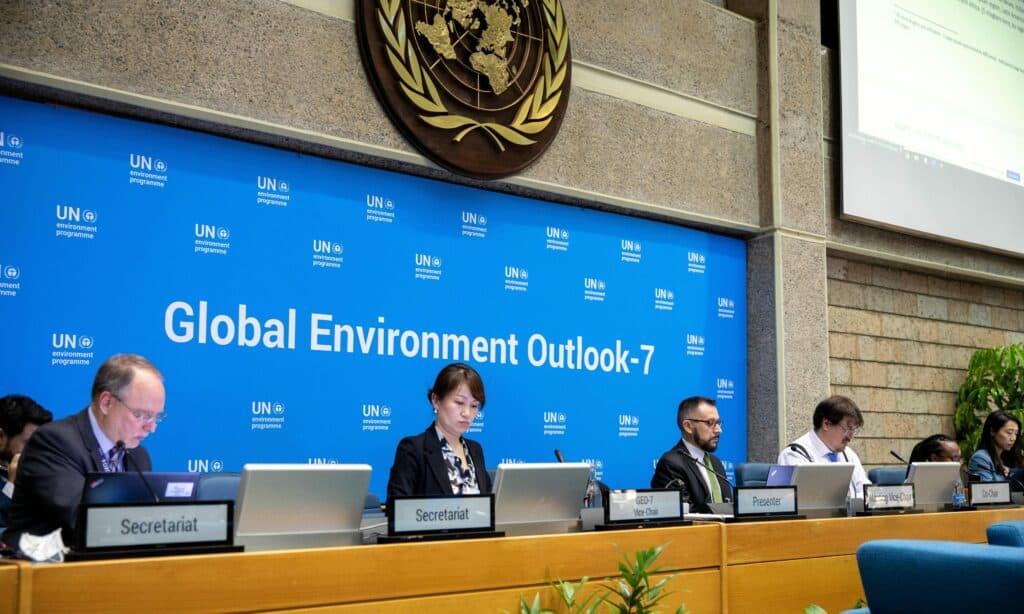
Summary Notes on the UN’s Global Environment Outlook (GEO-7)
Overview of GEO Report:
- GEO Report Frequency: Issued every five to seven years.
- Purpose: Provides a comprehensive assessment of the world’s ecological health, linking climate, pollution, and the global economy.
Key Findings of GEO-7:
- Climate Crisis: Recognized as a multifaceted issue deeply affecting human health, food and water security, and contributing to global conflicts.
- Need for Safety Nets: Urges policies to protect the poorest during ecological and economic turmoil.
- Economic Benefits: Quantifies potential health and economic advantages of sustainable development pathways.
Consensus Challenges:
- Fossil Fuels and Renewables: Highlights a lack of consensus on phasing out fossil fuels, transitioning to renewable energy, and reducing plastic use.
- US Role: Criticism of the US for siding with certain countries (Russia, Saudi Arabia, Iran) to weaken climate change language in the GEO report. This reflects a significant political divide affecting environmental policy.
Implications of US Climate Policy:
- Carbon Emissions Projection: The US is projected to increase emissions by 7 billion tonnes over the next five years, more than double India's annual output, due to policy rollbacks initiated under the Trump administration.
- International Negotiations: The absence of a US delegation during the initial report drafting and later interventions during negotiations show reluctance to support global clean energy initiatives.
COP 30 Reference:
- Climate Governance: The report reflects an ongoing effort to establish a climate governance framework globally, especially after the US's withdrawal from the Paris Agreement.
- Outcome: The hindrance created by the US's approach underscores the difficulties in advancing collaborative climate action.
Constitutional and Policy References:
- International Treaties: GEO serves as a substantial informational source impacting international climate agreements and national policies regarding environmental management.
- Sustainable Development: Supports the principles outlined in various international frameworks for sustainable development (like the Paris Agreement).
Economic and Environmental Data:
- Ecological Impact: The report emphasizes the critical intersection of environmental degradation with economic stability, urging nations to adopt ecologically sustainable pathways.
- Call for Action: Emphasizes a drastic increase in renewable energy generation to combat climate change effectively.
Conclusion:
The GEO-7 report, while comprehensive in addressing ecological challenges, highlights ongoing global governance challenges and emphasizes the urgency for nations to unite in combating climate crises through sustainable development practices. It stresses a collaborative approach to environmental policy that transcends national interests, particularly as the geopolitical landscape continues to influence climate negotiations.
Key Terms & Concepts
| UN Global Environment Outlook (GEO) | Report on ecological health |
| Intergovernmental Panel on Climate Change | Assessment body for climate data |
| climate crisis | Undermines human health, security |
| GEO-7 | Seventh edition of GEO report |
| COP 30 | Climate governance architecture negotiation |
| 7 billion tonnes | Projected increase in US emissions |
| Paris Pact | International climate agreement |
| renewable energy | Focus of global climate efforts |