iAspirants
Current AffairsPrelims PYQsUPSC CSE SyllabusUPSC CSE StrategyBlogsPricing
Login
iAspirants

Your AI-powered companion for UPSC preparation.

Quick Links

  • Home
  • About Us
  • Current Affairs
  • Prelims PYQs
  • UPSC CSE Syllabus
  • UPSC CSE Strategy
  • Blogs

Company

  • Pricing
  • FAQs
  • Contact Us
  • Login

Legal

  • Privacy Policy
  • Terms & Conditions
  • Return Policy

© 2025 iAspirants, Inc. All rights reserved.

  1. Blogs
  2. International Relations

UN Report on US War Crimes

Published on: 19-Sep-2026

Share this post

UN Report on US War Crimes

Article Summary

Summary of Key Points:

War Crimes and International Law:

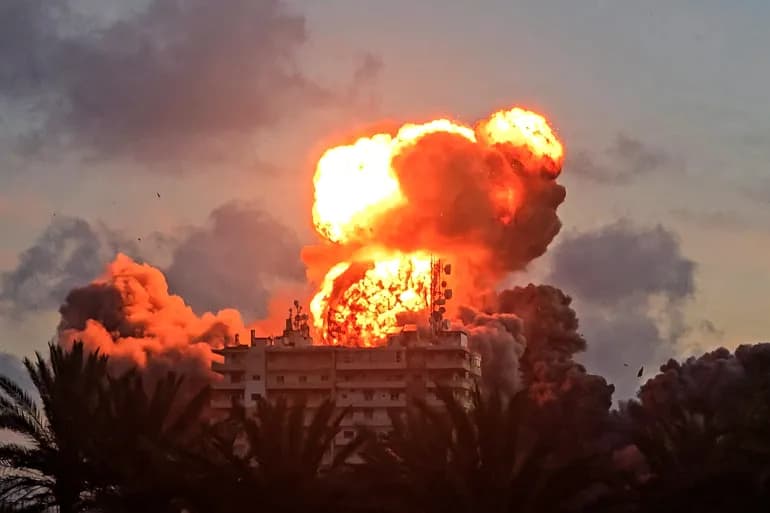
  • UN Fact-Finding Mission: A report indicates reasonable grounds to believe the US government committed war crimes in Iran, due to attacks on civilian sites.
    • Incidents:
      • Attack on a primary school in Minab resulted in 156 deaths, including 120 children.
      • Strike on a sports centre in Lamerd led to 22 fatalities.

Definition and Legal Framework:

  • International Humanitarian Law (IHL):

    • Governs conduct during armed conflicts to protect civilians.
    • Established by the 1949 Geneva Conventions and customary international law.
    • Recognizes the necessity to distinguish between combatants and non-combatants, prohibiting attacks on civilians.
  • Geneva Conventions:

    • Ratified by 196 countries; includes four conventions addressing the treatment of war victims, prisoners of war, and civilian protection.
    • Article pertaining to "grave breaches": defines acts such as wilful killing and torture which are categorized as war crimes under the Rome Statute of the International Criminal Court (ICC) (1998).

Implications of the Report:

  • The report asserts that the US attacks in civilian-populated areas violate IHL principles, characterizing them as indiscriminate attacks.
  • Critiques the US government's approach to civilian harm mitigation, indicating a deprioritization of adherence to international law.

Enforcement Challenges:

  • Enforcement of IHL is complex due to:

    • The need for substantial evidence linking specific perpetrators to incidents.
    • The difficulty in prosecuting crimes that occur across vast territories involving multiple victims.
  • ICC and International Responsibility:

    • While treaties like the Geneva Conventions impose obligations, enforcement is often hindered by states not recognizing jurisdiction (notably, the US, Russia, and India are not ICC signatories).
    • Reports from organizations like the UN can serve as evidence in international criminal proceedings if pursued.

Conclusion:

  • The case raises significant concerns regarding compliance with international humanitarian law, the responsibility of state actors in armed conflict, and the efficacy of current enforcement mechanisms for war crimes. These issues highlight the critical importance of accountability in international relations and humanitarian conduct.

Key Terms & Concepts

UN fact-finding missionInvestigated US war actions
Geneva ConventionsInternational humanitarian law framework
1949 Geneva ConventionsSet rules for armed conflicts
Rome Statute of the ICCDefines war crimes jurisdiction
156 casualties in MinabDeath toll from airstrike
120 children killedVictims in Minab attack
22 deaths in LamerdCasualty from sports center strike
International Committee of the Red CrossHumanitarian aid organization
2002ICC established year
1989Rome Statute adoption year
196 countriesGeneva Conventions ratifying nations

Mind Map for UPSC Civil Services Revision

Turn UPSC Civil Services Current Affairs Into Exam-Ready Notes

Reading International Relations current affairs is half the work. Revise them with ready-made notes and test what actually stuck.

  • Daily UPSC Civil Services current affairs analysis
  • Revision notes, mind maps & MCQs
  • Prelims mock tests with instant results

Related UPSC Civil Services Current Affairs Articles

AI Development and Global Cooperation
International Relations16-Sep-2026

AI Development and Global Cooperation

Exam-Focused Notes on Artificial Intelligence and International Dynamics

Key Themes:

  • The intersection of Artificial Intelligence (AI) development with global geopolitics, particularly in the context of the United States and BRICS nations.
  • Concerns regarding the "weaponisation" of technology and its implications on national security and cooperation among nations.

Constitutional and Policy Context:

  • The BRICS Summit highlighted the need for a collaborative approach to technology development, contrasting with U.S. unilateralism.
  • India's Prime Minister Narendra Modi emphasized the importance of preventing the "weaponisation" of technology during the Summit, suggesting a recognition of technological sovereignty and national security interests.

International Agreements and Initiatives:

  • The establishment of a "BRICS AI open source community" proposed by Chinese President Xi Jinping aims to foster collaborative development in AI that moves away from U.S. dominance.
  • Joint initiatives among BRICS nations seek to enhance cooperation in the development and deployment of AI technologies, indicating a shift towards a multipolar technological landscape.

Economic and Technological Implications:

  • The global push for AI development is interconnected with economic competition, particularly between the U.S. and China. This competition is leading to significant investments in data centers and AI infrastructures.
  • Concerns raised about the potential for the Global South to be impacted by geopolitical rivalries, specifically regarding the withdrawal of influential AI models like Anthropic’s Fable and Mythos.

Security and Cyber Defense:

  • The proliferation of AI technologies necessitates improved cyber defense mechanisms. Nations need to collaborate to ensure that defensive capabilities against AI risks are made widely accessible.
  • The rise of AI systems that can execute tasks independently raises security concerns, especially for nations with weaker cyber defenses.

Recommendations for Cooperation:

  • Emphasis on the need for collaborative, open-source AI solutions as a means to mitigate risks and enhance national security.
  • The call for a comprehensive approach to make AI technologies broadly available to prevent imbalances caused by geopolitical tensions.

Scientific and Technological Advances:

  • AI advancements are evolving rapidly, prompting concerns about control and potential misuse. The expectation is that oversight mechanisms will need to adapt as AI capabilities grow.
  • The ongoing development of AI, being crucial for national economies, underscores the importance of participation in its deployment, even by nations with developing technological ecosystems.

Conclusion:

Countries, especially those in the Global South, must navigate the complexities of AI development amidst great power competition. Proactive measures for international collaboration, particularly through platforms like BRICS, are essential to ensure equitable technological advancement and enhanced national security.

BRICS Summit Discusses Global Trade Dynamics
International Relations16-Sep-2026

BRICS Summit Discusses Global Trade Dynamics

BRICS Summit Highlights: Key Points and Implications

  1. Event Overview

    • The 18th BRICS summit is held in India, focusing on the growth prospects of the Global South.
  2. Bilateral Talks

    • Significant engagement anticipated between Indian Prime Minister Narendra Modi and Chinese President Xi Jinping.
    • Signs of improved relations include:
      • Resumption of direct flights.
      • Reopening of border trade via the Nathu La Pass.
      • Easing of foreign direct investment (FDI) restrictions from land-bordering countries.
  3. Economic Context

    • Ongoing global uncertainties (American trade policies, geopolitical tensions) prompting India and China to ease trade tensions.
    • India seeks to leverage Section 301 tariff rates to improve its competitive position over other nations, particularly China.
  4. Market Access Discussions

    • India aims to address market access issues faced by exporters in China during bilateral talks.
    • Potential focuses include:
      • Enhancing cross-border investments.
      • Collaborations between startups and SMEs.
      • Joint strategies to tackle U.S. economic policies and reforms in the World Trade Organization (WTO).
  5. Trade Dynamics

    • BRICS collaboration necessary to tackle heavy trade dependence on China, especially within MSMEs (Micro, Small, and Medium Enterprises).
    • India faces a significant trade deficit with China, particularly in sectors such as electronics, garments, and automobiles.
    • In 2023, China accounted for 19.2% of India’s total imports, indicating a critical dependency.
  6. BRICS Contributions

    • Potential for BRICS to enhance India's access to:
      • Critical minerals.
      • Energy technologies and capital.
      • New partnerships in manufacturing.
    • Emphasis on creating efficient trade and investment corridors and strengthening SME collaborations.
  7. Challenges Ahead

    • Indian manufactures face competitiveness against Chinese products due to China's dominance and reliance on exports.
    • Reports suggest that China remains integral to labor-intensive manufacturing, complicating global supply chain dynamics.
    • U.S. treasury report warns that China's economic model is unsustainable, which may have global repercussions.
  8. International Agreements and Collaborations

    • Discussions may cover improving mechanisms for trade, payment, and investment within BRICS nations, focusing on:
      • Faster cross-border settlements.
      • Easier recognition of standards.
      • Strengthening buyer-seller networks.
  9. Implications for Global South

    • Both nations acknowledge mutual stakes in the resilience of Global South countries.
    • A push for multilateralism is expected to shape future diplomatic engagements.
  10. Constitutional References

    • No specific constitutional articles were referenced directly in the context but implications for trade agreements may relate to Articles governing economic policy and international relations.

This summit marks a pivotal moment for redefining India-China relations amidst a complex global trade landscape. The outcomes may shape future cooperation among BRICS nations and address ongoing challenges in international trade.

Geopolitical Shifts Post BRICS Summit
International Relations16-Sep-2026

Geopolitical Shifts Post BRICS Summit

Summary of Key Points on Global Geopolitical Dynamics

  • Geopolitical Context:

    • Shift from BRICS summit in New Delhi to upcoming meetings between U.S. President Donald Trump and Chinese leader Xi Jinping.
    • Discussions around potential G2 (U.S.-China) and G3 (adding Russia) structures.
  • BRICS and G7 Analysis:

    • Economic Influence of China:
      • In 2006, China accounted for less than half of BRICS' GDP; now, it constitutes about 60%.
      • U.S. represents nearly 60% of G7's output, an increase from below 40% three decades ago.
      • Structural changes in global power dynamics favoring U.S. and China.
  • International Diplomacy:

    • Meetings Timeline:
      • Trump and Xi to meet in Washington, followed by APEC summit in Shenzhen, China.
      • Possible trilateral discussions including Russia's Vladimir Putin.
    • G20 Summit:
      • Scheduled for December, hosting major global economies including China, Russia, India, and Brazil.
  • U.S.-China Relations:

    • Continuous rivalry over trade, technology, and Taiwan.
    • Recognition needed for managing tensions through high-level dialogue despite disputes.
    • Bilateral agreements risk marginalizing other G20 members.
  • Russian Influence:

    • Despite economic challenges, Russia's military power and diplomatic reach remain significant in geopolitical discussions.
    • Ongoing complexities due to the conflict with Ukraine and U.S.-Russia relations.
  • Implications for India and Global Order:

    • India's desire for a multipolar world contrasts with an emerging G2 structure.
    • Indian foreign policy must adapt to the intensified great-power competition.
    • Organizations (APEC, BRICS, EU, G7, NATO) operate within the parameters defined by the U.S., China, and Russia, lacking true world order shaping capabilities.

Key Data and Figures:

  • China’s Economic Growth in BRICS: 60% of BRICS GDP.
  • U.S. Output in G7: Nearly 60% of nominal output.
  • Duration of Meetings: Regular bilateral meetings between Trump and Xi.

Conclusion:

The evolving geopolitical landscape, characterized by the rising influences of the U.S. and China, poses significant implications for global diplomacy and economic order. As organizations like BRICS and G20 grapple with these dynamics, India's strategic positioning becomes critical in navigating the challenges and opportunities of this changing environment.

Global Regulation for AI Safety
Science and Technology16-Sep-2026

Global Regulation for AI Safety

AI Regulation and Global Governance:

  • Leaders from major AI companies warn that AI technologies could pose significant risks, necessitating global regulatory frameworks.
  • The emphasis is on creating safety standards to prevent misuse in areas such as cyber warfare, bioterrorism, and economic disruptions.
  • Important sectors already integrating AI include banking, transportation, healthcare, and defense.

Indian Politics and Vegetarianism:

  • Criticism of the government over serving vegetarian food at the BRICS summit highlights discussions on food choices and cultural representation.
  • Initiatives like World Vegetarian Day promote vegetarianism globally, reinforcing India’s culinary heritage.

Counter-Terrorism and National Security:

  • The evolving landscape of global terrorism is shifting from organized networks to decentralized attacks, necessitating a robust counter-terrorism strategy.
  • Critique of current government strategies suggests a need for accountability beyond just military actions; Operation Sindoor is cited, but internal security vulnerabilities remain a concern.
  • Major security incidents such as the Delhi blasts point to gaps in the national security narrative.
  • India's international diplomacy, particularly regarding Pakistan and its placement on the FATF grey list, showcases a preference for diplomatic pressure over military intervention.
  • The need for balance between effective military response and the principles of non-violence, as advocated by Mahatma Gandhi, is highlighted.

Economic Indicators and Accountability:

  • Calls for transparency and accountability in national security operations, emphasizing the importance of intelligence over grandstanding publicity.
  • Reference to a potential military-industrial complex raises concerns over the motivations behind conflict engagement.

This summary captures key issues related to AI governance, dietary culture in diplomacy, counter-terrorism strategies, and the economic-political dynamics within India, reflecting on the implications for national security and international relations.

BRICS Declaration Highlights Key Issues
International Relations15-Sep-2026

BRICS Declaration Highlights Key Issues

BRICS Declaration Highlights

  1. Consensus Building: The 45-page BRICS declaration emphasizes diplomatic consensus, allowing member nations to achieve their objectives while avoiding contentious issues.

  2. Key Themes Discussed:

    • Trade
    • Health
    • AI (Artificial Intelligence)
    • Tourism
  3. Condemnation of Sanctions:

    • The declaration (Para 22) condemns "unilateral coercive measures" and "economic sanctions," a reference to Western sanctions, particularly those imposed by the U.S. on Russia and Iran.
    • It also addresses the "tightening of unilateral blockade measures" in relation to Cuba.
  4. Stance on Trade Tariffs:

    • Emphasizes the adverse effects of "indiscriminate rising of tariffs" and opposes "carbon border adjustment mechanisms" indicative of U.S. and EU climate measures.
  5. U.S. Influence:

    • Repeated mentions of U.S. tariffs and the effects on BRICS nations, with a noted absence of direct references to former President Trump.
  6. Non-Inflammatory Language on Ukraine:

    • Unlike the previous BRICS declarations, the Delhi 2026 document omits any mention of the Ukraine conflict, instead reflecting the geopolitical weight of Russia as a BRICS member.
  7. UN Security Council Reform:

    • Reiterates support for Brazil and India in playing a greater role within the UN, highlighting China and Russia's backing as permanent members (Para 27).
  8. Position on Terrorism:

    • Condemnation of terrorism was reiterated, mirroring language from the 2025 declaration, specifically condemning a terrorist attack in Jammu and Kashmir with strong language.
  9. Support for Global South:

    • Acknowledgment of China’s expansion of zero-tariff treatment to 53 African nations, depicting China as a benefactor amidst global economic sanctions.
    • Support for Iran's WTO accession and mention of Ethiopia in this context.
  10. Conflict References:

    • Direct references are made to the Israel-Gaza situation, citing UNSC Resolution 2803, condemning actions prolonging occupation and stressing humanitarian obligations.
    • The document underscores violations against civilian infrastructure and nuclear facilities, attending to international law violations.
  11. Judicial Insights:

    • Refers to the International Court of Justice regarding Israel's obligations in humanitarian contexts, particularly related to aid.
  12. International Agreements:

    • The declaration reaffirms the collective stance on Palestine and condemns actions that affect Palestinian rights and displacement.

Economic Context

  • BRICS nations, including Iran and Russia, are under significant pressure from Western economic sanctions, which influences the economic policies advocated in the declaration.

Conclusion

The BRICS 2026 declaration outlines significant diplomatic stances against unilateral sanctions and tariffs while navigating controversial geopolitical topics, maintaining a focus on collective economic benefits and regional stability, particularly in dealings related to trade and conflicts affecting the Global South.

India-US Joint Military Exercise 2026
National and International Importance15-Sep-2026

India-US Joint Military Exercise 2026

India-U.S. Joint Military Exercise "Yudh Abhyas 2026"

Overview:

  • The 22nd edition of the India-U.S. joint military exercise, "Yudh Abhyas 2026," commenced at the Auli Foreign Training Center, Uttarakhand.
  • The exercise also takes place simultaneously at the Mahajan Field Firing Range in Rajasthan.

Participants:

  • Each side comprises 600 soldiers, with Major General Amresh Gunjan from the Indian Army's 14th Infantry Division and Colonel Benjamin Jackman from the U.S. Army's 11th Airborne Division addressing the troops.

Objectives:

  • Enhance joint military capability in integrated battle groups for operations in mountainous and semi-mountainous terrains.
  • Focus on infantry-centric operations to improve interoperability and facilitate the exchange of best operational practices.
  • Strengthen joint planning and execution of military operations.

Technological Integration:

  • Emphasis on incorporating technology, including the use of drones and autonomous systems for surveillance and reconnaissance tasks.
Yemen Conflict Escalates with Airstrikes
International Relations15-Sep-2026

Yemen Conflict Escalates with Airstrikes

Summary of Key Points: Yemen Conflict and Regional Dynamics

  1. Conflict Overview:

    • Yemen's Houthis, an Iran-backed group, have been engaged in armed conflict against Saudi Arabia and the Saudi-backed internationally recognized Yemeni government.
    • The Houthis recently seized control of Yemen's Red Sea coast and the strategically important Bab al-Mandab Strait.
  2. Military Engagement:

    • The Houthis claimed to have launched missiles and drones targeting Saudi military bases, reportedly resulting in significant retaliatory action from Saudi Arabia.
    • Saudi Arabia conducted approximately 54 airstrikes on Houthi positions over a 24-hour period in response to these attacks.
    • Recent clashes led to the death of eight Yemeni government troops and two civilians due to Saudi airstrikes in Taiz province.
  3. Casualty Statistics:

    • According to sources, eight Yemeni government forces were killed due to Houthi missile strikes.
    • The conflict has resulted in various civilian casualties, raising concerns over humanitarian issues amidst ongoing military operations.
  • Demonstration of modern weapon systems at the Mahajan Field Firing Range.
  • Discussions among subject matter experts from both armies on emerging technologies and changes in multi-domain warfare.
  • Strategic Importance:

    • The exercise provides an opportunity for both armies to share strategies, technologies, and processes.
    • Aims to enhance their capability for coordinated military actions in diverse terrains and operational environments.

    Key Takeaways:

    • The exercise exemplifies India and the U.S.'s commitment to strengthening defense ties and improving operational readiness.
    • The integration of modern technology highlights the evolving nature of warfare and the need for adaptability in military strategies.

    This military exercise underscores the strategic partnership between India and the United States, with a focus on enhancing joint operational capabilities and adapting to new technological advancements in defense.

  • Regional Context:

    • The conflict in Yemen is part of a broader regional power struggle, notably tied to the U.S.-Iran tensions, particularly around the control and safety of maritime routes, including the Strait of Hormuz.
    • U.S. President expressed a willingness to engage in talks with Iran, indicating potential diplomatic shifts that could impact the situation in Yemen.
  • Humanitarian Situation:

    • Civilians in both Saudi Arabia and Yemen are facing significant hardships due to the ongoing military exchanges and resultant infrastructure damage, such as the destruction of bridges.
  • Geopolitical Implications:

    • The strategic significance of the Bab al-Mandab Strait is highlighted, given its role in international maritime trade and security.
    • The developments may have repercussions for international efforts to stabilize the region and manage competing influences from Iran and Saudi Arabia.
  • Potential for Diplomatic Resolution:

    • Statements from U.S. leadership suggest an opening for potential negotiations, which could influence future ceasefire efforts or diplomatic interventions in the Yemen conflict.
  • This summary encapsulates the current tensions in Yemen, providing insight into the military confrontations, regional implications, and the humanitarian crisis exacerbated by ongoing conflicts.