iAspirants
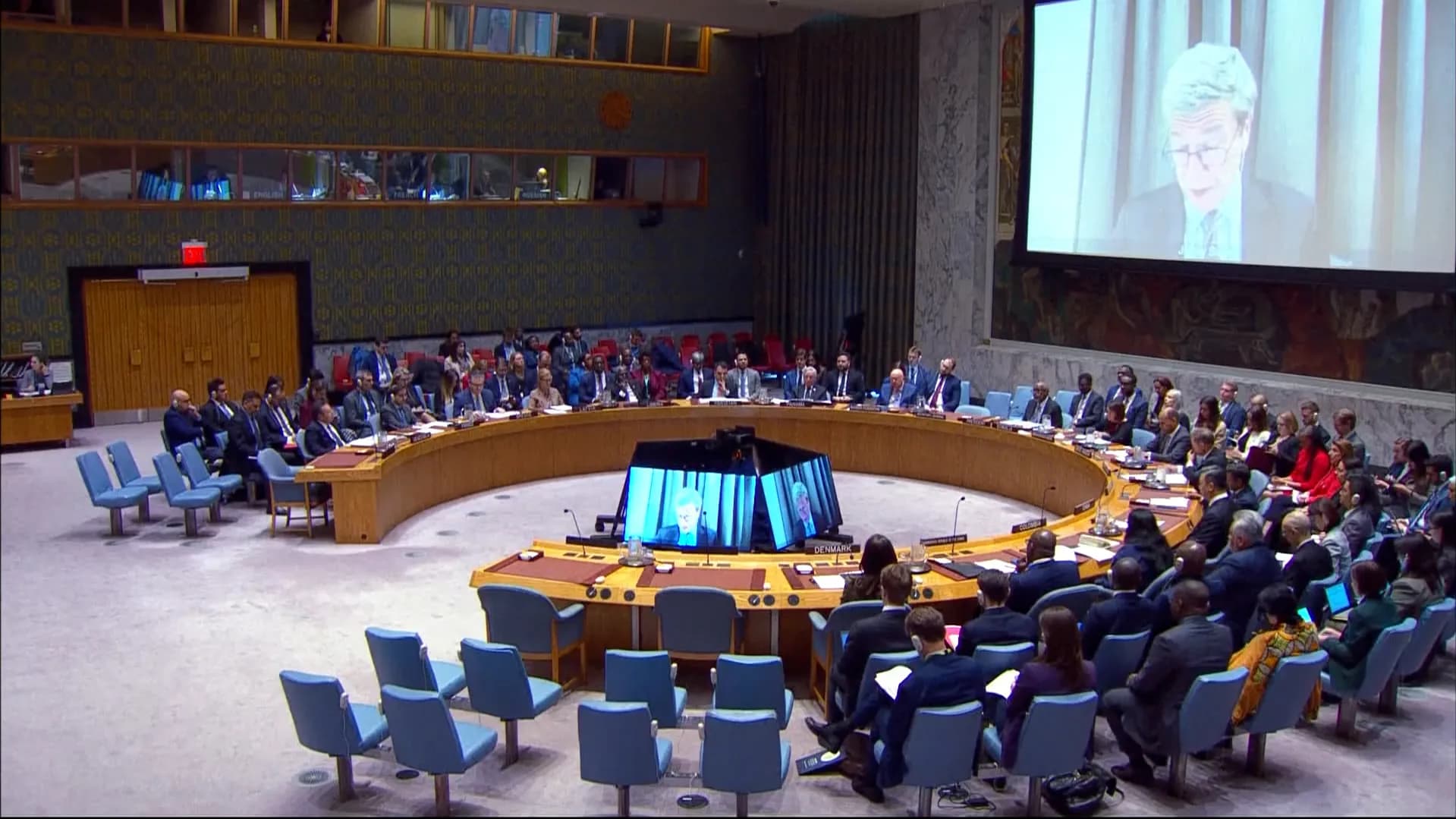
UN Security Council Urged on US Actions
Published on:
Share this post
Article Summary
Summary of Key Points
International Law and UN Security Council
- The UN Security Council convened an emergency meeting concerning a U.S. military operation in Venezuela on January 3, 2026, aimed at capturing President Nicolás Maduro.
- UN Secretary-General Antonio Guterres expressed concern over potential violations of international law, suggesting that the U.S. action could have lasting implications for international relations.
- Denmark, which holds jurisdiction over Greenland, emphasized the importance of the "inviolability of borders" not being open for negotiation.
Statements from Global Representatives
- Danish Ambassador Christina Markus Lassen stressed that no state should utilize threats or force against Venezuela.
- Colombian Ambassador Leonor Zalabata condemned the U.S. operation as reminiscent of historical interventions in Latin America, asserting that democracy cannot be defended through coercion or economic interests.
- Russian Ambassador Vasily Nebenzya criticized U.S. interventions as a regression to lawlessness, warning against unilateral military actions that disregard international norms and sovereignty.
U.S. Position and Justifications
- U.S. envoy Mike Waltz defended the military operation, labeling it a legitimate "surgical law enforcement operation."
- The U.S. justified its actions by framing Maduro as a "narco-terrorist" involved in a conspiracy and emphasized the need for intervention to uphold democracy in the region.
Military Actions and Legal Implications
- The operation involved seizing Maduro and his wife from their residence and transporting them to a U.S. warship for prosecution in New York.
- This move followed an accumulation of U.S. military presence off the Venezuelan coast, including destruction of vessels linked to drug trafficking operations.
- Maduro was indicted on charges of narco-terrorism and made his first court appearance in Manhattan on January 4, 2026.
Economic Control of Venezuela
- President Trump indicated intentions for U.S. interim governance post-capture, with plans to exploit Venezuela’s significant oil reserves for international sale.
- Secretary of State Marco Rubio mentioned enforcing oil quarantines on sanctioned tankers, leveraging economic sanctions to effect policy changes in Venezuela.
Implications and Reactions
- The operation sparked a contentious international debate on interventionism, state sovereignty, and the legality of military action without UN consensus.
- The criticism from multiple nations underscores a potential shift in diplomatic relations, with implications for U.S. actions in Latin America and beyond.
Conclusion
The U.S. intervention in Venezuela has raised critical conversations on international law, the role of the UN, and the ethical grounds of military interventions. The operation sets a precedent for future geopolitical actions, especially concerning sovereignty and the enforcement of international norms by powerful nations.
Key Terms & Concepts
| UN Security Council | Held emergency meeting |
| Nicolas Maduro | Venezuelan leader captured |
| United Nations | Voiced concerns on legality |
| Denmark | Expressed border concerns |
| Greenland | Potential US interest |
| Colombia | Mentioned in intervention context |
| Mexico | Mentioned in military expansion |
| US military operation | Targeted Maduro's capture |
| narco-terrorism conspiracy | Charges against Maduro |
| January 3, 2026 | Date of military action |
| January 5, 2026 | Date of UN meeting |
| US oil quarantine | Policy for sanctions enforcement |