iAspirants
Warning on Satellite Disaster Risk
Published on:
Share this post
Article Summary
Summary of Satellite Collision Risks and Solar Storm Implications
Key Concepts
- Kessler Syndrome: A theoretical scenario where collisions in space trigger a cascade of debris collisions, threatening the usability of orbital regions. The concept was first articulated in 1978.
Recent Findings
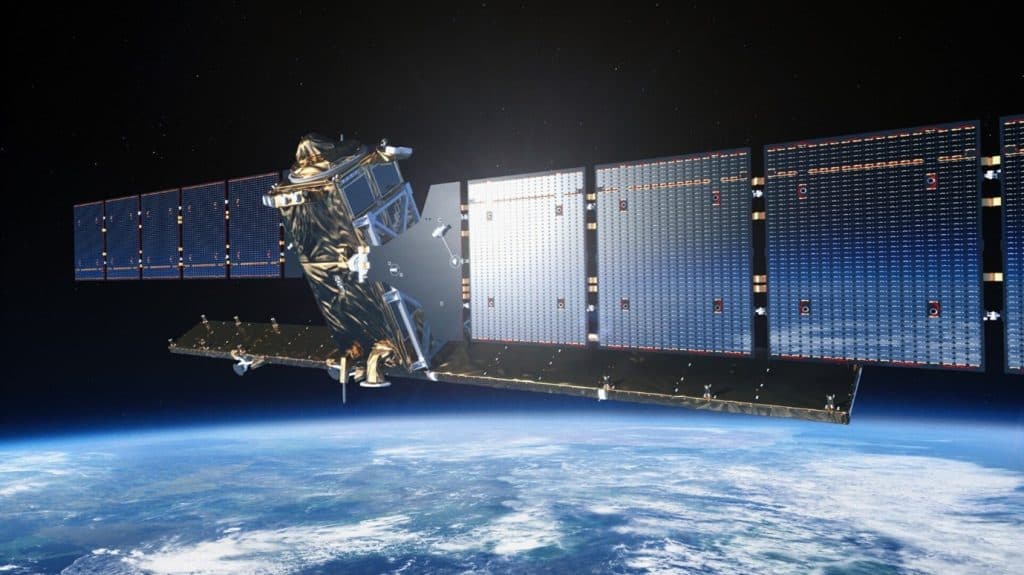
- A study published on December 10 (year not specified, but contextually noted as recent) reports an acute risk of satellite collisions due to increasing congestion in low Earth orbit caused by megaconstellations, particularly from SpaceX's Starlink, which has launched 8,811 satellites as of October 2025.
CRASH Clock
- Introduction of the CRASH Clock (Collision Realisation and Significant Harm), which measures the time available to respond to potential catastrophic collisions.
- Current CRASH Clock stands at 2.8 days, indicating a significantly reduced response window compared to 121 days reported in 2018.
Collision Risks
- Without operational collision-avoidance capabilities, the probability of collisions increases dramatically:
- Within 24 hours, a 30% chance of collision between tracked objects.
- 26% chance of a collision specifically involving a Starlink satellite.
Solar Storm Threats
- Solar storms can disrupt satellite electronics and communication systems, potentially leading to loss of control over collision avoidance maneuvers.
- The study indicates that a major solar storm could worsen collision probabilities, thereby increasing the risk of Kessler Syndrome.
Implications for Satellite Operations
- The results emphasize the importance of continual, precise avoidance maneuvers to prevent collisions in the increasingly crowded orbital environment.
- A major collision could generate extensive debris, heightening the risk of further collisions and complicating satellite operations.
- The dependency of modern society on reliable satellite functioning is underscored, affecting navigation, communications, and meteorological services.
Recommendations
- Urgent need for improved tools to monitor and manage Earth's orbital environment to prevent disasters linked to the expanding satellite networks.
Conclusion
The study highlights a pivotal moment concerning space congestion and the immediate dangers posed by natural solar events. The data demonstrates a critical need for enhanced strategies to protect the orbital environment and sustain essential satellite services amidst rising risks.
Key Terms & Concepts
| Kessler syndrome | Potential chain reaction risk |
| CRASH Clock | Measures collision risk time |
| 14,000 satellites | Total satellites predicted by 2024 |
| 8,811 satellites | Starlink network satellites launched |
| December 10 | Publication date of the study |
| 2019 near-miss incident | Highlighted satellite collision risk |
| 30% chance of collision | Risk after systems shutdown |
| 26% chance of Starlink collision | Specific risk for Starlink |
| 90 minutes | Satellite orbital period |
| 121 days | Pre-megaconstellation CRASH Clock |
| solar storm | Disruption risk factor |