iAspirants
Water Governance in Rural India
Published on:
Share this post
Article Summary
Exam-Focused Notes on Water Governance in Rural India
Overview
- Importance of Water Governance: Critical due to increasing demand, unequal distribution, and climate variability.
- Goal: Achieve water security and sustainable future through community empowerment via participatory water budgeting.
Water Budgeting
- Definition: Systematic assessment of water availability and demand within defined geographic units (villages, blocks, districts).
- Components: Involves evaluating inputs like rainfall, runoff, groundwater recharge against evaporation and water usage.
- Benefits: Supports informed decision-making for water allocation in agriculture, domestic use, and livestock.
Government Initiatives
- Atal Bhujal Yojana: Launched to promote decentralized water governance at the village panchayat level, particularly in groundwater-stressed areas across 7 states.
- National Water Mission: Incorporates water budgeting as a core element for integrated water resource management.
Key Findings and Data
- Annual Rainfall: Approximately 3880 billion cubic meters (BCM) of rainfall in India; effective water availability estimated at 1999.20 BCM after accounting for losses.
- Population Pressure: India houses 17.5% of the world’s population, exerting significant pressure on water resources.
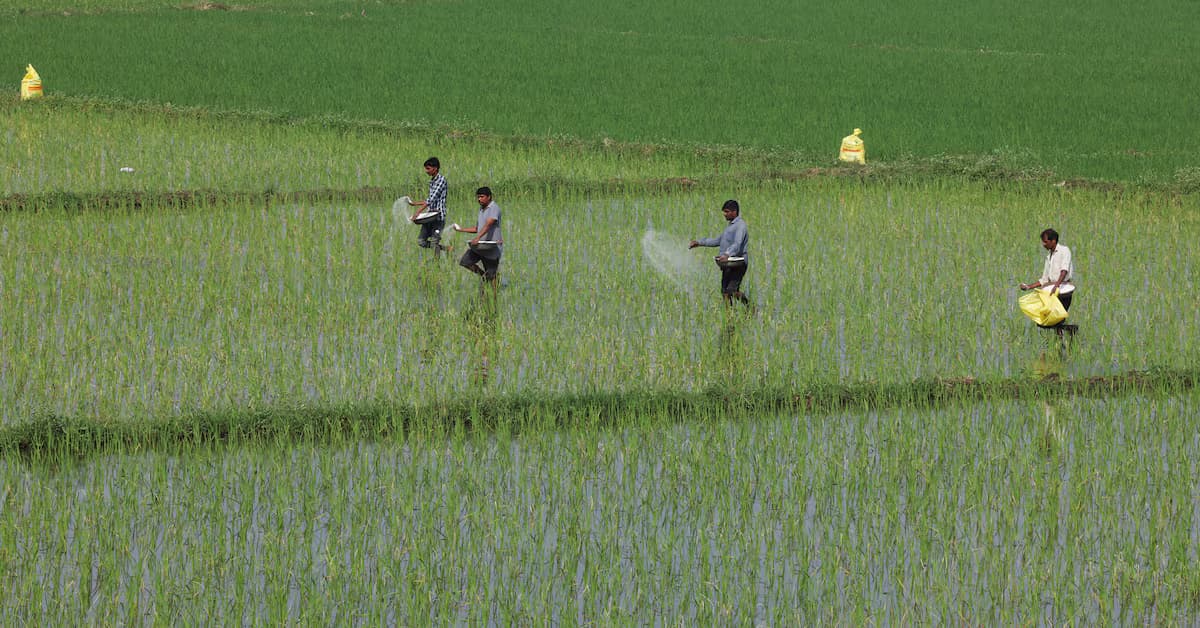
- Water Usage: 80-90% of rural water is utilized for agriculture, leading to declining groundwater levels and seasonal shortages.
Economic Indicators
- Projected Water Demand: By 2050, irrigation water demand could reach 807 BCM, indicating a need for improved water management strategies.
- Livestock Statistics: 4.6% increase in livestock from 2012 to 2019; supports increased water demand for drinking and fodder.
Technological Integration
- Varuni Web Application: Developed under the India-Germany bilateral project for scientific water budgeting, utilizing data from government portals for real-time analysis.
- Smart Water Management: Focus on automated systems to enhance accuracy and minimize human error in water assessment.
Community-Based Approaches
- Hivre Bazar Model: A drought-affected village that successfully implemented community-led water management and budgeting, improving water security.
- Capacity Building Initiatives: Over 1.25 lakh training sessions conducted to promote efficient water use practices.
State-Specific Programs
- Maharashtra's Water Conservation Campaign: Aimed at sustainable solutions for water scarcity; 11,000 villages declared drought-free, with groundwater levels rising by 1.5-2 meters.
- Rajasthan's Mukhyamantri Jal Swavlamban Abhiyan: Focuses on traditional water conservation structures and community involvement in water budgeting.
Constitutional and Policy Framework
- Constitutional Provisions: Emphasis on the Right to Water as part of the Fundamental Rights and Directive Principles of State Policy (DPSP).
- Integrated Approach: Encourages a unified, data-driven framework for water management to address the challenges posed by population growth and climate change.
Conclusion
- Need for Institutionalization: Water budgeting must be integrated into all planning processes to ensure long-term water security and sustainable agricultural practices.
- Community Empowerment and Technology: Leveraging community participation and modern technology is essential for effective water governance and resource management.
References
- National Water Mission documents, Atal Bhujal Yojana reports, and various government publications related to water management.
Key Terms & Concepts
| Atal Bhujal Yojana | Promotes decentralized water governance |
| National Water Mission | Focuses on water resource sustainability |
| Varuni Web Application | Facilitates data-driven planning |
| Groundwater Level Improvement | Observed in 180 blocks |
| 3880 billion cubic meters | Average annual rainfall in India |
| 1999.20 billion cubic meters | Estimated annual water availability |
| 807 billion cubic meters | Projected irrigation water demand by 2050 |
| 5,000 villages | Target for water security annually |
| 41 million people | Beneficiaries of improved water availability |
| 1.5-2 meters | Increase in groundwater levels |
| NABARD | Supports participatory water budgeting |
| 2019 | Year of livestock census increase |