iAspirants
Water Hyacinth Problem in Chennai
Published on:
Share this post
Article Summary
Environmental Concerns Along Adyar River: Key Facts and Data
Issues Identified:
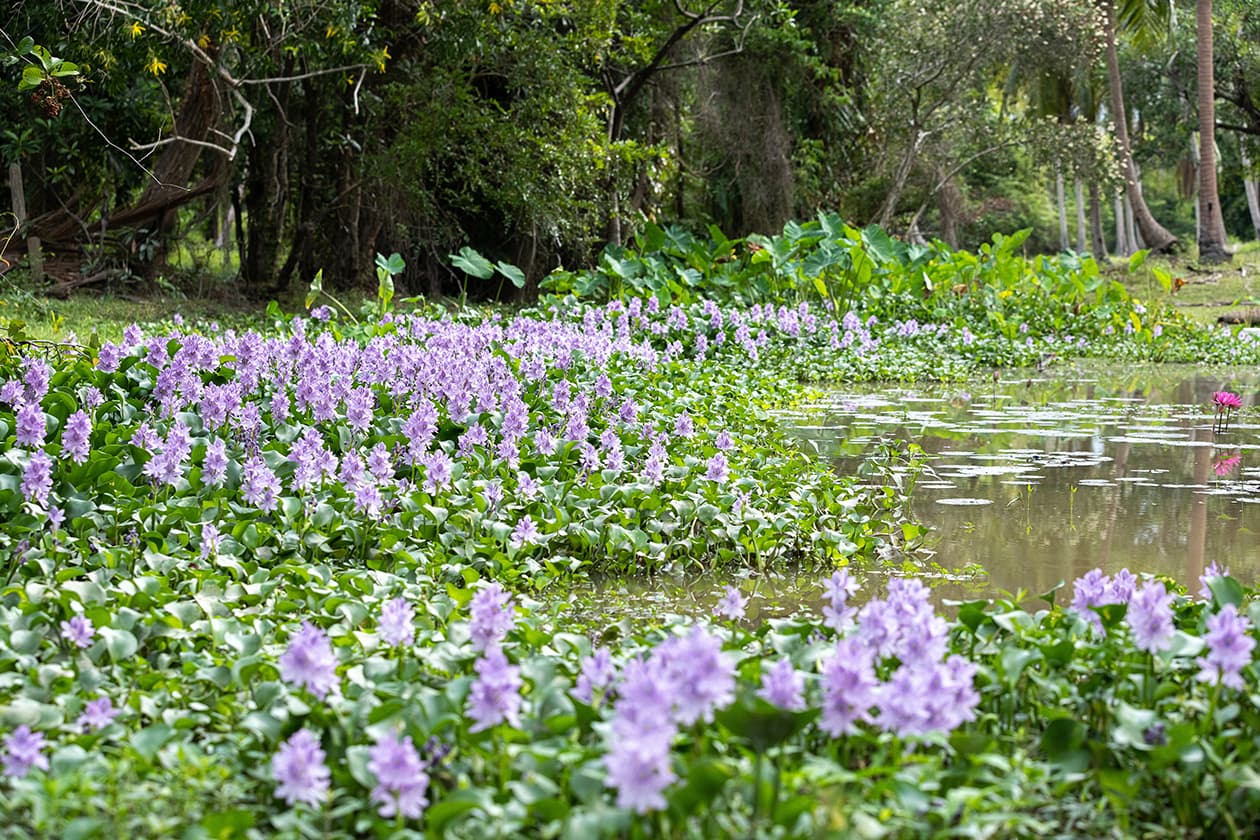
- Accumulation of water hyacinth causing:
- Increased mosquito breeding.
- Algal blooms leading to fish deaths due to oxygen depletion.
- Poor waste management practices among residents, contributing to river pollution.
- Accumulation of water hyacinth causing:
Local Impact:
- Residents near Thideer Nagar, such as S. Jagadeeshan, report:
- Severe mosquito menace affecting health, particularly of children.
- Lack of organized door-to-door garbage collection, leading to waste disposal in the river.
- Incomplete drainage projects resulting in sewage entering the river.
- Residents near Thideer Nagar, such as S. Jagadeeshan, report:
Historical Context:
- The problem worsened since October 2022 and has been persistent for 30-40 years.
- Previous studies and assistance from organizations like Anna University and Dutch agencies aimed at improving river health.
Governmental Response:
- Several past allocations for Adyar River restoration including initiatives for:
- Eco-park development.
- Sewage interception and flood mitigation.
- Riverfront parks and resettlement for families along riverbanks.
- Allocations for restoration projects ranged from multi-crore investments between 2006-2011 to ₹4,227 crores in 2024.
- Several past allocations for Adyar River restoration including initiatives for:
Judicial and Administrative Actions:
- Chennai Deputy Mayor M. Magesh Kumaar has promised inspections and action against illegal sewage discharge and garbage dumping.
- Continuous complaints to the Greater Chennai Corporation (GCC) regarding unaddressed environmental issues.
Community Observations:
- Observations by officials like Sumana Narayanan, captain of Madras Boat Club, confirm:
- Cancellation of boating sessions due to dense accumulation of hyacinth.
- Recurrent complaints by local communities regarding ineffective deweeding operations.
- Observations by officials like Sumana Narayanan, captain of Madras Boat Club, confirm:
Constitutional and Policy Framework:
- Article 48A of the Indian Constitution emphasizes the duty of the state to protect and improve the environment and safeguard forests and wildlife.
- The need for effective implementation of environmental regulations and community engagement reflects central tenets in this constitutional directive.
Economic Implications:
- The environmental health of the Adyar River impacts local businesses, including recreational activities such as boating, which are crucial for tourism and community well-being.
Future Considerations:
- Sustainable management practices must be adopted to control water hyacinth growth.
- Community awareness and involvement in waste management and environmental preservation could improve conditions.
- Regular audits and accountable civic engagement from civic bodies like GCC are essential to developing long-term solutions.
Conclusion: Efforts toward the restoration of the Adyar River hinge on governmental action, community participation, and adherence to constitutional mandates for environmental safeguarding, indicating a need for integrated and sustained approaches to tackle these environmental challenges.
Key Terms & Concepts
| Greater Chennai Corporation | Responsible for river management |
| Adyar River | Affected waterbody due to pollution |
| ₹4,227 crore | Funding for river restoration projects |
| October 2025 | Date when problem intensified |
| Anna University | Provided earlier assistance for studies |
| Netherlands | Assisted in water management |
| sewage discharge | Pollution source in river |
| garbage dumping | Contributes to water pollution |
| multi-crore phase-wise projects | Previous restoration allocations |
| eco-park development | Proposed project for restoration |