iAspirants
West Bengal Chief Minister in Supreme Court
Published on:
Share this post
Article Summary
Summary Notes on the Supreme Court Hearing on Special Intensive Revision (SIR) of Electoral Rolls
Key Facts:
- Date of Significance: February 9, 2026
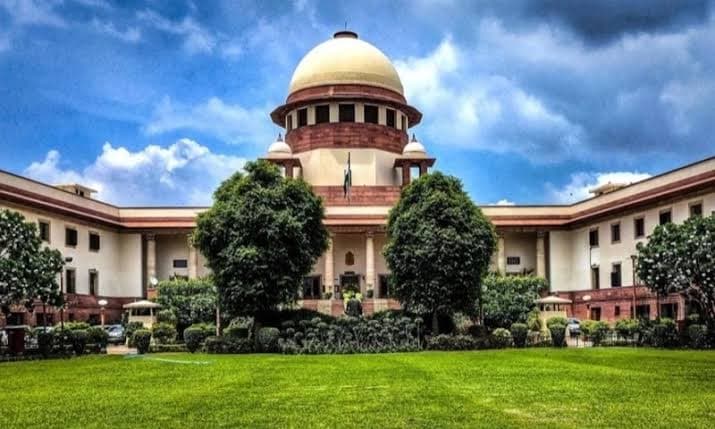
- Location: Supreme Court of India
- Key Figure: Chief Minister of West Bengal, Mamata Banerjee
- Main Issue: Hearing on the conduct of Special Intensive Revision (SIR) of electoral rolls across multiple states.
Legal Framework:
- Representation of the People Act: Governs the conduct of elections and grants the Election Commission of India (ECI) the authority to conduct special revisions of electoral rolls.
- Previous Judgment Reference: In Lal Babu Hussein and Others vs Electoral Registration Officer and Others (1995), the Court emphasized the need for specific evidence before deleting voter names, contrasting with the ongoing SIR's broad approach.
Constitutional Concerns:
- Role of Judiciary: The Supreme Court's intervention in administrative matters raises concerns about its constitutional role to uphold the Constitution, versus acting as an administrator.
- SIR's Constitutionality: Challenges have been raised regarding whether ECI's power to conduct SIRs is a carte blanche for nationwide revisions without specific cause.
Government Schemes/Directives:
- Aadhaar Use in SIR: Court deliberated on whether the Aadhaar card could be used for voter identification, paralleling prior debates about Aadhaar’s implementation and its constitutional ramifications.
Electoral Integrity Issues:
- Mass Revision of Voter Rolls: The ongoing SIRs require mass proof of citizenship from all residents, essentially reversing the traditional model where individuals suspected of non-citizenship were specifically targeted.
- Use of Form 7 for Objections: Reports indicate misuse of this form leading to arbitrary deletions from electoral rolls, which disproportionately affects marginalized communities, impacting their right to vote.
Economic and Sociopolitical Implications:
- Impact on Vulnerable Populations: Access to documentation necessary for SIRs is asymmetrical, creating undue hardship for marginalized groups (based on caste, poverty, and gender), potentially disenfranchising them.
Judicial Directives:
- Court's Responsibility: The Court is tasked with ensuring compliance with constitutional mandates and addressing the inversion of the state-citizen relationship through these electoral processes.
- Response to Administrative Glitches: The Supreme Court's approaches to rectifying issues in the SIR process have been criticized as insufficient, needing a broader constitutional framework to genuinely affirm participatory rights and dignity.
Conclusion:
The SIR exercise in India has sparked critical discussions about democracy and constitutional governance. The Supreme Court's role in balancing administrative efficiency alongside the constitutional rights of individuals is crucial, as evident from recent hearings and ongoing challenges. The case illustrates the complex interplay between election law, citizenship rights, and the judiciary's role in safeguarding democracy.
Key Terms & Concepts
| Special Intensive Revision (SIR) | Conduct of electoral rolls |
| Supreme Court of India | Adjudication of electoral disputes |
| Representation of the People Act | Election law for revisions |
| Aadhaar | Identification document use |
| Form 7 | Objection to electoral inclusion |
| November 2025 | Bihar Assembly Elections date |
| 1995: Lal Babu Hussein case | Judgment on voter roll removals |
| February 9, 2026 | Court directions on SIR |
| Electoral Commission of India (ECI) | Authority on electoral processes |
| Citizenship | Voter eligibility prerequisite |