iAspirants
Current AffairsPrelims PYQsUPSC CSE SyllabusUPSC CSE StrategyBlogsPricing
Login
iAspirants

Your AI-powered companion for UPSC preparation.

Quick Links

  • Home
  • About Us
  • Current Affairs
  • Prelims PYQs
  • UPSC CSE Syllabus
  • UPSC CSE Strategy
  • Blogs

Company

  • Pricing
  • FAQs
  • Contact Us
  • Login

Legal

  • Privacy Policy
  • Terms & Conditions
  • Return Policy

© 2026 iAspirants, Inc. All rights reserved.

  1. Blogs
  2. Economic and Social Development

Boosting India's Blue Economy Initiative

Published on: 10-Sep-2026

Source: PIB

Share this post

Boosting India's Blue Economy Initiative

Article Summary

Exam-Focused Notes on Prime Minister's Matsya Sampada Yojana (PMMSY)

Overview of PMMSY:

  • Launched to enhance India's fisheries sector, focusing on sustainable growth and modernization.
  • Significant financial commitment with ₹2,500 crore allocated in the budget for 2026-27.
  • Aims to create employment opportunities and improve infrastructure in fisheries.

Key Achievements:

  • Fish production increased from 14.164 million tons (2019-20) to 19.775 million tons (2024-25).
  • Fish export value rose from ₹46,663 crore (2019-20) to ₹73,890 crore (2025-26).
  • Generated employment for 5.8 million individuals in fisheries and aquaculture activities.

Financial Allocations and Projects:

  • Total expenditure of ₹20,750 crore since its inception in 2020-21.
  • ₹21,394.88 crore approved for fisheries and aquaculture projects from 2020-21 to 2025-26, including a central share of ₹9,510.89 crore.
  • Approval for 12 integrated aquaparks with a cost of ₹713.80 crore.
  • Support for 2,195 Fish Farmer Producer Organizations (FFPOs) with ₹544.86 crore for collective empowerment.

Government Schemes and Initiatives:

  • Prime Minister Matsya Kisan Samriddhi Yojana (PM-MKSSY):

    • A sub-scheme under PMMSY, operational from 2023-24 to 2026-27 with an estimated budget of ₹6,000 crore.
    • Focus on financial stability, risk mitigation, and market integration for fishermen and aquaculture farmers.
  • Digital Transformation:

    • Launch of the National Fisheries Digital Platform (NFDP) to enhance governance and service delivery in fisheries.
    • Over 37.23 lakh registrations on the platform by September 2026.

Infrastructure Development:

  • Investment in cold-chain, transportation, and marketing facilities.
  • Approval for the development of 28 fishing ports, 25 landing centers, and 23 dredging projects with an investment of ₹3,741.89 crore.

Environmental and Technological Focus:

  • Adoption of sustainable practices like bio-floc and Recirculating Aquaculture Systems (RAS) to enhance productivity and environmental sustainability.
  • Identification of 100 climate-resilient coastal fishing villages for infrastructure and livelihood support.

Impact on Livelihoods:

  • PMMSY significantly contributes to food security, job creation, and export enhancement, reinforcing the fisheries sector as a vital part of India’s economy.
  • The initiative is aligned with Sustainable Development Goal (SDG) 14 regarding life below water, promoting responsible fishing and sustainable resource use.

Conclusion:

  • PMMSY is pivotal for modernizing the fisheries sector, ensuring sustainable practices, and supporting the livelihoods of millions in coastal communities.
  • Continuous investment and strategic initiatives under PMMSY are crucial for the long-term growth and sustainability of India's blue economy.

Key Terms & Concepts

PMMSYEmpowering fisheries sector
₹2,500 CroresBudget allocation for 2026-27
197.75 lakh tonsProjected fish production by 2024-25
₹73,890 CroresProjected fish exports by 2025-26
58 lakhEmployment opportunities created
₹2,797 CroresApproved for cold-chain infrastructure
2,195 FPOsSupported under PMMSY
₹21,394.88 CroresApproved fisheries projects funding
₹20,750 CroresTotal expenditure for PMMSY
100 climate-resilient coastal villagesIdentified for support
National Fisheries Digital PlatformDigital governance initiative
SDG 14Contributing to life below water

Mind Map for UPSC Civil Services Revision

Turn UPSC Civil Services Current Affairs Into Exam-Ready Notes

Reading Economic and Social Development current affairs is half the work. Revise them with ready-made notes and test what actually stuck.

  • Daily UPSC Civil Services current affairs analysis
  • Revision notes, mind maps & MCQs
  • Prelims mock tests with instant results

Related UPSC Civil Services Current Affairs Articles

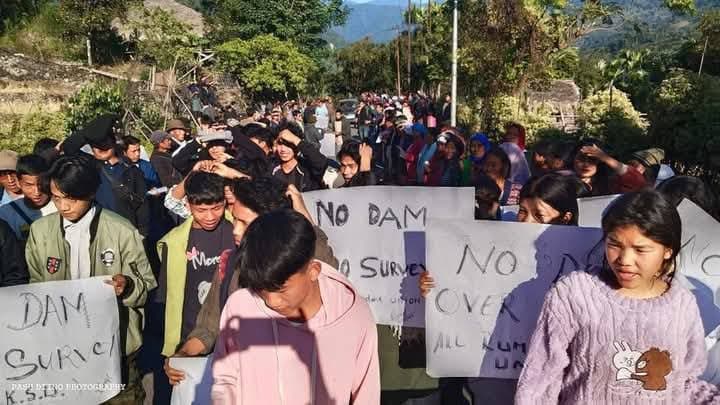
Protests Erupt Over Siang Dam Project
National and International Importance26-Oct-2026

Protests Erupt Over Siang Dam Project

Exam-Focused Notes on Siang Dam Protests in Arunachal Pradesh

Key Facts:

  • Location: Pasighat, East Siang District, Arunachal Pradesh.
  • Project: Siang Upper Multipurpose Project (SUMP) proposed capacity of 11,200 MW by NHPC Limited.
  • Protests: Recent violent protests against the dam; security measures in place, with law enforcement using tear gas against demonstrators.
₹6,000 Crores
Estimated budget for PM-MKSSY
₹198.17 CroresFunding for seaweed farming projects
₹3,741.89 CroresApproved for port modernization

Constitutional References:

  • Restrictions on public gatherings enforced under Section 163 of the BNSS.

Government Policies & Schemes:

  • Corporate Social Responsibility (CSR): NHPC has spent Rs 16.61 crore on the Siang district administration and Rs 94.29 crore in Upper Siang for CSR activities.
  • Public relations campaign engaged to counter negative perceptions of the project during a Rs 10.91 crore contract with Concept Public Relations. The aim was to promote development opportunities related to the project.

Judicial References:

  • No specific judicial pronouncements reported, but local governance and responses highlight administrative action post-violence.

Economic Indicators:

  • The dam project is positioned as a strategic response to water security concerns, particularly regarding China's upstream dam activities. The state government claims it is a focal point of national importance.

International Context:

  • The proposed dam is linked to broader national security issues in response to international developments, particularly related to neighboring China.

Environmental Concerns:

  • Opposition from the Siang Indigenous Farmers' Forum (SIFF) due to fears of submergence, displacement, and environmental degradation. Concerns raised include loss of livelihoods, ancestral lands, and agricultural viability along riverbanks.

Community Engagement:

  • NHPC initiated extensive community outreach involving village elders, NGOs, and local influencers, reflecting attempts to build a narrative around the project while addressing misinformation.

Political Landscape:

  • Mixed sentiments among stakeholders: While some government officials claim that 85% of residents support the project, significant local opposition persists, emphasizing a lack of trust and consultation with the affected communities.

Notable Statements/Actions:

  • Chief Minister Pema Khandu emphasized the need for accurate information to mitigate fears surrounding the dam project and asserted that misinformation contributes to unrest.
  • Local MLA Ojing Tasing suggested that unrest is politically motivated, promoting the view that the majority support the project, contrasting local accounts of resistance.

Societal Impact:

  • Residents express deep dependence on riverbank resources for agriculture and livestock, indicating significant socio-economic implications if the dam proceeds.

Historical Context:

  • The proposed dam project is still in the pre-feasibility survey stage, and local opposition has been longstanding, underscoring the historical grievances and land rights issues in the region.

Summary:

The protests against the Siang dam in Arunachal Pradesh illustrate a complex interplay of economic development, environmental concerns, cultural identity, and local governance. The government, while asserting support for the hydroelectric project, faces significant challenges in addressing the fears and objections of the indigenous populations affected by it.

US Pushes India for Venezuelan Oil
International Relations24-Oct-2026

US Pushes India for Venezuelan Oil

Summary Notes on US-India Oil Import Dynamics and Venezuelan Oil

Key Facts and Data

  • US Encouragement: The US is urging India to increase imports of Venezuelan oil, particularly through Reliance Industries Ltd (RIL), which operates the largest single-location refinery in Jamnagar, Gujarat.
  • Venezuelan Oil: The oil is uniquely heavy and sulfurous, making it suitable for processing at RIL's complex, which can handle around 1.4 million barrels per day (bpd).
  • Current Imports: India’s Venezuelan oil imports peaked at 350,000 bpd in August 2026, then decreased to 200,000 bpd in September 2026.
  • Contribution: Reliance accounted for 74.3% of India's Venezuelan crude imports (worth $3,585.6 million from April to August 2026).
  • Major Suppliers: Other refiners like Indian Oil and Hindustan Petroleum also import Venezuelan crude but to a lesser extent (11.7% and 11.3% respectively).

Economic Indicators

  • Pricing Challenges: Venezuela's Merey grade oil is priced at $25 per barrel lower than Brent, but shipping costs to India offset that advantage, making Venezuelan oil less competitive.
  • Competition: The return of heavier crude grades from Iraq, which are closer and cheaper to ship, may hinder Venezuelan crude's market share in India.

Constitutional and Policy Context

  • Geopolitical Dynamics: The US aims to redirect Venezuelan crude to strengthen its market after years of sanctions, while India seeks to diversify its energy sources amidst pressures regarding its Russian oil imports.
  • Russian Oil Dynamics: India has significantly increased oil imports from Russia to 1.9 million bpd (over 35% of total oil imports in September 2026), influenced by substantial discounts post-Ukraine invasion.

Judicial and Committee Insights

  • GTRI Report: The Global Trade Research Initiative highlighted the need for India to distinguish between increasing Venezuelan oil imports and reducing reliance on Russian supplies.

International Relations

  • Strategic Allies: The US waiver of potential tariffs on Russian energy buyers aims to prevent inflation impacts ahead of midterm elections, showcasing a flexibility in US policy to maintain its relationship with India as a strategic partner.
  • Venezuelan Oil as a Supplement: Experts indicate that Venezuelan oil will not replace Russian supplies but can serve as an alternative in India's broader diversification strategy involving over 40 supplying countries.

Government Schemes and Energy Policies

  • Import Diversification Strategy: India continues to diversify its oil sources in response to market conditions and geopolitical pressures, exploring genuine engagement with alternative suppliers rather than succumbing to external pressures.

By maintaining a strong refining capacity, India can play a pivotal role in absorbing Venezuelan crude, yet systemic challenges remain in terms of economics, reliable supply, and geopolitical implications of shifting energy sources.

Bihar's Rising Drug Crisis Post-Prohibition
National and International Importance23-Oct-2026

Bihar's Rising Drug Crisis Post-Prohibition

Exam-Focused Notes on Bihar's Drug Crisis (2026)

Background:

  • Prohibition in Bihar: Implemented in April 2016.
  • Seizures & Arrests:
    • Total of approximately 3.16 crore litres of liquor seized.
    • 7.15 lakh arrests made related to liquor violations.
    • Daily average: 8,650 litres seized and 196 arrests.

Shift to Drug Trade:

  • Emergence of Illegal Markets: Post-prohibition, illegal liquor prices surged due to a black market, stimulating a shift towards narcotics.
  • Identification of Drugs: Increase in the availability of cheap drugs like brown sugar and heroin variants (e.g., ‘kota’).

NDPS Cases Statistics:

  • Increase in Drug Cases: Bihar saw 1,905 NDPS (Narcotic Drugs and Psychotropic Substances) cases from January to May 2026,
    • Up by 83 cases compared to all of 2022.
    • 2019 recorded 697 cases.

Specific Drug Seizures (2026):

  • Ganja: Increased from 16,692 kg in 2022 to 31,915 kg in 2025.
  • Tablets: 9.29 lakh tablets seized in Jan–May 2026 alone, compared to 29,762 in 2022.
  • Total Seizures: Over Rs 52.32 crore worth of drugs confiscated by Special Task Force (STF) with 315 arrests as of October 2026.

Young People and Drugs:

  • Juvenile Detentions:
    • 50 juveniles detained under the NDPS Act in 2024 alone, compared to 11 over seven years (2016-2023).
  • Estimated Young Drug Users:
    • Cannabis: 99,000
    • Opioids: 40,000
    • Inhalants: 29,000
    • Sedatives: 8,000

Economic Implications:

  • Price Comparison:
    • Black market liquor: Rs 1,500 per bottle in Bihar.
    • Brown sugar: Rs 300-500 for small packets.
    • Drug usage less expensive compared to liquor, leading to increased consumption.

Drug Trafficking Routes:

  • Source Countries:
    • The majority of heroin and synthetic drugs originate from Myanmar.
    • Transit through Northeast India (Mizoram and Manipur borders) before reaching Bihar.

Legal Framework:

  • Narcotic Drugs and Psychotropic Substances Act, 1985: Primary legal framework under which drug-related cases are being prosecuted in Bihar.

Initiatives and Responses:

  • Establishment of Anti-Narcotics Units: Bihar's state response includes setting up dedicated units to combat drug trafficking.
  • Prohibition and State Narcotics Control Bureau: Formed in September 2025.
  • Nasha Mukt Bharat Campaign: Launched with a target year of 2029 to combat substance abuse.

Key Takeaway:

Bihar's drug crisis, arising primarily due to a prohibition-induced vacuum, has evolved into an alarming public health and legal issue with implications for youth, law enforcement, and policy-making. The increasing trend in NDPS cases underscores the need for comprehensive strategies to tackle both prevention and enforcement in the state.

Core Industrial Performance and Challenges
Economic and Social Development23-Oct-2026

Core Industrial Performance and Challenges

Economic Indicators and Industrial Performance

  1. Core Industries Performance (September 2026):

    • Index of Core Industries grew by 7.9%, marking the highest growth in this series and representing the second month of consecutive growth.
    • Coal Sector: Experienced a growth surge of 10.7% in September, although it contracted by 1.1% during the April-September 2026 period.
    • Electricity Sector: Grew by 11.4%, maintaining a trend of double-digit growth for six months.
  2. Sectoral Insights:

    • The rise in coal demand was driven by a heat wave, affecting power plant operations due to depleting coal stocks.
    • Steel Sector: Though it recorded growth, it was insufficient to support coal's output, whereas iron ore saw a rebound into double-digit growth.
    • Crude Oil & Natural Gas Sectors: These sectors have been in continuous contraction since 2024, highlighting fiscal challenges.
India's Oil Imports and Geopolitical Dynamics
International Relations23-Oct-2026

India's Oil Imports and Geopolitical Dynamics

Key Facts & Data Overview

International Relations & Trade:

  • US-India Oil Relations: The US is urging India to increase imports of Venezuelan oil through Reliance Industries Ltd (RIL), which has the world's largest single-location refining complex in Jamnagar, Gujarat.
  • US Secretary of State Marco Rubio's Visit: He emphasized India's status as a "refining superpower" during his recent visit to RIL.
  • Crude Oil Processing Capability: RIL's complex can process approximately 1.4 million barrels per day (bpd), making it suitable for refining Venezuela's heavy crude oil.

Oil Imports Data:

  • Venezuelan Oil Imports: India imported Venezuelan crude worth $3,585.6 million from April to August 2026. Reliance accounted for 74.3% of these imports.
  • Total Venezuelan Crude Purchase in September 2026: Peaked at 350,000 bpd in August, easing to 200,000 bpd in September.
  • Comparative Sources: Russia is currently the largest oil supplier to India, providing in September 2026, accounting for over of total oil imports.
  • Refinery Outputs: Increased to 10.3% in September, indicating reliance on expensive imported oil, with imports up 7% by volume but 47% in value.
  • Global Oil Market:

    • Oil prices escalated to over $112/barrel due to attacks on Saudi Arabia's energy infrastructure, complicating India’s import costs.
    • Continued reliance on imported oil is straining India’s foreign exchange reserves, particularly essential for stabilizing the rupee.
  • Government Role & Infrastructure Spending:

    • Cement and steel are the only sustainable industrial sectors, primarily fueled by government infrastructure expenditure.
    • Shrinking fiscal space indicates an impending challenge for sustained industrial output growth.
  • Constitutional and Policy References

    • Article 21: Addresses the right to life and personal liberty; a focus on maintaining economic stability can be linked to this fundamental right.
    • Fiscal Policy: The need for fiscal prudence becomes critical in light of industrial dips and reliance on expensive imports.

    Government Schemes and Reforms

    • Emphasis on infrastructure spending indicates potential alignment with ongoing government schemes aimed at boosting industrial output and job creation.
    • Encouragement of local production to reduce import reliance is paramount.

    Challenges Ahead

    • Concerns regarding the long-term sustainability of industrial growth amidst rising global oil prices, depleting reserves, and significant reliance on imports.
    • Continued monitoring of the El Niño effect on weather patterns is essential for predicting energy demands and agricultural impacts moving forward.

    Conclusion

    The industrial landscape in India is exhibiting momentary growth, supported largely by government spending and external factors, yet underlying challenges remain in sustaining this growth against a backdrop of rising costs and contractive patterns in major energy sectors.

    1.9 million bpd
    35%

    Economic Considerations:

    • Market Dynamics: The US aims to establish a market for Venezuelan oil, benefitting from Indian refining capacity, while India assesses purchases based on price, quality, and supply reliability.
    • Freight Costs: The freight cost to import Venezuelan crude to India is about $35 per barrel, which can erode the benefits of a $25 discount offered on the Merey grade crude.
    • Economic Rivalries: The competition from other oil supplies, particularly from the Gulf (Iraq), complicates the scenario for Venezuelan oil.

    Challenges:

    • Limitations on Imports: Technical capabilities and commercial viability limit the scale of additional Venezuelan crude imports. Refining capacity and economics play crucial roles.
    • Differing Quality of Crude: Venezuelan crude (Merey) is markedly different from Russian crude (Urals), complicating the substitution of one for the other.

    Strategic Implications:

    • US and Indian Strategies: US interests are to diversify energy sources and reduce global reliance on conflict-prone areas. Conversely, India's strategy considers maintaining a stable supply of crude despite pressures to reduce Russian imports.
    • Geopolitical Pressures: Experts suggest New Delhi should not link its Venezuelan imports to reducing purchases of Russian oil and must approach negotiations from a standpoint of diversification without compromising existing resources.

    Legal & Policy Insights:

    • Washington's Position: The US has waived potential tariffs on Russian oil imports, impacting ongoing negotiations between Washington and New Delhi while prioritizing stable fuel prices amid election pressures domestically.
    • Future Commitments: Experts advocate for India to clarify terms regarding supply reliability, investment obligations, and pricing before committing to increased Venezuelan imports under US pressure.

    Conclusion:

    India's role as an emerging refining powerhouse presents both opportunities and challenges, particularly in balancing international relations regarding oil imports from Venezuela and Russia. The intricate web of price, logistics, and geopolitical strategy defines current discussions, with careful navigation required to optimize India's energy security.