iAspirants
Challenges in Global Climate Governance
Published on:
Share this post
Article Summary
Global Climate Governance Notes
Current Framework:
- Governance resembles two "hop-on, hop-off" frameworks: CMP (Kyoto Protocol) and CMA (Paris Agreement) lacking a direction.
- Political interests often overshadow global climate urgency, leading to ineffective negotiations at Conferences of the Parties (COP).
Political Dynamics:
- Politics largely manages expectations and avoids costs, resulting in delayed climate action decisions.
- A lack of urgency from citizens diminishes the pressure for political action, as immediate needs (food, housing, health, employment) take precedence over climate issues.
Economic Factors:
- Economic short-termism prevails as market imperatives prioritize immediate profits over long-term ecological considerations.
- Current flow of climate finance is significantly below needs, with developing countries requiring $2.4 trillion-$3 trillion annually versus received under $400 billion.
COP30 Outcomes:
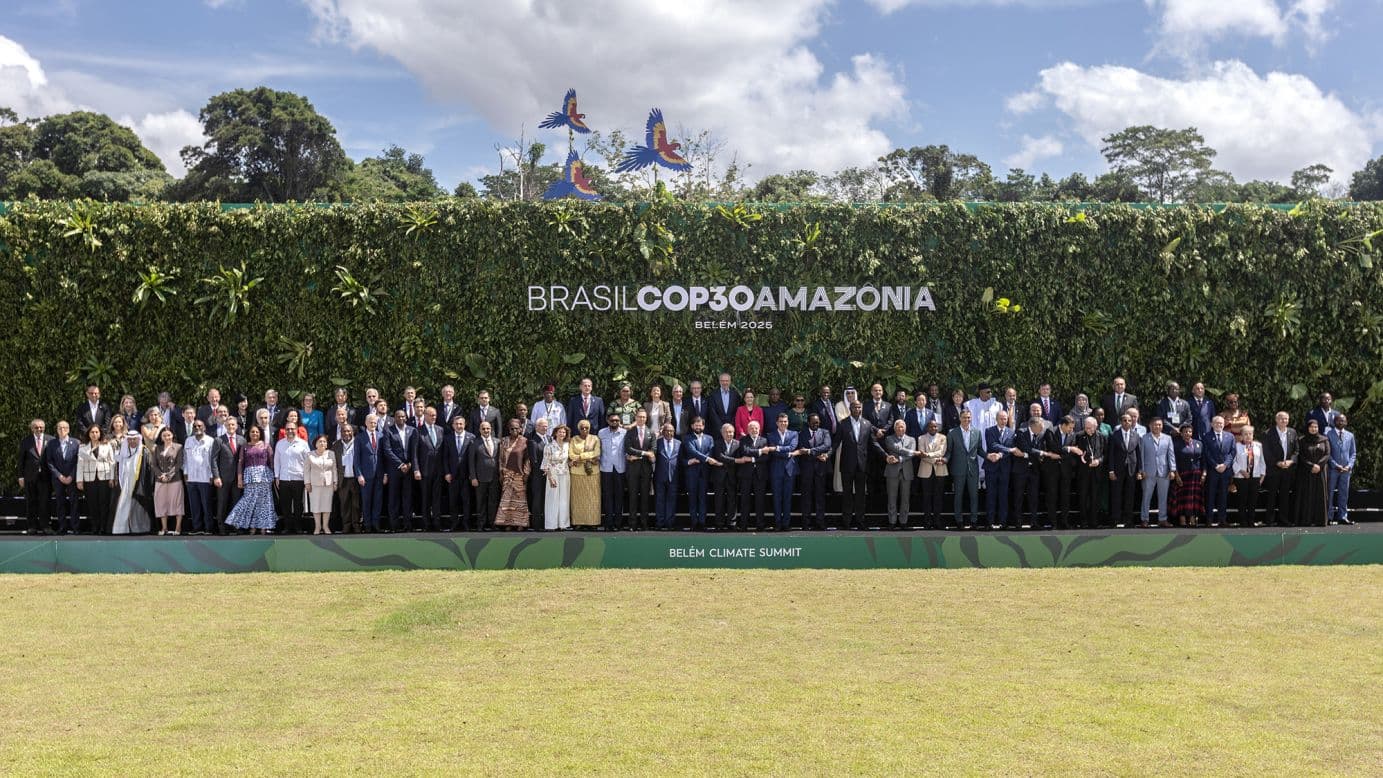
- COP30 emphasized "global mutirão" (cooperation) but lacked binding commitments; measures remain largely voluntary, undermining the principle of "common but differentiated responsibilities" enshrined in the Convention.
- No binding obligations or timelines were established for climate finance, adaptation, or technology transfer.
- Adaptation finance pledges are unsupported by specific baselines or commitments, leading to aspirational rather than actionable outcomes.
Greenhouse Gas Emissions:
- UNEP Emissions Gap Report 2024 indicates global greenhouse gas emissions reached a historic 57.4 GtCO₂e, with projections showing a likely breach of the 1.5°C threshold by the early 2030s.
Loss and Damage Fund:
- A new fund to support countries severely affected by climate disasters was initiated, but its capitalization remains inadequate, reflecting a significant gap between need and operational capability.
Capacity Building and Just Transition:
- Efforts to support poorer countries in monitoring climate progress continued to lack proportional financial backing.
- The just transition agenda acknowledged rights and principles but remains non-binding and lacks resources for implementation.
Role of UNFCCC:
- Despite structural flaws and limited action, the UNFCCC and COP process remain the only globally recognized platforms for coordinated climate action, unmatched by G-7, G-20, or BRICS groups.
- Abandoning the UNFCCC structure would likely worsen climate action prospects.
Challenges Ahead:
- The persistent divide between political rhetoric and actionable climate response leads to escalating climate challenges.
- Urgency and systematic reform in global climate governance are essential to bridge the existing action gap.
Conclusion:
- The path forwards will require enhanced political will, clarity in commitments, and genuine cooperation across nations to address the escalating climate crisis effectively.
Key Terms & Concepts
| CMP | Conference on Kyoto Protocol |
| CMA | Conference on Paris Agreement |
| UNEP Emissions Gap Report 2024 | Reports greenhouse gas emissions |
| 57.4 GtCO₂e | Global emissions in 2024 |
| 1.5°C | Global warming threshold |
| $2.4 trillion-$3 trillion | Annual needs for climate adaptation |
| $400 billion | Current climate finance flows |
| COP30 | Latest climate conference |
| loss and damage fund | Fund for climate disaster help |
| just transition agenda | Ensures justice in climate action |
| G-7 | Group of advanced economies |
| G-20 | Major economies group |
| BRICS |