iAspirants
China's Impact on India's DAP Supply
Published on:
Share this post

Article Summary
Summary of China's Impact on India's Di-Ammonium Phosphate (DAP) Supply
China's recent export restrictions on various critical commodities, including Di-Ammonium Phosphate (DAP), are reshaping the agricultural landscape in India. DAP is essential for farm productivity, especially during the monsoon planting season, as it is a key fertiliser providing phosphorus (P) nutrients necessary for crop development.
Current DAP Supply Situation:
- Opening stocks of DAP in India for the kharif planting season on June 1, 2024, were only 12.4 lakh tonnes (lt), significantly lower than 21.6 lt in 2023 and 33.2 lt two years prior.
- This shortfall is attributed to a drastic reduction in Chinese exports, wherein imports dropped from 22.9 lt in 2023-24 to just 8.4 lt in 2024-25, with no imports recorded from China in 2025.
Contributing Factors:
- China has prioritized domestic needs and the increasing demand for phosphates in electric vehicle (EV) battery production, limiting its availability for international markets.
- Indian importers have turned to alternative sources like Saudi Arabia, Morocco, Russia, and Jordan, but they have not sufficiently compensated for China's absence.
Price Dynamics:
- The reduction in supply has intensified price pressures, with recent cargoes contracted from Jordan priced at $781.5 per tonne, a sharp increase from earlier figures.
- Costs for phosphoric acid have also risen from $950 to $1,258 per tonne over a year, indicating broader inflation in fertiliser prices.
Market Response:
- DAP sales in India have fallen from 108.1 lt in 2023-24 to 92.8 lt in 2024-25, with early 2025 registering only 7.7 lt sold, down from 8.8 lt a year earlier.
- There is a notable shift toward complex fertilisers like NPKS, with sales surging from 110.7 lt to 142.1 lt in the same period, indicating a trend towards balanced fertilisation rather than reliance on high-analysis fertilisers like DAP.
Alternative Fertiliser Adoption:
- The ammonium phosphate sulphate (APS), an NPKS complex fertiliser, has gained traction due to its balanced nutrient content, recording increased sales from 50.4 lt in 2022-23 to 69.7 lt in 2024-25.
- Other products like single super phosphate also noted a rise in uptake, highlighting farmers' adaptability to changing circumstances by employing a diverse range of fertilisers.
Price Control Measures:
- The Indian government has informally set the maximum retail price of DAP at ₹1,350 per 50-kg bag, though actual prices tend to be around ₹1,700. In contrast, APS and other NPKS complexes are competitively priced at ₹1,350-₹1,800 per bag.
Long-term Implications:
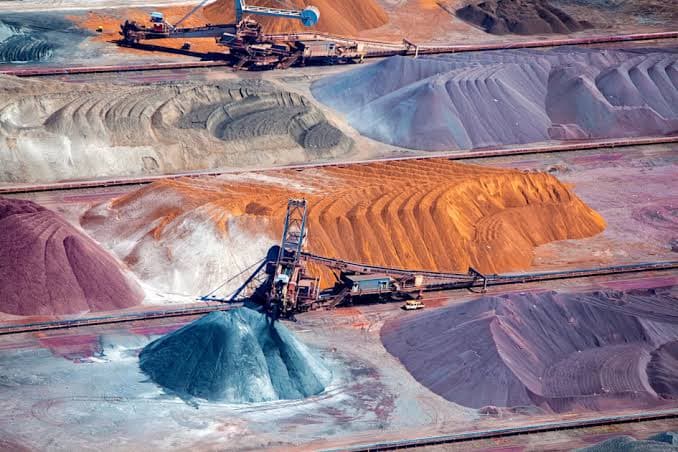
- The shortage of DAP highlights India’s limited domestic rock phosphate deposits, necessitating strategic policy considerations for fertiliser imports and production.
- Encouraging farmers to reduce dependence on high-nutrient fertilisers could lead to more efficient usage of imported materials, potentially stabilizing agricultural practices in the face of international supply variabilities.
Conclusion: China's export restrictions have not only tightened the global phosphate market but have also spurred a significant shift in India's fertiliser consumption patterns. While challenges persist due to fluctuating prices and availability, the ongoing increase in complex fertiliser sales suggests a gradual transition towards more sustainable agricultural practices.
Key Terms & Concepts
| China | Exporter of DAP |
| India | Consumer of DAP |
| di-ammonium phosphate (DAP) | Fertilizer for crops |
| Saudi Arabia | Alternative DAP supplier |
| Morocco | Alternative DAP supplier |
| Russia | Alternative DAP supplier |
| Jordan | Alternative DAP supplier |
| ammonium phosphate sulphate (APS) | Alternative fertilizer |
| single super phosphate | Alternative fertilizer |
| Urea | Common fertilizer |