iAspirants
Conservation Efforts for Great Indian Bustard
Published on:
Share this post
Article Summary
Summary of Key Facts and Initiatives
1. Great Indian Bustard Conservation
- Ministerial Visit: Union Environment Minister Bhupender Yadav visited the Great Indian Bustard habitat in Naliya, Kutch, Gujarat.
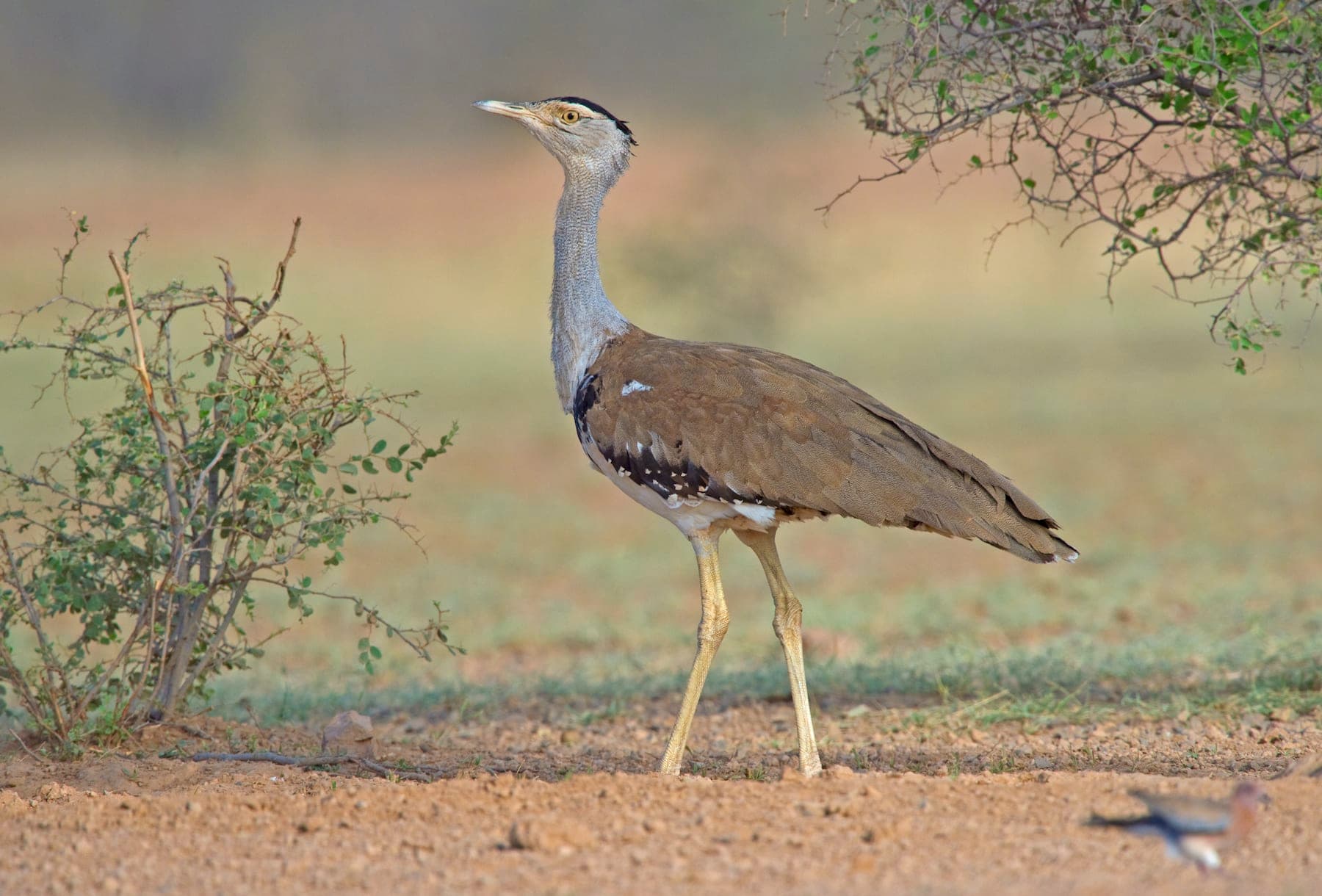
- Soft Release Centre: Inaugurated a Soft Release Centre specifically for the endangered Great Indian Bustard (GIB), which is critical for monitoring and adapting GIBs to their natural environment.
- Conservation Efforts:
- Focus on comprehensive habitat management and protection measures.
- Restoration of approximately 11 square kilometers of grassland affected by Prosopis juliflora (an invasive species).
- Construction of anti-predator fencing over a 30-kilometer stretch to protect GIBs.
- Innovative breeding program replacing infertile eggs with viable ones, successfully resulting in chicks surviving beyond three months in the wild.
2. Government Schemes and Initiatives
- Van Kavach: A model for dense, biodiversity-rich forest development using the Miyawaki method, covering 9.46 square kilometers.
- Over 10,000 native plant species planted, aimed at improving local climate, groundwater recharge, and providing habitats for wildlife.
- MISHTI Program: Mangrove Initiative for Shoreline Habitats & Tangible Incomes, aimed at large-scale mangrove restoration.
- Target of 29,250 hectares from 2023-24 to 2026-27; 27,652 hectares already completed, including 12,450 hectares in Kori Creek.
- Establishment of 3.49 lakh mangrove seedlings at Jakhau Mangrove Nursery.
3. Community Engagement
- Minister interacted with local communities, emphasizing the importance of community-led stewardship in conservation efforts.
- Engaged with beneficiaries of environmental initiatives, promoting local participation in GIB conservation.
4. Environmental Impact
- The Van Kavach initiative is expected to reduce local temperatures by 1.5 to 2 degrees Celsius, prevent soil erosion, and enhance biodiversity.
- Mangrove restoration efforts contribute to coastal protection, livelihood improvement, and biodiversity conservation.
5. Economic and Ecological Significance
- GIB serves as a cultural symbol and plays a crucial role in maintaining the ecosystem of arid regions in India.
- The initiatives are expected to foster environmental tourism and education, contributing to local economies.
6. Judicial and Policy Framework
- The conservation efforts align with India’s commitment to biodiversity preservation and sustainable environmental practices, as reflected in various national policies and international environmental agreements.
This summary encapsulates the ongoing efforts and initiatives in Gujarat aimed at conserving the Great Indian Bustard and enhancing local biodiversity through community engagement and governmental support.
Key Terms & Concepts
| Great Indian Bustard | Endangered bird species conservation |
| Soft Release Centre | Facility for bird rehabilitation |
| MISHTI | Mangrove restoration initiative |
| Kutch | Region for conservation efforts |
| 11 square kilometers | Area for grassland restoration |
| 30 kilometers | Length of anti-poaching fence |
| 29,250 hectares | Mangrove plantation target |
| 27,652 hectares | Completed mangrove plantation area |
| 3.49 lakh | Mangrove seedlings raised |
| 10,000 plants | Number of native species planted |