iAspirants
Discovery of Offshore Freshwater Aquifers
Published on:
Share this post
Article Summary
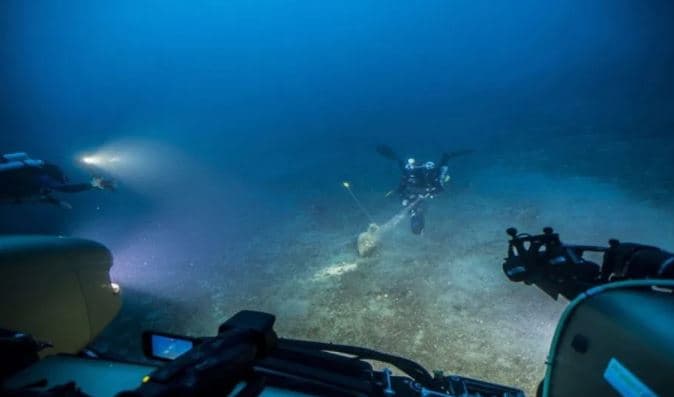
The recent exploration of an extensive offshore aquifer off the northeastern United States, spanning from New Jersey to Maine, has revealed a substantial body of freshwater beneath the Atlantic Ocean. This significant discovery, which follows a previous finding made nearly 50 years ago, involved a group of international scientists extracting nearly 50,000 liters of freshwater from a depth of up to 1,289 feet. This aquifer could potentially serve a metropolis like New York City for 800 years.
Key Facts and Figures:
- Location: Offshore aquifer from New Jersey to Maine.
- Depth: Freshwater extracted from depths of 30 to 50 kilometers under the sea floor.
- Volume: Estimated to contain enough freshwater to supply New York City for 800 years.
- Study Reference: A 2021 study published in Environmental Research Letters estimated a total of one million cubic kilometers of freshwater exists beneath the sea floor, representing about 10% of all terrestrial fresh groundwater.
Overview of Offshore Aquifers:
- Definition: Offshore aquifers consist of permeable rock or sediment layers that hold freshwater, located beneath the sea floor.
- Formation Theories: Freshwater may have accumulated during past ice ages when sea levels were lower, or through connections with onshore aquifers.
- Significance: They represent largely untapped freshwater resources, potentially alleviating water scarcity exacerbated by global warming and increased demand.
Global Context and Water Crisis:
- Current Situation: A 2023 United Nations report warns of a looming water crisis, with global demand expected to outstrip supply by 40% by 2030, influenced by climate change, pollution, and improper water use.
- Expert Insights: Johan Rockstrom from the Potsdam Institute highlights this situation as a multi-faceted water crisis affecting global hydrology.
Challenges in Utilization:
- Economic Viability: Offshore drilling incurs high costs, with recent explorations costing approximately $25 million.
- Technical Feasibility: Creating wells beneath the ocean, managing transportation of water onshore, and controlling potential saltwater intrusion are significant engineering challenges.
- Ecological Impact: The effect of water extraction on marine ecosystems remains uncertain.
- Sociopolitical Issues: Questions of governance arise regarding water management and the rights of indigenous and coastal communities in the extraction processes.
Conclusion:
The discovery of freshwater in offshore aquifers presents promising opportunities for addressing impending water shortages. Nevertheless, the operational challenges, ecological considerations, and legal complexities of utilizing these resources necessitate thorough research and thought-out policies before large-scale extraction can be realized. Scientists are currently undertaking sample analysis to determine the sustainability of these aquifers as renewable resources.
Important Sentences:
- A US government ship discovered freshwater while drilling off the northeastern coast nearly 50 years ago.
- The newly confirmed aquifer stretches from New Jersey to Maine and could supply New York City for 800 years.
- Offshore aquifers can hold more freshwater than all the historical withdrawals from terrestrial aquifers.
- A 2023 UN report predicts a 40% shortfall in global freshwater supply by 2030 due to climate change and poor resource management.
- Significant challenges include high drilling costs, ecological impacts, and governance issues related to resource management.
Key Terms & Concepts
| Atlantic Ocean | Location of aquifer discovery |
| New Jersey | Starting point of aquifer |
| Maine | Ending point of aquifer |
| Colorado School of Mines | Institution conducting research |
| Environmental Research Letters | Publication of study |
| United Nations | Source of water crisis report |
| Potsdam Institute for Climate Impact Research | Research institute on climate impact |
| Global Commission on the Economics of Water | Commission addressing water issues |