iAspirants
Current AffairsPrelims PYQsUPSC CSE SyllabusUPSC CSE StrategyBlogsPricing
Login
iAspirants
Current AffairsPrelims PYQsUPSC CSE SyllabusUPSC CSE StrategyBlogsPricingContact UsLoginSignUp
iAspirants

Your AI-powered companion for UPSC preparation.

Study Resources

  • Current Affairs
  • Prelims PYQs
  • UPSC CSE Syllabus
  • UPSC CSE Strategy
  • Blogs

Practice & Plans

  • Mains Answer Evaluation
  • Pricing
  • Sign Up
  • Login

Company

  • Home
  • About Us
  • Contact Us
  • FAQs

Legal

  • Privacy Policy
  • Terms & Conditions
  • Return Policy

© 2026 iAspirants, Inc. All rights reserved.

  1. Blogs
  2. Science and Technology

Google Unveils Gemini 4 Argon AI

Published on: 02-Oct-2026

Source: Indian Express

Share this post

Google Unveils Gemini 4 Argon AI

Article Summary

Summary of Google’s AI Model "Gemini 4 Argon": Key Information and Developments

  • Model Name: Gemini 4 Argon
  • Launch Date: Introduced on September 30, 2026.

Key Features:

  • Capabilities:
    • Designed for long-horizon tasks requiring deep reasoning.
    • Proficient in coding, legal, and financial domains.
    • Self-sufficient in detecting, verifying, and fixing software vulnerabilities.

Cybersecurity Role:

  • Identified a significant security vulnerability in a healthcare software used globally, emphasizing its advanced cybersecurity potential.
  • Access limited to trusted cybersecurity partners due to risks associated with its capabilities.

Pricing Model:

  • Initial pricing established at:
    • $2 per million input tokens.
    • $10 per million output tokens.
    • Cached input tokens priced at a 95% discount.

Token Limitations:

  • Expanded output token limit from 64,000 to 1,000,000 to facilitate solving complex problems and enhance reasoning depth.

Performance Metrics:

  • Achieved a benchmark score of:
    • 77.9% on DeepSWE v1.1 (real-world software tasks).
    • 91.7% on LVBench (video understanding).
    • First place on CWE-bench v1 (security vulnerability remediation) with a score of 68%.
    • Topped Vals Index for finance, coding, legal, and tax work.

Operational Application:

  • Used by Google engineers for tasks like debugging and algorithm design.
  • Supports optimization in quantum computing, enhancing resource efficiency significantly.

Safeguards and Misuse Prevention:

  • Implemented to prevent malicious activity, including:
    • Responses to harmful requests are systematically rejected.
    • Resilient to indirect prompt injection attacks.
    • Enhanced monitoring for traceability of actions and decision-making.

Recommendations and Future Precautions:

  • Post-launch, heightened concerns arose regarding autonomous AI systems, prompting calls for a responsible pace in AI development to safeguard against potential misuse.
  • Joint voluntary safety pact established among major tech firms including Google to assess AI effectiveness and developer intentions.

Government and International Context:

  • Engagement with the U.S. government, particularly collaboration with independent auditors to ensure adherence to AI operational integrity.
  • Discussion around cybersecurity threats influenced by the deployment of advanced AI models in military and intelligence contexts.

Conclusion:

Google's Gemini 4 Argon signifies a leap in AI capabilities, particularly regarding cybersecurity and complex task management. The ongoing discourse about safety and functionality reflects a broader trend of multidisciplinary collaboration to ensure the responsible evolution of AI technologies.

Key Terms & Concepts

Gemini 4 ArgonNew frontier AI model
Healthcare software vulnerabilitySecurity issue discovered
Fairwind ProgrammeProgram for trusted defenders
$2 per million input tokensPricing model at launch
1 million tokensExpanded output token limit
77.9 percentTop score on DeepSWE benchmark
91.7 percentScore on LVBench
68 percentTop score on CWE-bench
May 2026Date of cybersecurity test incident
AI safety pactAgreement on safety measures
Pentagon designationSecurity supply chain risk

Mind Map for UPSC Civil Services Revision

Turn UPSC Civil Services Current Affairs Into Exam-Ready Notes

Reading Science and Technology current affairs is half the work. Revise them with ready-made notes and test what actually stuck.

  • Daily UPSC Civil Services current affairs analysis
  • Revision notes, mind maps & MCQs
  • Prelims mock tests with instant results

Related UPSC Civil Services Current Affairs Articles

Rise of Artificial Intelligence Technology
Science and Technology16-Nov-2026

Rise of Artificial Intelligence Technology

  1. Historical Context of AI:

    • Early AI representation: The Mechanical Turk, an 18th-century automaton designed to play chess, was a significant feat where a human chess master operated from within, misleading the audience to believe in its intelligence.
Practise Mains answer writingUpload a handwritten answer and get it evaluated

Key Figures and Contributions:

  • Charles Babbage: Recognized for conceptualizing the first mechanical computer, the Analytical Engine. This laid foundational work for modern computing and AI sectors.
  • Concept of Intelligence in AI:

    • The Mechanical Turk exemplified the illusion of artificial intelligence where mechanical mechanisms simulated intelligent behavior, reflecting societal perceptions of intelligence and technology.
  • Evolution of AI:

    • Current entities like ChatGPT have evolved from early, simplistic automata to sophisticated systems performing complex tasks, indicating significant advancements in AI capabilities.
  • Technological Progression:

    • AI's rapid development highlights a shift from basic automated processes to advanced machine learning and human-like problem-solving capabilities.
  • Cultural Reference and Public Perception:

    • The fascination with AI akin to the awe generated by the Mechanical Turk emphasizes historical patterns of human interaction with machines and the ongoing journey towards recognizing and understanding intelligence—both artificial and human.
  • Scientific Exploration:

    • The underlying mechanisms of machines, such as the Mechanical Turk, underpin critical principles in AI's functioning today, integrating principles from various scientific disciplines including mathematics, cognitive science, and engineering.
  • By understanding the historical context of AI, its early manifestations, and notable contributions from key figures in the field, we gain deeper insight into the current landscape and future potential of AI technologies.

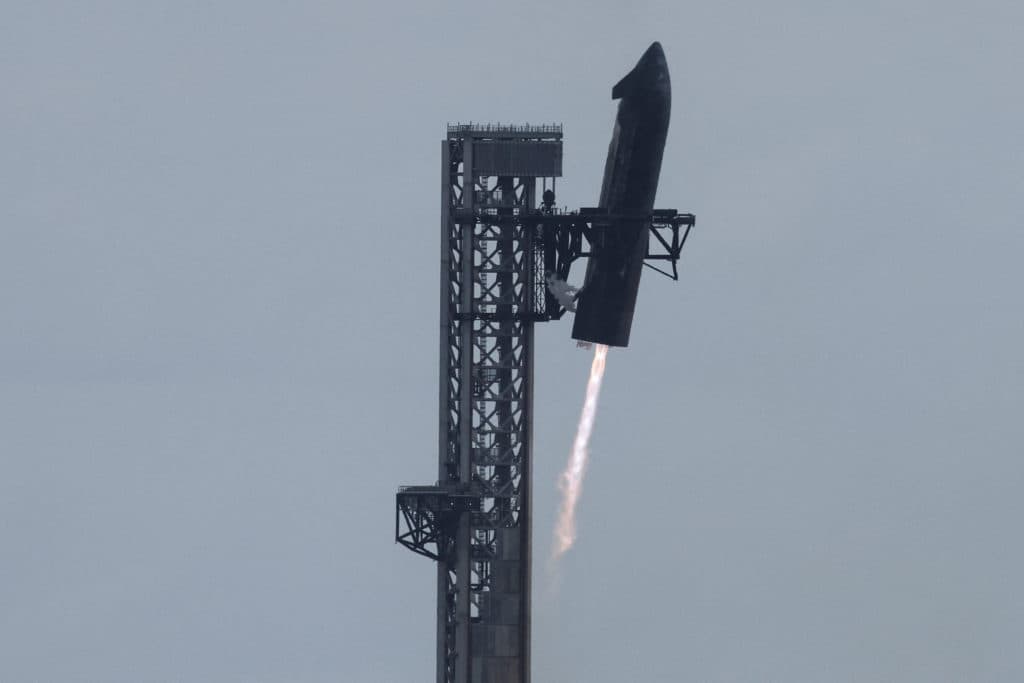
    SpaceX's Starship Captured on Return
    Science and Technology15-Nov-2026

    SpaceX's Starship Captured on Return

    • SpaceX Starship Mission:

      • Successful recovery of Starship spacecraft via mechanical arms after a 22-hour mission.
      • First-ever midair catch of Starship, aimed at demonstrating full reusability for future space missions (moon and Mars).
    • Booster Launch and Recovery:

      • The first-stage booster exploded post-liftoff, indicating a failure in its recovery. Previous successful catches validate the technology.
      • The booster’s guidance system malfunctioned leading to self-destruction during descent.
    • Technical Specifications:

      • Starship is the world’s largest rocket at 407 feet (124 meters).
      • Completed 14 orbits around Earth, enhancing the spacecraft's performance compared to previous missions.
    • NASA Involvement:

      • NASA is investing billions in the Starship program for lunar missions under the Artemis program, which focuses on landing astronauts on the Moon and establishing a lunar base.
      • Artemis III Mission: Planned docking with Starship and Blue Origin’s lunar lander, targeting 2028 for Artemis IV, marking the first moon landing since Apollo missions.
    • Future Launches:

      • SpaceX aims to commence launches from Kennedy Space Center in Florida shortly, crucial for upcoming NASA missions.
    • Scientific and Technological Significance:

      • The mission utilized SpaceX's Starlink technology for live streaming during the flight.
      • SpaceX's efforts contribute to long-term goals of colonizing Mars and enhancing space travel technologies.
    • Judicial and Regulatory Context:

      • The success and challenges faced by SpaceX exemplify the private sector's role in space exploration, reflecting trends in government partnerships for space technology development.

    These highlights reflect key facts and developments surrounding the SpaceX Starship mission relevant for examinations focused on space technology and international collaborations in scientific advancement.

    Supporting Social Entrepreneurs with Tech
    Economic and Social Development14-Nov-2026

    Supporting Social Entrepreneurs with Tech

    Overview of the^delta and Its Initiatives

    • Established: 2018, as an incubator under the Atal Innovation Mission.
    • Focus: Supports social entrepreneurs tackling complex social issues through incubation and Grand Challenges.
    • Current Cohorts: 13th for incubators and 8th for accelerators.
    • Areas of Work: Healthcare, skilling, livelihoods, climate, financial inclusion, access to justice.
    • Impact: Supported 148 organizations, mobilizing Rs 1,400 crore in follow-on capital.

    Notable Initiatives and Programs

    • Pragati AI for Impact: Focuses on using AI for social enterprises to solve real-world problems and enhance inclusion.
    • Grand Challenges: Research-led initiatives to spur innovation by identifying systemic gaps. Prize funding starting from Rs. 2.5 crore, recently increasing to Rs. 6.5 crore for specific initiatives.
    • Climate Big Bets 2047: Focus on regenerative agriculture and sustainable practices for enhancing soil health and farmer income.

    Technological Integration

    • Tech Usage: Approximately 25% of supported nonprofits use technology as a key element in scaling operations.
    • Examples of Technological Solutions:
      • Rocket Learning: Utilizes WhatsApp to deliver educational content to preschool children, reaching 6 million children across 16 states.
      • Khushi Baby: A digital platform for monitoring children's health through community health workers in India.
      • Adalat AI: Builds AI solutions for courts, reaching over 6,300 courtrooms.

    Policy and Economic Insights

    • Inclusivity in Economy: Emphasis on supporting women from underserved communities to engage in the AI economy.
    • Government Role: Importance of aligning solutions with government needs for broader adoption and success in scaling.

    Environmental Initiatives

    • Climate Focus: The Rapid Regen Challenge aims for sustainable agriculture practices and farmer livelihood improvement, targeting a 25% income increase for involved farmers.

    Impact and Results

    • Non-profit Reach: Impacting nearly half of India’s government and government-aided schools through education programs.
    • Employment and Engagement: Helped mobilize over 370 entrepreneurs and extensive engagement with educational and health sectors.

    Challenges and Learnings

    • Adoption Barriers: Issues with technology adoption due to behavioral change requirements; installing tech does not guarantee its effective use.
    • Market Viability: Necessity to understand the buyer and payer dynamics for effective scaling; often relies on government procurement.
    • Outcome Discrepancies: Transition from training to actual employment retention requires supportive mechanisms.

    Grand Challenge Examples & Innovations

    • S4S Technologies: Solar-powered food processing to minimize post-harvest losses.
    • BioPrime Agri: Biotechnology applications for enhancing crop productivity under environmental stress.
    • Smartterra: AI tools for water leak detection, improving municipal water management.

    Conclusion

    The^delta exemplifies a robust model for facilitating social entrepreneurship through innovative funding, strategic support, and technology integration, addressing critical social and environmental issues while fostering inclusive economic growth.