iAspirants
Current AffairsPrelims PYQsUPSC CSE SyllabusUPSC CSE StrategyBlogsPricing
Login
iAspirants
Current AffairsPrelims PYQsUPSC CSE SyllabusUPSC CSE StrategyBlogsPricingContact UsLoginSignUp
iAspirants

Your AI-powered companion for UPSC preparation.

Study Resources

  • Current Affairs
  • Prelims PYQs
  • UPSC CSE Syllabus
  • UPSC CSE Strategy
  • Blogs

Practice & Plans

  • Mains Answer Evaluation
  • Pricing
  • Sign Up
  • Login

Company

  • Home
  • About Us
  • Contact Us
  • FAQs

Legal

  • Privacy Policy
  • Terms & Conditions
  • Return Policy

© 2026 iAspirants, Inc. All rights reserved.

  1. Blogs
  2. Science and Technology

SpaceX's Starship Captured on Return

Published on: 15-Nov-2026

Source: The Hindu

Share this post

SpaceX's Starship Captured on Return

Article Summary

  • SpaceX Starship Mission:

    • Successful recovery of Starship spacecraft via mechanical arms after a 22-hour mission.
    • First-ever midair catch of Starship, aimed at demonstrating full reusability for future space missions (moon and Mars).
  • Booster Launch and Recovery:

    • The first-stage booster exploded post-liftoff, indicating a failure in its recovery. Previous successful catches validate the technology.
    • The booster’s guidance system malfunctioned leading to self-destruction during descent.
  • Technical Specifications:

    • Starship is the world’s largest rocket at 407 feet (124 meters).
    • Completed 14 orbits around Earth, enhancing the spacecraft's performance compared to previous missions.
  • NASA Involvement:

    • NASA is investing billions in the Starship program for lunar missions under the Artemis program, which focuses on landing astronauts on the Moon and establishing a lunar base.
    • Artemis III Mission: Planned docking with Starship and Blue Origin’s lunar lander, targeting 2028 for Artemis IV, marking the first moon landing since Apollo missions.
  • Future Launches:

    • SpaceX aims to commence launches from Kennedy Space Center in Florida shortly, crucial for upcoming NASA missions.
  • Scientific and Technological Significance:

    • The mission utilized SpaceX's Starlink technology for live streaming during the flight.
    • SpaceX's efforts contribute to long-term goals of colonizing Mars and enhancing space travel technologies.
  • Judicial and Regulatory Context:

    • The success and challenges faced by SpaceX exemplify the private sector's role in space exploration, reflecting trends in government partnerships for space technology development.

These highlights reflect key facts and developments surrounding the SpaceX Starship mission relevant for examinations focused on space technology and international collaborations in scientific advancement.

Key Terms & Concepts

StarshipSpacecraft for moon and Mars
SpaceXCompany developing reusable rockets
NASAAgency funding lunar missions
Artemis programLunar exploration initiative
407-foot rocketSize of the Starship
26 advanced Starlink satellitesSatellites deployed during mission
2028Target year for Artemis IV
14 laps around EarthCompleted by Starship mission
Gulf of MexicoLocation of booster wreckage
NASA’s Kennedy Space CenterFuture launch site for Starship
Artemis IIIUpcoming lunar mission
Blue Origin’s Blue MoonCompetition for lunar landings
2023

Mind Map for UPSC Civil Services Revision

Turn UPSC Civil Services Current Affairs Into Exam-Ready Notes

Reading Science and Technology current affairs is half the work. Revise them with ready-made notes and test what actually stuck.

  • Daily UPSC Civil Services current affairs analysis
  • Revision notes, mind maps & MCQs
  • Prelims mock tests with instant results

Related UPSC Civil Services Current Affairs Articles

Air Pollution Crisis in India
Environment and Ecology15-Nov-2026

Air Pollution Crisis in India

Air Pollution in India: Key Facts and Insights

Constitution and Legal Framework

  • Fundamental Rights: Article 21 (Right to Life) and Article 47 (Duty of the State to raise the level of nutrition and the standard of living) emphasize the government's responsibility to ensure clean air.
  • National Green Tribunal: This adjudicatory body addresses environmental matters, yet the enforcement of its decisions remains inconsistent.
Year of Starship's 15th flight
Elon MuskLeader of SpaceX
Practise Mains answer writingUpload a handwritten answer and get it evaluated

Government Initiatives and Policies

  • National Clean Air Programme (NCAP): Launched to improve air quality in over 100 cities by implementing pollution control measures.
  • Parivartan Scheme: Offers subsidies for replacing commercial vehicles with BS VI standard vehicles or transitioning to Electric Vehicles (EVs) in the National Capital Region (NCR). It aims to reduce vehicular emissions amidst severe air quality issues.
    • Current Status: Only 56,000 vehicles registered under the scheme; few operators accessed subsidies, indicating insufficient financial viability.

Economic Impact

  • Daily Wage Laborers: A 15-day ban on construction due to pollution left 70% of the labor force in regions like Gurgaon and Manesar without financial support. The economic burdens of anti-pollution measures often disproportionately affect poorer segments.
  • Industry Transition: Several industries are mandated to switch to cleaner fuels, yet execution challenges remain due to inadequate state capacities and inconsistent political pressures across states.

Environmental Challenges

  • Pollution Control vs. Economic Survival: Numerous regulations (e.g., on firecrackers, construction dust) primarily burden the economically vulnerable, raising concerns about the prioritization of environmentalism at the expense of social equity.
  • Federalism Issues: Pollution management faces hurdles as ecological boundaries (air sheds) do not align with political boundaries, allowing states to externalize environmental costs.

Societal and Behavioral Observations

  • Public engagement with pollution levels focuses on the Air Quality Index (AQI) but lacks broader accountability mechanisms.
  • There exists skepticism towards governmental initiatives as many are viewed as ritualistic rather than effective; for example, the use of water sprinkling mist cannons and anti-smog guns.

International Perspectives and Comparisons

  • Environment vs. Economy Debate: Similar to discussions observed internationally, India's anti-pollution measures have come under scrutiny for favoring economically privileged classes over the marginalized who experience the brunt of pollution.

Science and Technology Developments

  • Transition towards cleaner energy sources and the broader integration of Electric Vehicles (EVs) is crucial; however, strategic implementation and investment are still lacking.

Conclusion

  • Addressing air pollution in India necessitates a holistic approach that considers health, economic stability, and environmental sustainability. Effective execution of government schemes, equitable distribution of economic burdens, and a unified national strategy are essential to foster a cleaner environment for all citizens.
Nehru's Influence on Indian Science
Science and Technology15-Nov-2026

Nehru's Influence on Indian Science

Summary of Key Points on Jawaharlal Nehru's Influence on Science and Technology in India

Background and Early Education

  • Jawaharlal Nehru studied natural sciences (geology, chemistry, botany) at Trinity College, Cambridge, completing the Natural Science Tripos with second-class honors.
  • His engagement with science persisted throughout his political career, postulating that science could resolve issues of hunger and poverty.

Pre-Independence Contributions

  • Prominent Indian scientists before Independence included Jagadish Chandra Bose, C.V. Raman, and Homi J. Bhabha, laying a strong foundation for scientific research.
  • The National Planning Committee was established in 1938 under Nehru during Subhas Chandra Bose's presidency to envision India's economic future.

Post-Independence Scientific Advancements

  • Nehru was a staunch advocate for science, which led to the thriving of scientific institutions post-Independence.
  • The Atomic Energy Commission was established on August 10, 1948, initiating India’s indigenous atomic energy program, heavily influenced by Homi Bhabha.
  • The Department of Atomic Energy (DAE) was created in 1954, with the Prime Minister overseeing it directly.

Educational Reforms

  • Nehru emphasized the establishment of technological institutions, leading to the creation of the Indian Institutes of Technology (IITs), beginning with IIT Kharagpur in 1951.
  • The objective was to produce skilled scientists and technologists for national development and self-reliance.

Legislative Framework

  • The Scientific Policy Resolution was adopted by Parliament on March 4, 1958, highlighting the government’s commitment to using science and technology for national development. It stressed the importance of technology, raw materials, and capital.

Government Investment in Science

  • By 1964, the Indian government allocated Rs. 550 million to research, a significant increase from Rs. 24 million in 1947, showcasing a robust commitment to scientific advancement.

Vision of Science and Society

  • Nehru believed in adopting a scientific approach to all problems, advocating that science should influence every aspect of life, including politics and social issues.
  • He articulated a vision where socialism aligns with a scientific method to address societal challenges.

Interplay of Science and Religion

  • Nehru argued for compatibility between religious thought and scientific inquiry, emphasizing rationalism rooted in Buddhism as a method of psychological analysis.

Need for Scientific Temper

  • He underscored the importance of developing a scientific mind and temper, advocating that this approach is where true understanding and advances in science will stem from.

Conclusion

Nehru’s contributions laid a thick foundation for India’s scientific and technological frameworks. His belief in science as a method of inquiry and problem-solving has resonated through India’s developmental strategies and policy formations. The subsequent growth in scientific investment and education in India reflects his enduring legacy towards fostering a scientifically informed society.

Supporting Social Entrepreneurs with Tech
Economic and Social Development14-Nov-2026

Supporting Social Entrepreneurs with Tech

Overview of the^delta and Its Initiatives

  • Established: 2018, as an incubator under the Atal Innovation Mission.
  • Focus: Supports social entrepreneurs tackling complex social issues through incubation and Grand Challenges.
  • Current Cohorts: 13th for incubators and 8th for accelerators.
  • Areas of Work: Healthcare, skilling, livelihoods, climate, financial inclusion, access to justice.
  • Impact: Supported 148 organizations, mobilizing Rs 1,400 crore in follow-on capital.

Notable Initiatives and Programs

  • Pragati AI for Impact: Focuses on using AI for social enterprises to solve real-world problems and enhance inclusion.
  • Grand Challenges: Research-led initiatives to spur innovation by identifying systemic gaps. Prize funding starting from Rs. 2.5 crore, recently increasing to Rs. 6.5 crore for specific initiatives.
  • Climate Big Bets 2047: Focus on regenerative agriculture and sustainable practices for enhancing soil health and farmer income.

Technological Integration

  • Tech Usage: Approximately 25% of supported nonprofits use technology as a key element in scaling operations.
  • Examples of Technological Solutions:
    • Rocket Learning: Utilizes WhatsApp to deliver educational content to preschool children, reaching 6 million children across 16 states.
    • Khushi Baby: A digital platform for monitoring children's health through community health workers in India.
    • Adalat AI: Builds AI solutions for courts, reaching over 6,300 courtrooms.

Policy and Economic Insights

  • Inclusivity in Economy: Emphasis on supporting women from underserved communities to engage in the AI economy.
  • Government Role: Importance of aligning solutions with government needs for broader adoption and success in scaling.

Environmental Initiatives

  • Climate Focus: The Rapid Regen Challenge aims for sustainable agriculture practices and farmer livelihood improvement, targeting a 25% income increase for involved farmers.

Impact and Results

  • Non-profit Reach: Impacting nearly half of India’s government and government-aided schools through education programs.
  • Employment and Engagement: Helped mobilize over 370 entrepreneurs and extensive engagement with educational and health sectors.

Challenges and Learnings

  • Adoption Barriers: Issues with technology adoption due to behavioral change requirements; installing tech does not guarantee its effective use.
  • Market Viability: Necessity to understand the buyer and payer dynamics for effective scaling; often relies on government procurement.
  • Outcome Discrepancies: Transition from training to actual employment retention requires supportive mechanisms.

Grand Challenge Examples & Innovations

  • S4S Technologies: Solar-powered food processing to minimize post-harvest losses.
  • BioPrime Agri: Biotechnology applications for enhancing crop productivity under environmental stress.
  • Smartterra: AI tools for water leak detection, improving municipal water management.

Conclusion

The^delta exemplifies a robust model for facilitating social entrepreneurship through innovative funding, strategic support, and technology integration, addressing critical social and environmental issues while fostering inclusive economic growth.

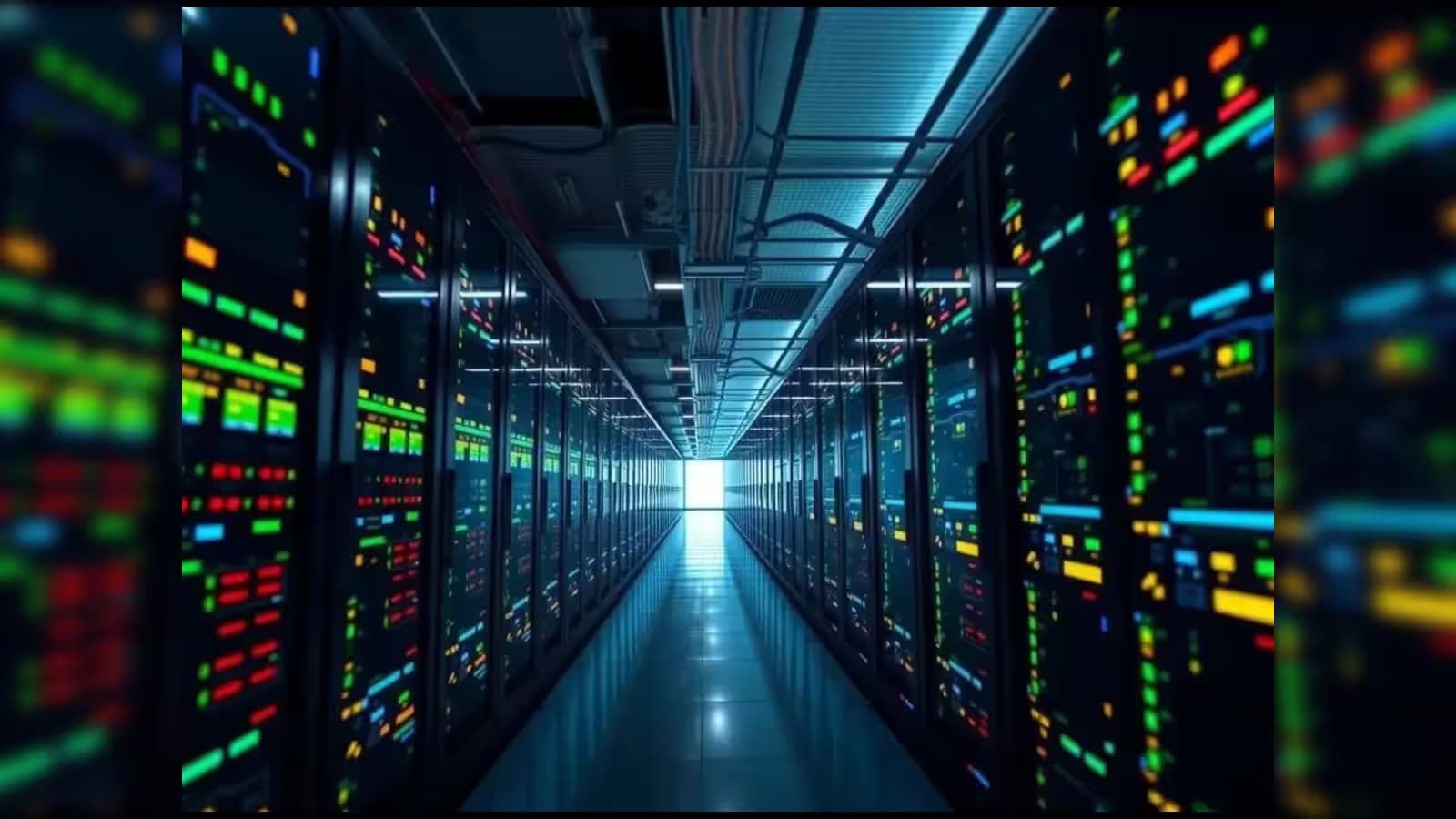
Concerns Over New Data Centres
Science and Technology13-Nov-2026

Concerns Over New Data Centres

Notes on Data Centres and AI Expansion

Overview of Data Centres

  • Data centres support cloud computing, search, streaming, and increasingly, AI applications.
  • AI models, such as Claude and ChatGPT, require extensive computing power, with data centres housing GPUs and TPUs for processing.

U.S. Data Centre Market

  • 1,500+ data centre projects are currently underway in the U.S., marking it as the dominant global data centre market (Cushman & Wakefield).
  • Texas, specifically Dallas, is experiencing significant growth, with 180 existing data centres and 25 under construction, adding approximately 1.34 GW capacity.
  • Virginia has over 11 GW of operational data centre capacity (2026).

India's Data Centre Growth

  • India’s installed data centre capacity rose from 375 MW (2020) to approximately 1,575 MW (2023).
  • Central Electricity Authority forecasts demand could reach nearly 17 GW by 2031-32.
  • Google is investing $15 billion in an AI hub in Visakhapatnam, which includes a data centre with an initial capacity of 1 GW.

Legislative and Regulatory Considerations

  • Community opposition to data centres has risen; a survey indicated around 75% of Americans oppose new local data centres.
  • The Texas government paused new approvals for data centre constructions pending a thorough review of power grid impacts.

Environmental and Economic Implications

  • Concerns include increased electricity demand; Irish data centres represented 23% of the nation’s electricity consumption in 2025 (Central Statistics Office, Ireland).
  • Data centres can contribute to local economies through job creation and tax revenue, yet residents worry about utility strains.

Hyperscalers and Technological Infrastructure

  • Major players in the cloud services market (hyperscalers) include Amazon Web Services, Google, Microsoft, and Alphabet, with their infrastructure supporting global demand.
  • Distributed computing allows hyperscalers to manage concurrent data processing across multiple servers.

Cooling Systems and Sustainability Innovations

  • New data centre designs incorporate closed-loop cooling systems, which significantly reduce water usage.
  • The debate continues regarding the energy and water consumption footprints of these facilities amidst regulatory requirements in the EU for energy performance disclosure.

Community Sentiment and Future Directions

  • Local residents express concerns about noise pollution and energy demands from data centres.
  • There is an ongoing discussion about balancing technological advancement with community needs, including potential economic benefits versus environmental and social costs.
  • Political dynamics indicate that growing scrutiny of data centre developments may influence future construction policies, particularly in states that recently endorsed stronger protective measures.

Conclusion and Future Outlook

  • The future of data centres and AI integration remains a focal point for economic and technological infrastructure.
  • Considering political trends and community concerns will shape the trajectory of data centre expansion in both the U.S. and India.
  • The effective translation of data centre capacity into real economic benefits for local communities will be crucial in addressing potential backlash against these facilities.