iAspirants
Current AffairsPrelims PYQsUPSC CSE SyllabusUPSC CSE StrategyBlogsPricing
Login
iAspirants

Your AI-powered companion for UPSC preparation.

Quick Links

  • Home
  • About Us
  • Current Affairs
  • Prelims PYQs
  • UPSC CSE Syllabus
  • UPSC CSE Strategy
  • Blogs

Company

  • Pricing
  • FAQs
  • Contact Us
  • Login

Legal

  • Privacy Policy
  • Terms & Conditions
  • Return Policy

© 2025 iAspirants, Inc. All rights reserved.

  1. Blogs
  2. Economic and Social Development

Growth of Project Investments in India

Published on: 28-Sep-2026

Source: Indian Express

Share this post
Growth of Project Investments in India

Article Summary

Economic and Investment Insights: RBI Study Summary

  • Overall Project Sanctioning:

    • In the fiscal year 2025-26, banks and financial institutions sanctioned projects totaling Rs 4.4 lakh crore, up from Rs 3.7 lakh crore in 2024-25, indicating a 19% increase.
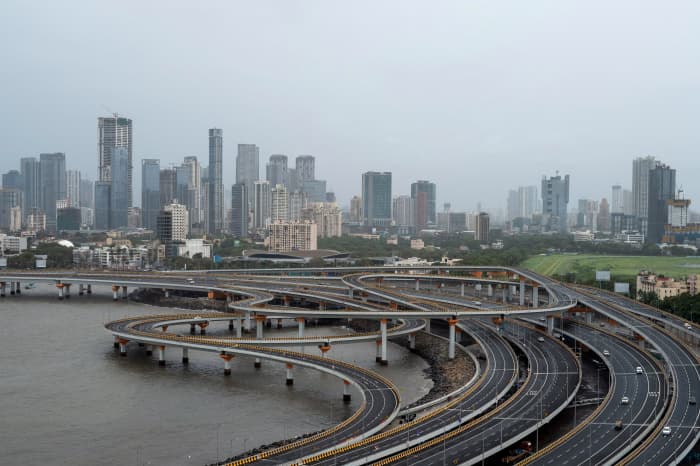
    • Maharashtra became the largest destination, sanctioning projects worth Rs 88,880 crore (20.2%); Gujarat followed with Rs 78,760 crore (17.9%), and Rajasthan accounted for Rs 48,840 crore (11.1%).
    • The six leading states (Maharashtra, Gujarat, Rajasthan, Karnataka, Andhra Pradesh, Tamil Nadu) together reported Rs 2.96 lakh crore, comprising 67.1% of the total project costs for FY26.
  • Project Distribution:

    • Significant shifts in the geographical distribution of investments were noted; Maharashtra and Rajasthan saw increased shares while Gujarat's share declined from 20.6% in FY25 to 17.9% in FY26.
    • The number of projects sanctioned rose from 907 in FY25 to 1,032 in FY26.
  • Investment Sources:

    • Of the total project costs, approximately 55% (Rs 2.4 lakh crore) was financed directly by banks and financial institutions.
    • Beyond the banks' financing, 509 private non-financial companies raised about Rs 1 lakh crore through external commercial borrowings (ECBs) and 298 companies raised Rs 23,809 crore via domestic equity issuances in FY26.
  • Investment Intentions:

    • A total of 1,839 projects involving Rs 5.6 lakh crore were recorded for FY26, representing increases of 16% in project numbers and 12% in investment values compared to FY25.
  • Project Size Dynamics:

    • Smaller projects (less than Rs 100 crore) continued to dominate the numbers, yet larger projects (Rs 5,000 crore and above) significantly influenced the total project cost.
    • The post-Covid period showed an increase in the number of larger projects.
  • Outlook:

    • The RBI forecasts a healthy investment outlook for 2026-27, suggesting that the private-sector investment cycle is anticipated to gather momentum, potentially influenced by bank financing, ECBs, and equity market activities.
  • Key Takeaways:

    • Significant growth and changes in project sanctioning dynamics reflect a strengthening investment cycle in India.
    • Continuous monitoring of state-level investment trends and funding channels will be crucial to understanding the economic landscape and the trajectory of corporate investments moving forward.

Key Terms & Concepts

MaharashtraLeading state in project sanctions
GujaratSecond highest project sanctions
RajasthanThird highest project sanctions
Reserve Bank of IndiaSource of investment data
Rs 4.4 lakh croreTotal project cost sanctioned
2025-26Fiscal year of data
200 croreThreshold for smaller projects
1,839 projectsTotal projects recorded
12%Increase in investment value
1,000 croreLower range for larger projects
1 lakh croreFunds raised through ECBs
55%Banks financed project costs

Mind Map for UPSC Civil Services Revision

Turn UPSC Civil Services Current Affairs Into Exam-Ready Notes

Reading Economic and Social Development current affairs is half the work. Revise them with ready-made notes and test what actually stuck.

  • Daily UPSC Civil Services current affairs analysis
  • Revision notes, mind maps & MCQs
  • Prelims mock tests with instant results

Related UPSC Civil Services Current Affairs Articles

Caste Discrimination Cases at IIT
National and International Importance28-Sep-2026

Caste Discrimination Cases at IIT

  • Incident Overview: On September 18, 20-year-old Sahil Wakode, a second-year B.Tech student at IIT Bombay, died by suicide. His parents alleged caste discrimination, filing an FIR against IIT Bombay faculty under the Scheduled Castes and Scheduled Tribes (Prevention of Atrocities) Act.

  • :

Institutional Response
  • IIT Bombay has set up a 10-member inquiry committee to investigate the circumstances of Sahil's death.
  • The institute acknowledged 18 demands from students, including:
    • Action against involved individuals and an apology for defamation.
    • Establishing a code of conduct for faculty and student representation in committees.
    • Provision of mental health support: one-on-one interactions with the Dean, 24/7 access to a psychiatrist, and at least one counselor per 250 students.
    • Independent auditing of the Student Wellness Centre and counselors in every hostel.
  • The Director of IIT Bombay, Shireesh Kedare, signed the memorandum from students and issued an apology for the previous statement about Sahil’s incident.
  • Protests: Ongoing student protests characterize IIT Bombay's response as inadequate, with demands including the resignation of the Director and Dean Doolla. A student group claimed a pattern of ignoring mental health issues and linked four previous suicides to inadequate institutional support.

  • Faculty Division: Faculty members are split on the issue, with some supporting Prof. Doolla, questioning the due process followed in Sahil’s case, and others criticizing the Faculty Forum for not representing the wider faculty opinion adequately.

  • Statistics on Caste Discrimination:

    • National Task Force report reveals that from 2018 to 2023, 13,600 students from disadvantaged communities dropped out of premier institutions:
      • Central Universities: 4,596 OBC, 2,424 SC, and 2,622 ST students.
      • IITs: 2,066 OBC, 1,068 SC, and 408 ST students.
      • IIMs: 163 OBC, 188 SC, and 91 ST students.
    • Notable dropouts occurred despite government support measures such as fee waivers and stipends.
  • Mental Health Context: The report by the National Task Force on students' mental health indicates severe academic stress as a significant contributing factor to the dropouts among underrepresented communities in higher education.

  • Support Services: The national helpline Tele MANAS is available at 14416 for persons in distress.

  • This summary emphasizes the key facts, statistics, institutional responses, and ongoing issues relevant to the suicide of Sahil Wakode and the implications regarding caste discrimination and student mental health in higher education institutions.

    Maharashtra Drought Threats and Historical Context
    Economic and Social Development27-Sep-2026

    Maharashtra Drought Threats and Historical Context

    Exam-Focused Notes on Drought in Maharashtra

    Historical Context

    • Drought Incidence: Maharashtra has experienced at least 15 droughts from 1960 to 2026, with the 1972 drought being unprecedented.
    • Impact of 1972 Drought: Affected 75-80% of Maharashtra's population (approximately 1.8-2 crore people). Key regions impacted included Marathwada and Vidarbha.
    • Historical Population Growth: Mumbai's population surged by approximately 3.5 lakh during the 1972 drought due to mass migration from rural areas.

    Government Response and Schemes

    • Employment Guarantee Scheme (EGS):

      • Introduced in March 1972 based on the principle that work is a fundamental right.
      • Provided alternative employment through public works (water conservation, well digging, etc.) for those affected by agricultural losses.
      • Initially enrolled nearly 15 lakh participants, ultimately absorbing around 1 crore workers.
      • Post-crisis, the EGS Act of 1978 mandated timely job provision, later influencing the Mahatma Gandhi National Rural Employment Guarantee Act (MGNREGA) of 2005.
    • Supplemental Nutrition Program:

      • Provided "sukdi," a calorie-rich food supplement, utilizing substandard imported wheat amidst domestic shortages.
    • Public Distribution System (PDS):

      • Became crucial for providing essential grains through fair-price shops during the 1972 crisis.

    Current Scenario

    • El Niño Impact: Current agricultural forecasts predict severe drought conditions in Maharashtra, potentially worse than 1972.
    • Current Drought Assessment: Out of 36 districts in Maharashtra, 21 are already logging significant rainfall deficits.

    Expert Opinions

    • Water Conservation Challenges: Experts like Pradeep Purandare highlight failures in contemporary water conservation efforts, accusing the state of utilizing outdated irrigation methods incompatible with current demands.

    Constitutional and Policy References

    • Fundamental Rights: EGS reflects Article 21 (Right to Life) as it addresses employment as a fundamental aspect of livelihood.
    • Government Schemes: EGS and its evolution into MGNREGA underline progressive governmental responses toward employment and rural empowerment.

    Economic Indicators

    • Financial Investment: In 1972, over Rs 200 crore was allocated to the EGS.
    • Long-term Economic Impact: The drought significantly challenged the cooperatively-driven agricultural economy of Maharashtra.

    Environmental Context

    • Agricultural Vulnerability: Maharashtra's agriculture, heavily rain-fed, is particularly susceptible to climate variations influenced by phenomena such as El Niño.
    • Biodiversity Impact: Drought conditions could threaten local biodiversity and farming communities reliant on agriculture.

    Inflection Points

    • The drastic measures taken during the 1972 drought laid foundational policies that presently inform disaster management and agricultural policies in India.

    Conclusion

    Maharashtra’s struggle with droughts historically underscores the importance of robust government intervention in crisis management and the ongoing necessity for innovations in water conservation and agricultural resilience strategies. Current climatic threats demand renewed attention to historical lessons and reforms in agricultural policy.

    Maharashtra Drought and Crop Impact
    Economic and Social Development27-Sep-2026

    Maharashtra Drought and Crop Impact

    Summary of Drought Situation in Maharashtra

    1. Drought Declaration:

      • Maharashtra government declared drought in approximately 265 of its 358 tehsils (about 74% of the state).
      • A rainfall deficit of 18% recorded in the state, compared to a national average deficit of 13%.
    2. Rainfall Distribution:

      • Significant regional variation in rainfall, with Marathwada and Vidarbha regions being the most affected.
      • Marathwada recorded 38% less rain than normal, while Vidarbha saw a 27% deficiency.
    3. Affected Districts:

      • Critical deficits observed in districts: Solapur, Dharashiv, Latur, Hingoli, Jalna, Beed, and parts of Nanded, especially away from the Godavari river where rainfall levels dropped to around 50% of normal.
      • Western Maharashtra, including Nashik district (notably an onion-producing area), has seen 37% excess rainfall.
    4. Impact on Crop Yield:

      • Soybean crop yield expected to be significantly lower: 40-50% of normal in Marathwada; 60-70% in Vidarbha. Current market price for soyabean at Rs 5,600-5,700 per quintal, close to the Minimum Support Price (MSP) of Rs 5,705.
    Innovations in Rural Technology Ecosystem
    Economic and Social Development26-Sep-2026

    Innovations in Rural Technology Ecosystem

    Summary of Key Points

    Profiles and Contributions

    • Nagaraja Prakasam: Angel investor, fund advisor, and mentor with a focus on social enterprises, particularly in rural technology and appropriate technology.
    • Mentoring Initiatives: First resident mentor at NSRCEL, IIM-Bangalore; involved with IIT-Madras Rural Technology Business Incubator and IIM-Ahmedabad’s Centre for Innovation.

    Government and Policy Engagement

    • NITI Aayog, NABARD, Ministry of Rural Development: Contributed to policy design and rural innovation.
    • Kisan Mitr Platform: Established during the pandemic to curate and disseminate technologies for rural entrepreneurs. Aimed to empower communities and facilitate a reverse brain drain.

    Technological Innovations in Rural Development

    • Rural Smart Village Centers (RSVC): NABARD is coordinating the establishment of 200 centres across India to provide access to technologies and foster entrepreneurship.
    • Technology Focus: Emphasis on appropriate technologies pertinent to local contexts, diverging from typical IT sector applications.
      • Example: Ecosan Technologies for waste management and sanitation solutions.

    Startups and Innovations

    • Examples of Successful Startups:
      • GoCoop: Marketplace for rural handloom weavers connecting them to global buyers; leverages carbon credits for sustainability.
      • Kosha.ai: Uses QR codes for traceability in textile markets, enhancing transparency in supply chains.
    • IIT Initiatives: RUTAG (Rural Technology Action Group) focuses on village problem-solving and technology implementation.

    Judicial and Development Milestones

    • ICAR: Various agricultural technologies curated via Kisan Mitr helped address practical rural needs.

    Challenges and Observations

    • Inappropriate Technology Transplants: Introduction of foreign technologies without local adaptation can lead to failures (e.g., biogas systems).
    • Local Conditions Consideration: Emphasis on technologies being relevant to Indian climatic and socio-economic situations is critical.
    • Educational Initiatives: Courses that encourage students to engage with rural communities to identify and solve real problems.

    Future Directions

    • Focus on Diverse Opportunities: A shift in traditional rural entrepreneurial activities (beyond food products) towards technology-enabled enterprises, ensuring greater economic resilience and innovation.
    • Integration and Ecosystem Development: Strengthening connections between entrepreneurs, technology, and institutions to enhance rural capacities.

    Economic Indicators and Impact

    • Enterprises Growth: Creating scalable models that incorporate local solutions to solve national challenges, potentially transforming rural economies.

    This summary encapsulates significant contributions in the field of rural development through technology and entrepreneurship and emphasizes the need for contextually relevant innovations.

  • More severe impact anticipated for arhar (pigeon pea) and chana (chickpea) crops due to prolonged growth periods and anticipated moisture stress from the ongoing El Niño phenomenon.
  • Current prices for arhar at Rs 9,000-9,200 per quintal (MSP: Rs 8,450) and chana at Rs 7,200 per quintal (MSP: Rs 5,875).
  • Future Projections and Concerns:

    • Anticipated rabi season crisis due to moisture depletion in soil, impacting sowing of rabi crops (such as chana and jowar) due to insufficient irrigation sources like reservoirs and borewells.
  • Ministries and Schemes:

    • The response to agricultural distress likely involves various ministries related to agriculture and rural development, which may activate schemes for drought relief, crop insurance, and support for farmers.
  • Long-term Agricultural Impact:

    • A significant long-term effect on the agricultural outputs and food security in the state, necessitating government interventions and strategic planning for future drought conditions.
  • Key Terms:

    • Minimum Support Price (MSP): Price at which the government purchases specified crops from farmers, ensuring a minimum income.
    • El Niño Phenomenon: A climate pattern characterized by the warming of sea surface temperatures in the Pacific Ocean, affecting global weather patterns.

    Understanding this drought situation is crucial as it sheds light on agricultural productivity, government intervention necessities, and the broader implications for food security in Maharashtra and India at large.