iAspirants
Historic Trilateral Summit in Shenzhen
Published on:
Source: Indian Express
Share this post
Article Summary
International Relations Summit - Key Points
Event Overview:
- President Xi Jinping hosted the first-ever trilateral summit with leaders of China, Russia, and the United States in Shenzhen on November 19, 2026.
Concept Introduction:
- The term "Shenzhen International System," coined by Wang Wen from Renmin University, suggests a new framework for international relations, likening it to historical agreements like Westphalia and Yalta.
Leadership Dynamics:
- Xi greeted Donald Trump at the airport, breaking protocol, emphasizing the importance of the summit.
- Vladimir Putin engaged with Xi prior to the main event, indicating strategic pre-summit dialogues.
Goals and Aspirations:
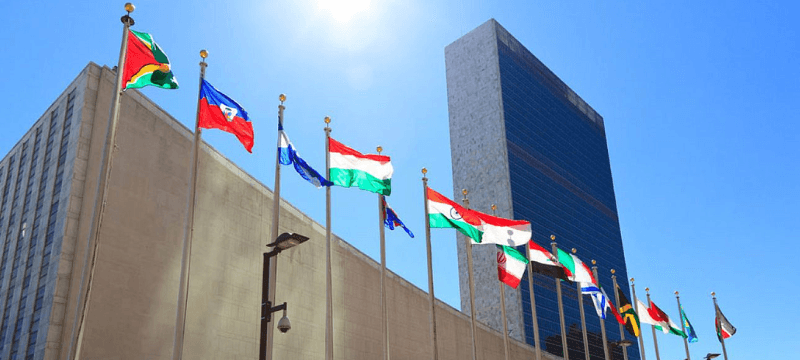
- Contrary to a "G-3" alliance aimed at sidelining other nations, the Shenzhen framework aims for a trilateral crisis management channel without undermining the United Nations Security Council (UNSC).
- Discussions are expected to focus on nuclear stability rather than disarmament, addressing threats from North Korea and nuclear proliferation in the Middle East.
Historical Context:
- The summit evokes comparisons to Yalta (1945), with an explicit narrative promoting the sovereignty of nations rather than great-power control.
- The meeting seeks to reinforce China, Russia, and the U.S. as co-architects of global peace, with historical ties discussed in the context of the World Anti-Fascist War.
Geopolitical Implications:
- The summit aims to reshape perceptions of alliances, particularly concerning member states like Japan, suggesting an intention to weaken the U.S.-Japan partnership.
- Leaders hoped to promote the idea of cooperation in managing great-power rivalry with “braking mechanisms” to limit competition.
Expected Outcomes:
- The expectation of a joint statement remains uncertain, with differing opinions from advisors about the likelihood of a consensus communiqué.
- There are speculations about a possible meeting with North Korean leader Kim Jong Un, potentially amplifying the summit's significance.
Global Message:
- Kremlin officials emphasized the summit as a call for open dialogue, indicating a shift towards cooperative international relations amidst rising tensions.
Scientific Technology Contributions:
- Discussion may include technological safeguards against the use of AI in nuclear weapon management as part of broader crisis stability conversations.
This summit is positioned as a crucial juncture in the evolution of international relations, potentially redefining power dynamics amongst the world's leading countries. The implications of the "Shenzhen International System" could have far-reaching consequences for global governance and diplomatic engagements.
Key Terms & Concepts
| Shenzhen International System | Proposed framework for international order |
| UN Security Council | Established global peace framework |
| World Anti-Fascist War | Historical context for collaboration |
| Nuclear Stability Framework | Focus of summit discussions |
| South Korea | Country supporting US engagement |
| Artificial Intelligence | Concern in nuclear management |
| North Korea | Potential participant in summit |
| China | Key organizer of summit |
| Russia | Co-host of summit |
| United States | Co-host of summit |
| Trilateral Communiqué | Possible outcome of summit |
| Vladimir Putin | Russian leader participating |
| Donald Trump |