iAspirants
Current AffairsPrelims PYQsUPSC CSE SyllabusUPSC CSE StrategyBlogsPricing
Login
iAspirants
Current AffairsPrelims PYQsUPSC CSE SyllabusUPSC CSE StrategyBlogsPricingContact UsLoginSignUp
iAspirants

Your AI-powered companion for UPSC preparation.

Study Resources

  • Current Affairs
  • Prelims PYQs
  • UPSC CSE Syllabus
  • UPSC CSE Strategy
  • Blogs

Practice & Plans

  • Mains Answer Evaluation
  • Pricing
  • Sign Up
  • Login

Company

  • Home
  • About Us
  • Contact Us
  • FAQs

Legal

  • Privacy Policy
  • Terms & Conditions
  • Return Policy

© 2026 iAspirants, Inc. All rights reserved.

  1. Blogs
  2. International Relations

India-Nepal Foreign Relations Meeting

Published on: 06-Nov-2026

Source: The Hindu

Share this post

India-Nepal Foreign Relations Meeting

Article Summary

India-Nepal Bilateral Relations: Key Highlights from Foreign Secretary Vikram Misri's Visit

  1. Key Meetings and Participants:

    • Vikram Misri, Foreign Secretary of India, met with:
      • Prime Minister Balendra Shah of Nepal
      • Finance Minister Swarnim Wagle
      • Foreign Minister Sisir Khanal
      • Nepali Foreign Secretary Amrit Bahadur Rai
  2. Focus Areas of Discussion:

    • Bilateral Cooperation:
      • Discussions centered on enhancing relations in diverse sectors including commerce, development, hydropower, and physical connectivity.
      • Emphasis on energy cooperation, border management, and improving people-to-people ties.
    • Digital Connectivity and AI:
      • New initiatives proposed in digital networks and artificial intelligence to strengthen bilateral ties further.
  3. Upcoming Visit:

    • Discussions included preparations and anticipated outcomes for Prime Minister Shah's upcoming visit to India.
  4. Border Dispute:

    • Prior mention by PM Shah regarding border disputes in the Lipulekh-Kalapani-Limpiyadhura region, with India asserting a preference for resolution through bilateral talks rather than involving third-party nations.
  5. Humanitarian Assistance:

    • Nepal expressed appreciation for India's timely humanitarian and technical aid following the recent Bhotekoshi floods.
  6. Political Context:

    • PM Balendra Shah's government came to power following the Gen-Z uprising in September 2025, which resulted in the ousting of the previous government.
  7. International Relations:

    • Strategic discussions reflect India's interest in maintaining stable and cooperative relationships with neighboring countries, focusing on mutual benefits.
  8. Impact on Future Relations:

    • Continuation of dialogue on these pressing issues is crucial for fostering long-term peace and collaboration in South Asia, especially concerning regional stability and development initiatives.

This outline encapsulates the essential elements of the discussions during Foreign Secretary Vikram Misri’s visit to Nepal, highlighting areas of cooperation, ongoing disputes, and humanitarian contributions, which are pivotal for the strengthening of India-Nepal relations.

Key Terms & Concepts

Vikram MisriIndian Foreign Secretary
Balendra ShahNepal Prime Minister
Bhotekoshi floodsNatural disaster requiring assistance
Lipulekh-Kalapai-LimpiyadhuraBorder dispute area
Commerce and development partnershipArea of bilateral cooperation
HydropowerSector for collaboration
Digital connectivityNew area of cooperation
AISector for collaboration
March 2026Date of PM Shah's swearing-in
Gen-Z uprisingEvent leading to government change

Mind Map for UPSC Civil Services Revision

Turn UPSC Civil Services Current Affairs Into Exam-Ready Notes

Reading International Relations current affairs is half the work. Revise them with ready-made notes and test what actually stuck.

  • Daily UPSC Civil Services current affairs analysis
  • Revision notes, mind maps & MCQs
  • Prelims mock tests with instant results

Related UPSC Civil Services Current Affairs Articles

India's Record Fossil Fuel Imports from Russia
International Relations13-Nov-2026

India's Record Fossil Fuel Imports from Russia

Summary of Key Points on India's Fossil Fuel Imports from Russia

Economic Data:

  • India's Imports: In October 2026, India imported Russian fossil fuels worth €6.4 billion, marking the highest monthly import since January 2022.
  • : Crude oil made up (€5.8 billion) of these imports; coal accounted for €333 million, and oil products for €232 million.
Practise Mains answer writingUpload a handwritten answer and get it evaluated
Crude Oil Composition
91%
  • Price Increase: The average price of Russia's flagship crude, Urals, rose 13% month-on-month to $101.7 per barrel, the highest since October 2021.
  • International Trade Dynamics:

    • Ranking: India is the second-largest buyer of Russian hydrocarbons, following China, which imported €10.7 billion worth in the same month.
    • China's Share: China purchased 50% of Russia's crude exports from February 2023 to October 2026, while India covered 37%.
    • EU Position: The European Union remains a significant importer but ranks third behind China and India for Russian fossil fuels.

    Geopolitical Context:

    • Post-Ukraine War Impact: India ramped up its imports following the February 2022 invasion of Ukraine, benefiting from discounted prices offered by Russia after Western sanctions.

    • Refinery Increases: Notable increases in Russian crude imports were observed at Indian refineries:

      • Vadinar by 12%
      • Jamnagar by 22%
      • Paradip by 28%

      Jamnagar refinery is reported as the largest importer of seaborne Russian crude.

    Russian Revenue Statistics:

    • Export Revenues: Russia's fossil fuel export revenues increased by 14% month-on-month to €754 million per day, the highest since December 2022.
    • Crude Oil Export Increase: Revenues rose 19% to €449 million per day in October 2026, the highest since June 2022.
    • Seaborne vs. Pipeline:
      • Seaborne crude revenue rose 23% to €352 million per day.
      • Pipeline export earnings also increased by 6% month-on-month.

    Strategic Conclusions:

    • There is significant concentration in Russia’s fossil fuel exports, primarily to China, India, and Turkiye.
    • India's strategic import behaviour has shifted under changing geopolitical circumstances, markedly increasing reliance on Russian fossil fuels.
    • The energy crisis driven by the West Asia conflict has further augmented revenue for Russia amidst global energy price fluctuations.

    This summary encapsulates relevant economic data, trade dynamics, geopolitical contexts, and revenue statistics pertaining to the fossil fuel trade between India and Russia, aiding in understanding the implications for international relations and energy markets.

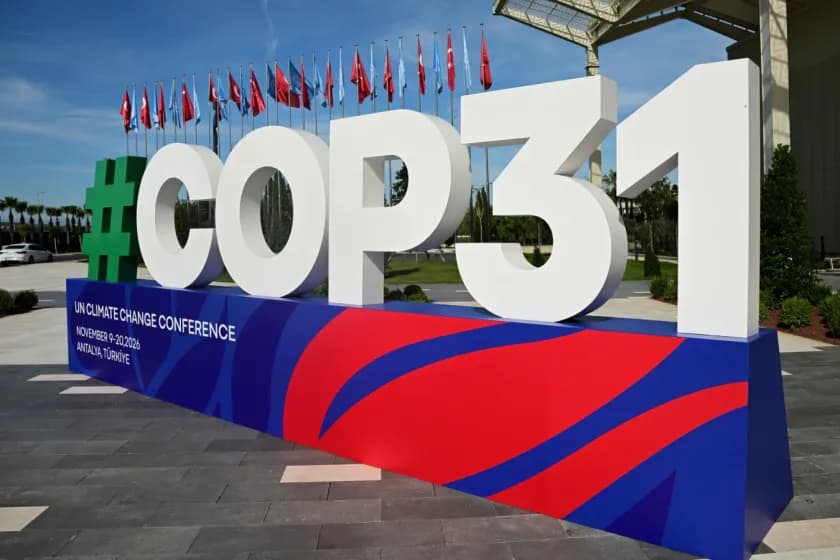
    COP31 Focuses on Climate Implementation
    International Relations05-Nov-2026

    COP31 Focuses on Climate Implementation

    Summary of COP31 and Climate Action Framework

    Conference of Parties (COP) Overview:

    • COP31 branded as “COP of the Future: The COP of Implementation.”
    • COP27 (Egypt) and COP30 (Brazil) presented similar themes of implementation.

    Roles and Responsibilities:

    • Turkey hosts COP31 and leads the non-negotiated Action Agenda.
    • Australia steers the negotiations.
    • Emphasis on implementation of commitments under the Paris Agreement.

    Transforming Dialogue:

    • Shift from queries on what and who will act to how actions are to be executed and current statuses.
    • Increasing reliance on action agendas to drive climate solutions rather than formal negotiations.

    2035 Voluntary Targets:

    • Proposed voluntary targets include:
      • Electricity comprising 35% of final energy demand.
      • Halving global waste growth.
      • Reducing energy-use intensity in buildings by at least 25%.
    • As of now, only 5% of cooperative climate initiatives since 2015 have met their goals.

    Nationally Determined Contributions (NDCs):

    • 2035 NDCs are expected by February 2025; pressing need for timely submissions underscored by COP31 presidency.
    • Only Colombia and Turkey have submitted their second biennial transparency reports by late October 2023.

    Importance for Developing Countries:

    • Climate finance from developed nations is crucial for developing countries to cope with impacts and reduce emissions.
    • The accountability of the Global South on its NDCs is often tied to funding and scrutiny from the Global North.

    Implementation Metrics:

    • COP31 will analyze progress through reports including NDC Synthesis and Biennial Transparency Reports (BTR).
    • The Facilitative, Multilateral Consideration of Progress forum serves to monitor experiences and issues among states but lacks enforcement mechanisms.

    Recommendations for COP31:

    1. Turkey should encourage timely submissions of BTR from all parties to leverage synthesis findings in discussions.
    2. Developed countries should publish comprehensive biennial reports on climate finance.
    3. An annual public report on progress towards 2035 targets should be established for accountability.

    Conclusion:

    • Effective implementation defines true commitment to climate goals, requiring collaborative efforts on measurement and reporting of progress.
    • Successful climate summits must align with the urgency of the climate crisis and showcase tangible advancements in mitigation efforts.

    Key Terms for Study:

    • COP, UNFCCC, Paris Agreement, NDC, BTR, climate finance, adaptation plans, Global North/South relations, action agenda.
    India's Strategic Engagement with USA
    International Relations05-Nov-2026

    India's Strategic Engagement with USA

    Summary of Key Points from Article on US-India Relations Post Midterm Elections

    Political Context

    • US Midterm Elections Outcome: The Democratic Party's victory indicates substantial political shifts within the U.S. that India must navigate.
    • Significance for India: Emphasis on the need for a deeper understanding of American politics beyond a simplistic dichotomy (Republicans vs. Democrats).

    Diplomatic Engagement

    • Upcoming Meetings: Prime Minister Narendra Modi has opportunities to meet former President Donald Trump at the East Asia Summit and the G20 summit.
    • Long-term Strategy:
      • Move away from binary perceptions of the U.S. political landscape.
      • Recognize the importance of adaptability and engagement across the diverse political spectrum in the U.S.

    Historical Context

    • Civil Nuclear Agreement of 2008: A precedent for building America-India relations through bipartisan support and broad engagement, highlighting India’s strategic importance not being leveraged automatically.

    Challenges in Indo-U.S. Relations

    • Changing Political Dynamics:
      • The Republican Party is divided, with factions including economic nationalists, libertarians, and traditional conservatives.
      • The Democratic Party faces internal challenges, particularly from progressives focused on issues like economic inequality and foreign policy.

    Engagement Strategies

    • Broaden Outreach:
      • Importance of reconnecting with American progressives who have become increasingly critical of India.
      • Increased interaction necessary between Indian political parties, civil society, and American institutions such as think tanks and universities.

    Key Takeaways for Indian Political Class

    1. Engagement Beyond Diplomacy: Importance of investing in connections across American society, not just with government leaders.
    2. Long-term Political Relationships: Establishing enduring ties rather than relying solely on individual leaders or transient administrations.
    3. Diverse Political Networks: Understanding and engaging with the multiplicity of political influences in the U.S., including ethnic minorities and grassroots movements.

    Economic and Strategic Considerations

    • Importance of U.S.-India relations for India's economic transformation, technological advancements, and regional security framework.
    • Recognition of active participation in discussions surrounding trade, human rights, and military alliances as critical for future interactions.

    This analysis underscores that India's approach to its relationship with the United States should evolve into a more nuanced and multifaceted engagement that accounts for changing political landscapes and diverse constituencies in the U.S.