iAspirants
India's Climate Initiatives Unveiled
Published on:
Share this post

Article Summary
On the occasion of the 19th Foundation Day of the Ministry of Earth Sciences (MoES), Union Minister Dr. Jitendra Singh announced a series of significant initiatives and developments aimed at bolstering climate preparedness in India. The event, held in Delhi, spotlighted the Ministry's transformation over the past decade and emphasized the integration of science and innovation into daily life and economic growth.
Key Highlights:
Introduction of New Initiatives: Dr. Singh unveiled 14 new scientific products and digital services, including:
- Rainfall monitoring and crop-weather calendars.
- Advanced forecasting systems like the Bharat Forecast System – Extended Range Prediction (BharatFS-ERP).
- High-resolution rainfall datasets and updated wave atlases.
- Air quality forecasting systems and seismic microzonation studies for four Indian cities.
Enhanced Communication and Accessibility: Minister stressed the importance of public engagement with scientific tools. The Ministry's initiatives allow casual users to access live weather alerts, cyclone warnings, air quality updates, and ocean forecasts via mobile devices.
Technological Advances: Over the last decade, significant improvements in weather infrastructure were reported:
- Doppler weather radars increased from 15 to 41.
- Seismic and weather stations, upper-air observational systems, and lightning detection networks have all more than doubled.
- Earthquake alerts are now issued within 2-3 minutes, providing real-time information to the public.
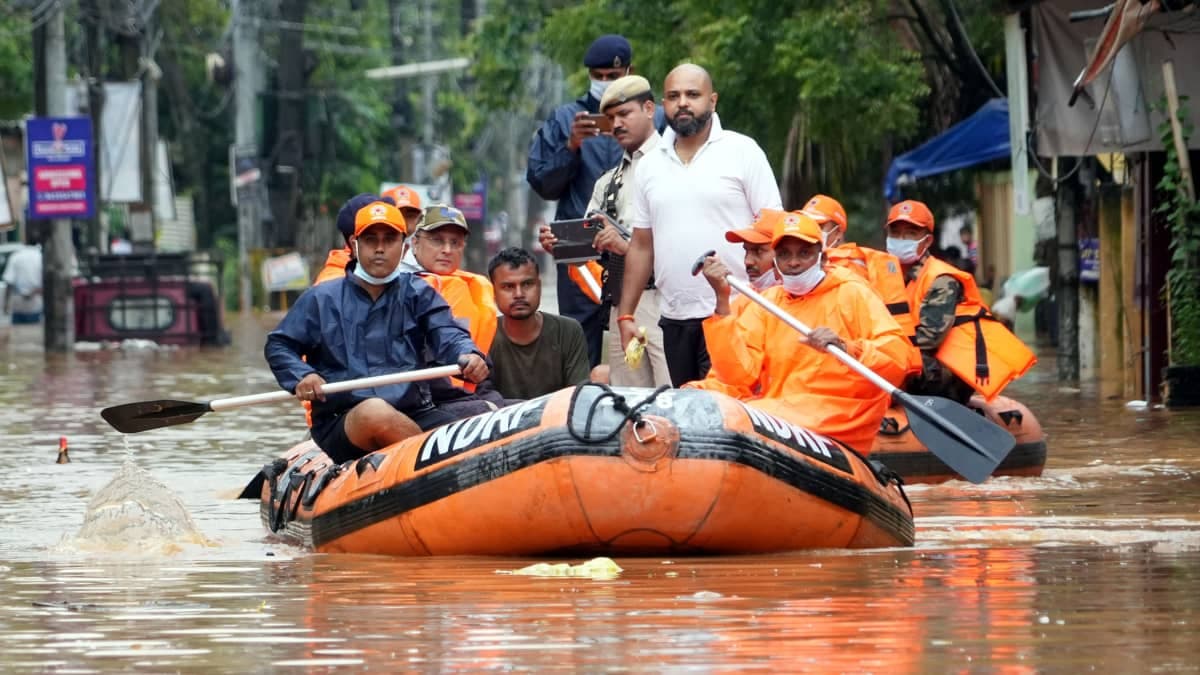
Impact on Disaster Management: Citing improvements made since the 1999 Odisha super cyclone, Dr. Singh noted that timely alerts have dramatically reduced casualties during recent storms. Alerts now come with a lead time of up to 10 days.
Support for Agriculture and Fisheries: The MoES plays a vital role in aiding farmers and fishermen with real-time information. Over seven lakh farmers are registered on the Meghdoot app, which assists with sowing and irrigation schedules. Fishermen receive daily SMS updates to identify safe fishing zones.
Ocean-Based Sustainability: India's efforts in ocean-based sustainability include six Ocean Thermal Energy Conversion (OTEC) desalination plants in the Lakshadweep islands, providing 1.5 lakh litres of potable water daily, addressing freshwater scarcity in the region.
Deep Ocean Mission: Dr. Singh underscored the potential of the Deep Ocean Mission as a game changer for India's economic future. He highlighted plans for exploring India’s underwater wealth and introducing marine technology such as the Samudrayaan project which aims to send Indians to considerable ocean depths.
Budgetary Support: The budget for the MoES increased from ₹1,281 crore in 2014 to ₹3,658 crore in 2024, highlighting governmental commitment to enhancing environmental science and research capabilities.
Call for Enhanced Outreach: The Minister emphasized the need for better communication strategies to raise awareness about the Ministry's tools and services, suggesting collaboration with other government platforms.
International Presence: The event witnessed participation from various officials, including Dr. M. Ravichandran (Secretary, MoES) and Prof. Dev Niyogi (UNESCO Chair at the University of Texas), who attended virtually.
Conclusion:
Dr. Jitendra Singh's address reflects a significant commitment from the Indian government to leverage scientific advancements in improving climate resilience and enhancing public preparedness for natural disasters. The integration of technology and outreach initiatives signifies the Ministry's active role in promoting ecological sustainability and economic growth through science-driven solutions.
Important Points:
- Launch of 14 scientific products aimed at climate resilience.
- Dramatic expansion of meteorological infrastructure.
- Significant decreases in disaster-related casualties due to improved forecasting.
- Support for agriculture and fisheries through technology.
- Investment in ocean sustainability initiatives.
- Budget expansion reflecting government prioritization of earth sciences.
- Emphasis on public outreach and awareness of scientific tools.
Key Terms & Concepts
| Ministry of Earth Sciences | Government body for Earth science |
| Deep Ocean Mission | Future economic growth driver |
| Doppler weather radars | Weather forecasting technology |
| Meghdoot app | Advisory tool for farmers |
| Ocean Thermal Energy Conversion | Desalination technology in islands |
| Indian Meteorological Department | Weather alert services |
| Lakshadweep islands | Location for water sustainability |