iAspirants
India's Economic Growth Challenges Ahead
Published on:
Source: Indian Express
Share this post

Article Summary
Economic and Employment Overview
Income Classification:
- Five countries (Jordan, Micronesia, Philippines, Sri Lanka, Vietnam) upgraded to upper-middle income status as per World Bank.
- Vietnam transitioned from lower-middle income in 2009 to upper-middle income in 2016 (16 years).
- India entered lower-middle income status in 2007 but remains there (19 years later), indicating a stagnation in economic growth.
Growth Projection:
- If India’s income grows at 8.5% (compared to the past decade's 5.4%), it could achieve upper-middle income status in approximately six years.
Labour Market Dynamics:
- India's labour force increased by over 100 million in less than a decade.
- Unemployment rates decreased while job quality remains a concern; many jobs are informal with low productivity.
- Women account for two-thirds of the labour force increase, primarily in agriculture, where 43% of the total labour force is employed.
Manufacturing and Employment:
- Registered factories in India doubled from 130,000 (2004-05) to 260,000 (2024-25).
- However, formal employment in manufacturing hasn't increased; more jobs have been created in the gig economy.
- Capital-intensive production and increased profits have led to higher inequality and slower wage growth.
Infrastructure Investment:
- Significant government expenditure on upgrading infrastructure (highways, airports, ports) has been made.
- Despite this, the transition to increased private investment has not occurred; companies are prioritizing shareholder returns over expansion.
Renewable Energy Challenges
- Energy Production:
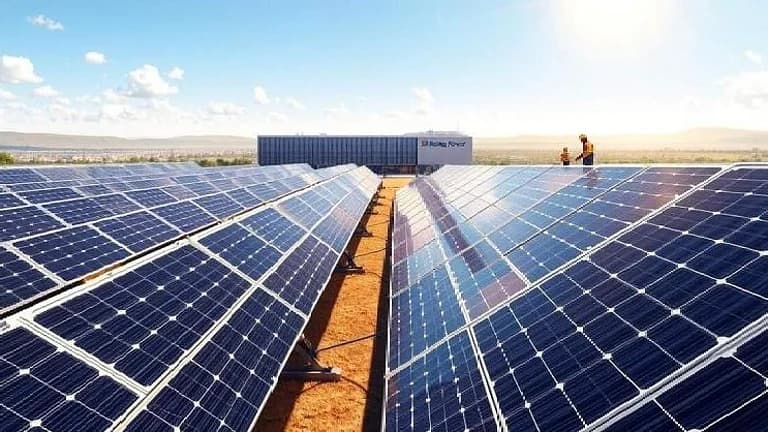
- Rapid expansion of renewable energy sources, particularly solar power.
- Surplus solar output during high demand periods has highlighted inadequacies in transmission infrastructure.
- Dependable electricity supply is crucial for manufacturing, technology sectors, and data centers.
Wealth and Economic Implications
- Millionaires Statistics:
- India has 940,000 dollar millionaires, ranking alongside Switzerland and Spain, with projections to reach 1 million by next year.
- This shift reflects higher consumption of premium goods and increased foreign exchange demand.
- The expansion in affluent demographics outpaces the growth of a broad middle class, necessitating a focus on pathways to high-value job creation.
Conclusion and Recommendations
- India requires strategies to elevate its workforce from low- to high-value employment.
- Emphasis on manufacturing that provides scalable job opportunities and competition in global markets is crucial.
- Continued public infrastructure investments are needed to support private sector growth and create a favorable economic environment conducive to prosperity.
Key Terms & Concepts
| World Bank | Economic classification authority |
| Jordan | New upper-middle income country |
| Micronesia | New upper-middle income country |
| Philippines | New upper-middle income country |
| Sri Lanka | New upper-middle income country |
| Vietnam | Transitioned to upper-middle income |
| India | Stagnant in lower-middle income |
| China | Faster transition to upper-middle income |
| 8.5% | Projected growth rate for India |
| 100 million | Increase in labor force |
| 43% | Labor force in agriculture |
| 79% | Non-agri labor in informal sector |
| 1.3 lakh to 2.6 lakh |