iAspirants
India's Upcoming Climate Commitments
Published on:
Share this post
Article Summary
Summary of India’s Energy Transition Strategy and NDCs
International Commitments:
- India is required to submit new Nationally Determined Contributions (NDCs) under the Paris Agreement covering the period until 2035.
Key Targets for Energy Transition:
Emissions Intensity of GDP:
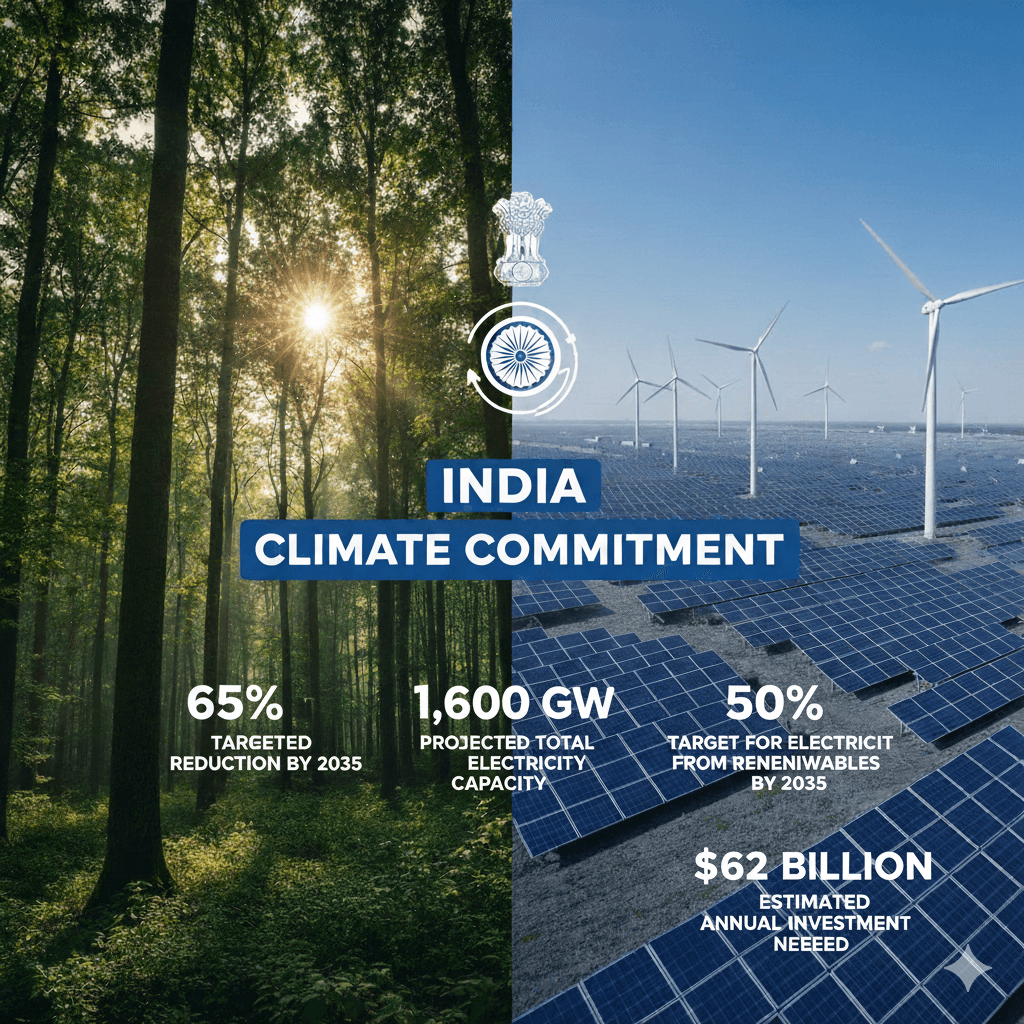
- Target: Reduce emissions intensity by 45% compared to 2005 levels by 2030 and set a new target to reduce by 65% by 2035.
- Projected GDP growth: 7.6% over this period, resulting in total emissions peaking around 2035.
Non-Fossil Fuel Power Generation:
- Goal: Increase capacity of non-fossil fuel-based power to 80% of total generation by 2035 (currently at 50% target for 2030).
- Total electricity generation capacity to reach 1,600 GW by 2035, with 1,200 GW coming from solar and wind power.
- The share of electricity from renewables to rise from 13.5% to 50% by 2035.
- Energy storage capacity projection: increase from <1 GW today to 170 GW by 2035.
Coal Generation:
- Phasing down unabated coal-based generation is vital to achieving net-zero by 2070.
- Current coal capacity is 255 GW; expected to peak at 293 GW by 2030, then decline to 230 GW by 2040.
- No new unabated coal plants to be commissioned post-2030.
Electrification of Key Sectors:
- Aim for nearly 100% electrification of railway traction by 2035 and 50% electric buses in urban fleets.
- Transition to 100% electric sales in three-wheeler category anticipated.
Carbon Credit Trading Scheme (CCTS):
- Operational from April 2026; to be included in NDCs with a potential for expanded coverage over time.
- Initial emission intensity targets will be lax, with future tightening aligned with net-zero goals.
Electricity Pricing and Grid Management:
- High renewable share to require reforms in electricity pricing including variable price mechanisms.
- Introduction of time-of-day tariffs to align consumer pricing with generation variability.
Investment Requirements:
- Estimated investment of $62 billion annually from 2026 to 2035 (about 0.84% of GDP per annum).
- 80% of this funding to come from domestic sources, with 20% anticipated from international flows, supported by Multilateral Development Banks (MDBs).
Implementation Framework:
- Recommend revival of the Prime Minister’s Council on Climate Change to coordinate actions nationally and facilitate a unified approach among stakeholders.
Conclusion:
- The outlined strategy is positioned as a comprehensive plan toward achieving India's climate commitment while addressing economic and job market transitions in coal-dependent states, incorporating stakeholder engagement for effective policy execution.
Key Terms & Concepts
| Paris Agreement | International climate accord |
| NDCs | Nationally Determined Contributions |
| GDP | Economic growth metric |
| 2030 | Emission reduction target year |
| 65% | Targeted emissions reduction by 2035 |
| 1,600 GW | Projected total electricity capacity |
| 50% | Target for electricity from renewables by 2035 |
| Carbon Credit Trading Scheme (CCTS) | New policy for emissions trading |
| $62 billion | Estimated annual investment needed |
| Viksit Bharat | Vision for developed India |
| Prime Minister’s Council on Climate Change | Coordination body for climate policy |