iAspirants
Current AffairsPrelims PYQsUPSC CSE SyllabusUPSC CSE StrategyBlogsPricing
Login
iAspirants

Your AI-powered companion for UPSC preparation.

Quick Links

  • Home
  • About Us
  • Current Affairs
  • Prelims PYQs
  • UPSC CSE Syllabus
  • UPSC CSE Strategy
  • Blogs

Company

  • Pricing
  • FAQs
  • Contact Us
  • Login

Legal

  • Privacy Policy
  • Terms & Conditions
  • Return Policy

© 2026 iAspirants, Inc. All rights reserved.

  1. Blogs
  2. Science and Technology

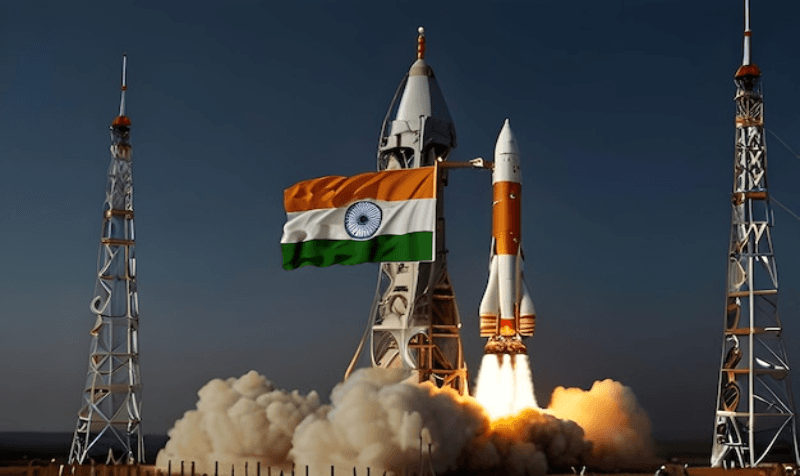
India's Vision for Space Cooperation

Published on: 10-Sep-2026

Source: PIB

Share this post

India's Vision for Space Cooperation

Article Summary

International Space Summit Highlights

  1. Event Overview:

    • Prime Minister of India addressed the First International Space Summit via video conferencing.
    • Hosted by President Emmanuel Macron of France.
  2. Key Themes:

    • Emphasis on collaboration over conflict in space exploration.
    • Advocacy for sustainability, inclusion, and long-term benefits over short-term gains.
    • Promotion of the principle of "Vasudhaiva Kutumbakam" (the world is one family) in space endeavors.
  3. International Cooperation:

    • Support for a secure, peaceful, and sustainable space environment based on international law and multilateral cooperation.
    • Call for transparency and integrity in the use of scientific data for public good.
  4. India's Contributions to Space:

    • Indian Space Research Organisation (ISRO) recognized for its excellence and cost-effective missions.
    • Over 430 satellites from 34 countries launched through Indian rockets.
    • Key missions:
      • Chandrayaan-3: First country to land near the Moon's south pole.
      • Aditya-L1: Mission to uncover the mysteries of the Sun.
  5. Future Goals:

    • Establishment of an Indian space station by 2035.
    • Sending an Indian astronaut to the Moon by 2040.
  6. Private Sector Growth:

    • Rapid development of India's private space sector, fostering entrepreneurship and innovation alongside ISRO's advancements.
  7. Historical Context:

    • France has been a reliable partner in India's space program since its inception in the 1960s.
    • Collaboration extends to Earth observation and advanced technologies that merge scientific excellence with humanitarian goals.
  8. Global Invitation:

    • India invites France and other nations to become partners in its space journey.
  9. Conclusion:

    • The summit reinforced the message of collective exploration, innovation, and protection of space for the benefit of humanity and future generations.

This summary encapsulates the key points from the Prime Minister's address at the International Space Summit, focusing on India's role and vision in global space exploration and cooperation.

Key Terms & Concepts

ISROLeading space organization in India
Chandrayaan-3First to land near Moon's south pole
Aditya-L1Investigating secrets of the Sun
2035Target year for Indian space station
2040Target year for sending Indian to Moon
34 countriesNumber of countries with satellites launched by India
430 satellitesTotal satellites launched by India
ThumbaSite of India's space program inception
FranceKey partner in India's space efforts

Mind Map for UPSC Civil Services Revision

Turn UPSC Civil Services Current Affairs Into Exam-Ready Notes

Reading Science and Technology current affairs is half the work. Revise them with ready-made notes and test what actually stuck.

  • Daily UPSC Civil Services current affairs analysis
  • Revision notes, mind maps & MCQs
  • Prelims mock tests with instant results

Related UPSC Civil Services Current Affairs Articles

Ebola Vaccine Trials Begin in Congo
Science and Technology24-Oct-2026

Ebola Vaccine Trials Begin in Congo

Ebola Vaccine Clinical Trial in the Democratic Republic of Congo (DRC)

  1. Ebola Outbreak Status:

    • The DRC is experiencing its worst Ebola outbreak, surpassing 9,700 confirmed cases and resulting in over 4,600 fatalities.
  • This outbreak has primarily been attributed to the Bundibugyo species of Ebola, which lacks an approved vaccine or treatment.
  • Vaccine Trial Initiation:

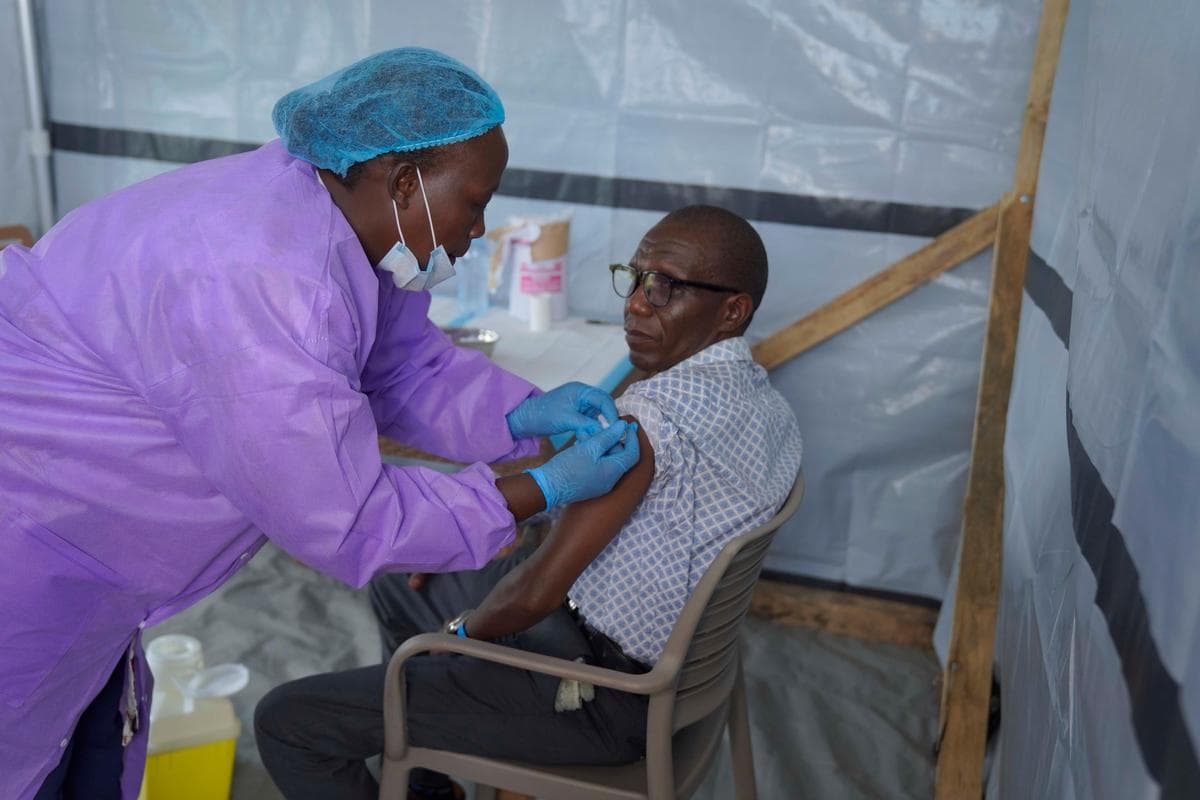
    • The World Health Organisation (WHO) announced the commencement of the first clinical trial for an Ebola vaccine targeting Bundibugyo on October 23, 2026.
    • The trial is named Tumaini, meaning "hope" in Swahili, and commenced with its first vaccination in Bunia, Ituri province, the outbreak's epicenter.
  • Vaccine Candidates and Approach:

    • The trial will evaluate Ervebo, a vaccine approved for the Zaire strain of Ebola, to assess its cross-protection potential against Bundibugyo.
    • It employs a ring vaccination approach, immunizing individuals at high risk, including pregnant women and children aged 12 years and older.
    • The trial aims to include two Bundibugyo-specific vaccines currently in earlier-stage trials:
      • ChAdOx1 adenoviral vector jab (developed by the University of Oxford).
      • mRNA-based vaccine (developed by Moderna).
    • Funding for these efforts has been provided by the Coalition for Epidemic Preparedness Innovations (CEPI).
  • Objectives and Outcomes:

    • The Tumaini trial will rigorously assess the safety, efficacy, and immunogenicity of the candidates.
    • If successful, it may provide critical evidence for vaccine efficacy against Bundibugyo, representing a significant advancement in outbreak response.
    • WHO and CEPI emphasize the importance of robust evidence to support community health responses and enhance preparedness for future outbreaks.
  • Public Health Response:

    • The DRC declared its 17th outbreak of Ebola on May 15, with WHO designating it as a public health emergency of international concern shortly thereafter, indicating the high alert level for global health.
  • Historical Context:

    • Ebola has claimed over 15,000 lives across Africa in the last 50 years, illustrating the disease's enduring threat to public health.
  • Key Takeaways:

    • The Tumaini trial aims to fill a critical void in the Ebola vaccine landscape and potentially transform response strategies for both current and future outbreaks.
    • The involvement of local communities and health authorities is crucial for generating actionable evidence to enhance public health outcomes.
    India and Poland Strengthen Strategic Partnership
    International Relations23-Oct-2026

    India and Poland Strengthen Strategic Partnership

    Summary of India-Poland Strategic Partnership Meeting

    Bilateral Relations

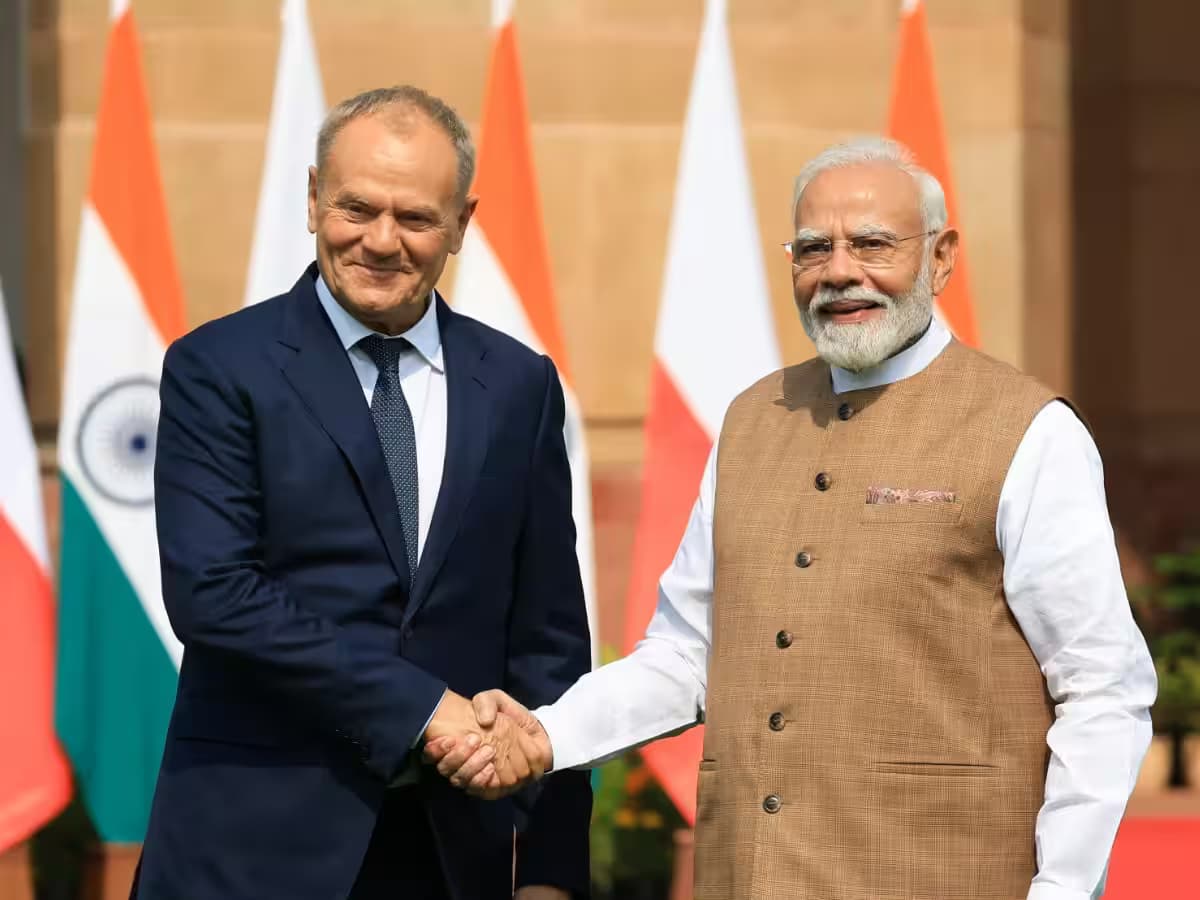
    • Meeting: Prime Minister Narendra Modi of India and Polish Prime Minister Donald Tusk discussed the deepening of strategic ties.
    • Key Focus Areas: Defence industry, space technology, digitization, nuclear energy, and counter-terrorism cooperation.

    Economic Data

    • Bilateral Trade Growth: Increased from $1.95 billion in 2013 to $6.36 billion in 2025 (192% growth).
    • Bilateral Trade Target: Agreement to double trade by 2030.
    • GDP Figures: Poland's GDP surpassed $1 trillion; India recorded a growth rate of 7.8% in the last quarter.

    Strategic Initiatives

    • Defence Agreements: Establishment of a defence industry dialogue aimed at fostering cooperation in drone technology and satellite imagery, critical for both nations amidst geopolitical tensions (notable usage in Ukraine and climate of tensions in South Asia).
    • Cultural Relations: Strengthening cooperation in culture, education, sports, and tourism, including the establishment of the Indian Studies Chair in Krakow.
    • Startup Initiatives: Launch of an India-Poland startup bridge focusing on areas like AI, cyber, fintech, and critical minerals.

    International Context

    • Geopolitical Landscape: Acknowledgment of Poland's proximity to the conflict zones (Ukraine-Russia) and India's strategic alignment with Russia.
    • Mutual Support on Global Platforms: Discussions on India's role in proposing peace initiatives (e.g., ceasefire in the Black Sea region).

    Science and Technology

    • Collaboration in Space: Shared goals in advancing the space sector referenced during talks, with a particular emphasis on joint missions and technological exchanges.
    • Education and Technology Initiatives: Plans for hackathons to boost collaboration and innovation among the youth from both countries.

    Remarks and Significance

    • Mutual Respect and Acknowledgment: Tusk praised Modi's leadership amid global instability and emphasized mutual dependency for economic growth and stability in facing political threats (specifically mentions from China).

    Government Schemes:

    • Emphasis on rural entrepreneurship through technology and advancing capabilities in biotechnology and advanced manufacturing via Polish investment.

    International Agreements:

    • Highlighted the importance of the India-European Union Free Trade Agreement, further enhancing trade relations and opportunities.

    These discussions embody a significant step towards bolstering not just bilateral relations but also shared geostrategic interests amid a changing global landscape. The partnership between India and Poland is set against a backdrop of increasing economic collaboration and technological advancements, further anchored by their geographic positions and strategic objectives.

    Japan's Martian Moons Exploration Mission
    Science and Technology21-Oct-2026

    Japan's Martian Moons Exploration Mission

    Summary of Japan's Martian Moons Exploration (MMx) Mission:

    Mission Overview:

    • Agency: Japan Aerospace Exploration Agency (JAXA)
    • Rocket Launch: H3 from Tanegashima Space Center, Japan.
    • Launch Time: 4:40 am JST (1:11 am IST)
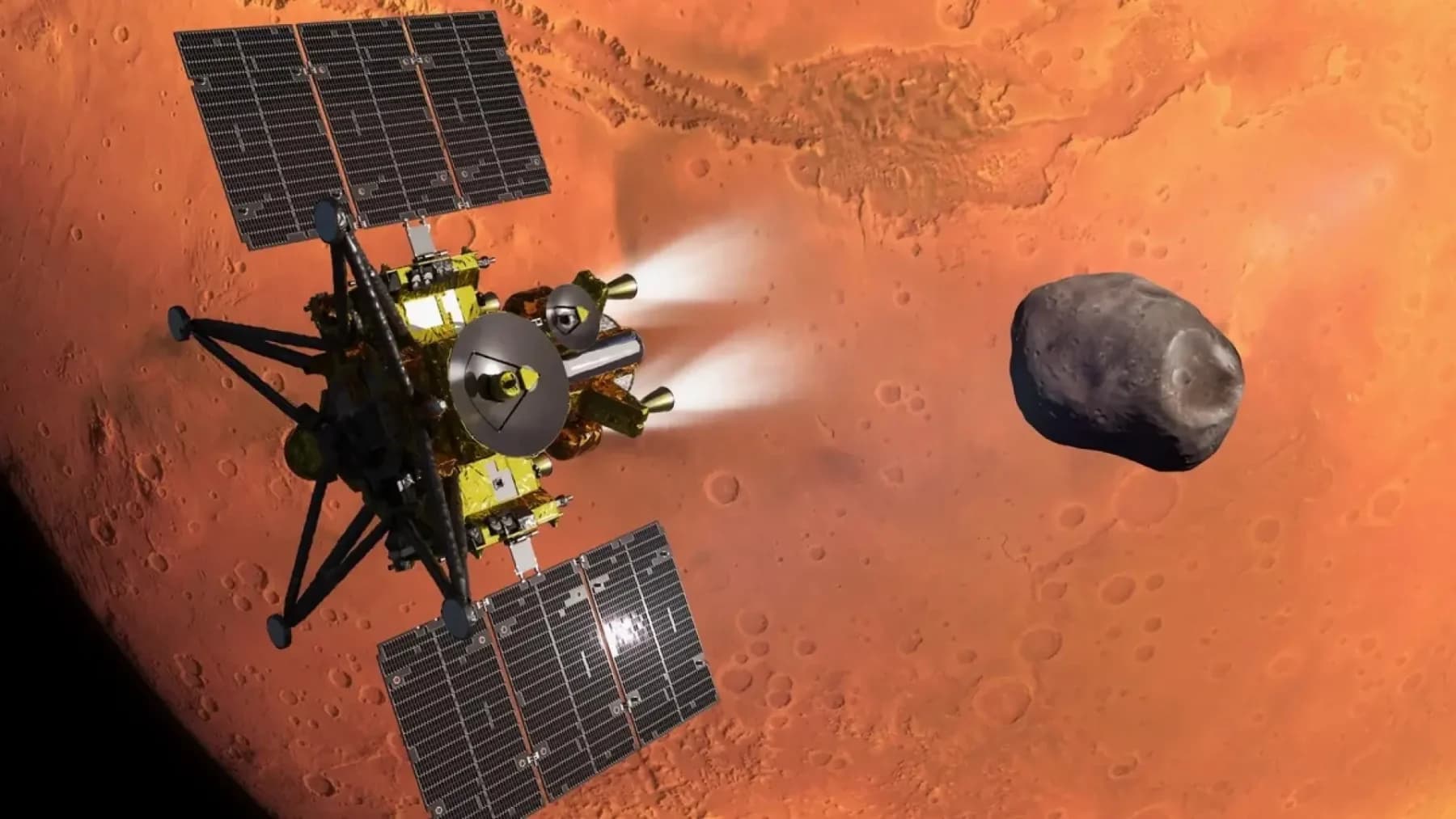
    • Objective: Study Martian moons Phobos and Deimos, aiming to retrieve 10 grams of material from Phobos to return to Earth by 2031.

    Scientific Importance:

    • Current Theories on Origins:

      1. Asteroid Capture Theory: Moons are relics from asteroids captured by Mars's gravitational pull.
      2. Collision Theory: Formed from debris after a large impact on Mars.
    • Challenges: The weak gravity of Phobos offers a more manageable environment for landing and taking off compared to Mars.

    Mission Details:

    • Timeline: Five-year round trip, expected arrival at Mars in August 2027; enter quasi-satellite orbit around Phobos.
    • Spacecraft Modules: Comprises propulsion, exploration, and sample return modules.
    • Scientific Instruments: 13 instruments including cameras and spectrometers for topography and chemical analysis.
    • Rover: IDEFIX rover (developed by France's CNES and Germany's DLR) to be deployed on Phobos before sample retrieval.

    Technological Innovations:

    • The mission tests autonomous navigation and landing technologies critical for future Martian missions.

    International Collaboration:

    • Involves partnerships with NASA, European Space Agency (ESA), CNES, DLR, and the Australian Space Agency to share costs and advance collective goals in planetary exploration.

    Strategic Significance:

    • Advances Japan's position as a leader in planetary exploration and reinforces its technological autonomy in space science.
    • Highlights the importance of lunar and Martian bodies for potential staging of crewed missions, given that missions from Phobos require significantly less fuel than direct landings on Mars.

    Historical Context:

    • Builds on Japan's past success with the Hayabusa spacecraft, which successfully retrieved samples from an asteroid in 2010, establishing Japan as a pioneer in sample-return missions.

    This mission aligns with global trends in space exploration, as various nations aim to enhance their capabilities in studying celestial bodies and the potential for human exploration of Mars.