iAspirants
Current AffairsPrelims PYQsUPSC CSE SyllabusUPSC CSE StrategyBlogsPricing
Login
iAspirants

Your AI-powered companion for UPSC preparation.

Quick Links

  • Home
  • About Us
  • Current Affairs
  • Prelims PYQs
  • UPSC CSE Syllabus
  • UPSC CSE Strategy
  • Blogs

Company

  • Pricing
  • FAQs
  • Contact Us
  • Login

Legal

  • Privacy Policy
  • Terms & Conditions
  • Return Policy

© 2025 iAspirants, Inc. All rights reserved.

  1. Blogs
  2. International Relations

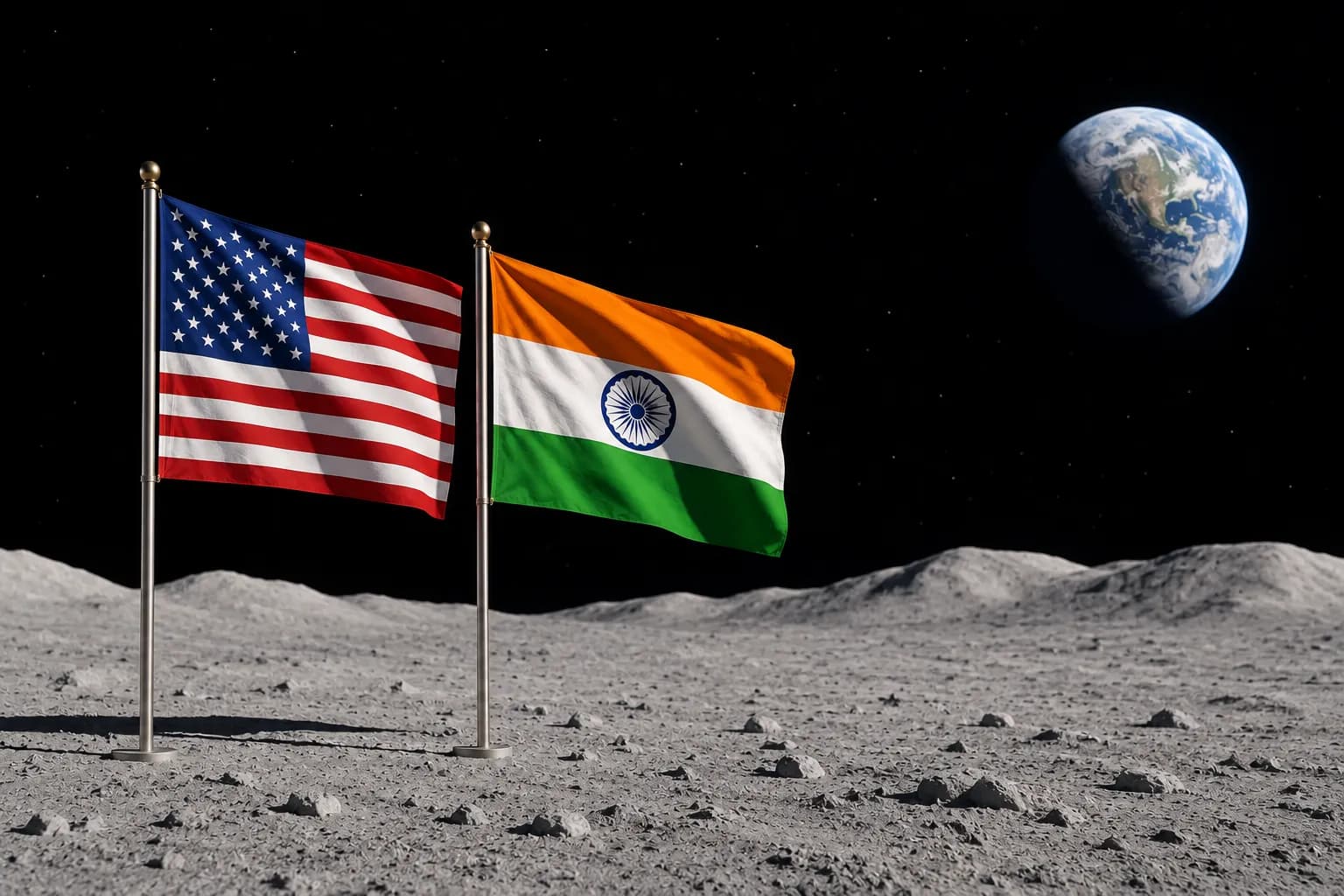
ISRO Joins NASA's Moon Base Program

Published on: 12-Aug-2026

Source: The Hindu

Share this post

ISRO Joins NASA's Moon Base Program

Article Summary

  • NASA Invitation to ISRO: NASA has formally invited the Indian Space Research Organisation (ISRO) to participate in its Moon Base program during the ninth meeting of the India-U.S. Civil Space Joint Working Group (CSJWG) in Bengaluru. This initiative is part of the collaboration established under the Artemis Accords.

  • Artemis Accords: This international agreement aims to promote peaceful and transparent exploration of space, with a focus on sustainable practices. The invitation aligns with the broader U.S.-India partnership involving strategic technology.

  • Moon Base Program Overview: The Moon Base program intends to establish humanity's first outpost on the Moon, specifically targeted near the lunar South Pole. The program will be executed in three phases and was first announced at NASA's "Ignition" event on March 24, 2026.

  • Strategic Technology Framework: The meeting advanced civil and commercial space cooperation through the U.S.-India Transforming the Relationship Utilizing Strategic Technology (TRUST) Initiative, which aligns with the February 2025 Joint Leaders’ Statement from Prime Minister Narendra Modi and then-President Donald Trump.

  • Joint Mission and Future Collaborations: The discussions included the success of past collaborations like the NISAR mission (NASA-ISRO Synthetic Aperture Radar) launched last year and plans for future science and human spaceflight technology partnerships.

  • United Nations Committee on Outer Space: Both nations reaffirmed their commitment to the United Nations Committee on the Peaceful Uses of Outer Space (COPUOS) and its guidelines for long-term sustainability of outer space activities, emphasizing multilateral efforts for its effectiveness.

  • Key Participants: The meeting included ISRO Chairman V. Narayanan, U.S. Ambassador Sergio Gor, and senior officials from both countries, highlighting the high-level engagement in space collaboration.

These points showcase the advancements in international space cooperation between India and the U.S., reflecting a significant strategic partnership that supports technological development and sustainable exploration of space.

Key Terms & Concepts

NASAInviting ISRO for Moon Base
Indian Space Research Organisation (ISRO)Participating in Moon Base project
Artemis AccordsFramework for cooperation
NISAR missionSuccessful joint space launch
TRUST InitiativeAdvancing civil and commercial cooperation
United Nations Committee on the Peaceful Uses of Outer Space (COPUOS)Guidelines for sustainable activities
March 24, 2026Announcement of NASA’s program
February 2025 Joint Leaders’ StatementStatement by Modi and Trump

Mind Map for UPSC Civil Services Revision

Turn UPSC Civil Services Current Affairs Into Exam-Ready Notes

Reading International Relations current affairs is half the work. Revise them with ready-made notes and test what actually stuck.

  • Daily UPSC Civil Services current affairs analysis
  • Revision notes, mind maps & MCQs
  • Prelims mock tests with instant results

Related UPSC Civil Services Current Affairs Articles

India's Nuclear Doctrine and Security Challenges
National and International Importance26-Sep-2026

India's Nuclear Doctrine and Security Challenges

India's Nuclear Doctrine & Strategic Environment

  1. Current Status of Nuclear Doctrine:

    • India’s nuclear doctrine has been stable since its operationalization in 2003, based on principles of credible minimum deterrence and a declared No First Use (NFU) posture.
  • It's stated that nuclear retaliation is an option following a major biological or chemical attack on India.
  • Historical Context:

    • Emerged post-Pokhran-II tests (1998) establishing India as a nuclear state and Kargil conflict (1999) demonstrating that nuclear deterrence does not preclude conventional wars.
    • Key documents: 1999 Draft Nuclear Doctrine, Cabinet Committee on Security’s decision (January 4, 2003).
  • Strategic Shifts:

    • China-Pakistan Alignment:
      • Increasing cooperation and interconnected threats from two nuclear-armed neighbors.
      • China has reportedly modernized its nuclear forces and military infrastructure, while Pakistan has diversified its nuclear capabilities, including tactical nuclear weapons.
    • Technological Advances:
      • Innovations in AI, cyber capabilities, space surveillance, and hypersonic weapons alter deterrence dynamics and introduce complexities in command and control networks.
    • Geopolitical Dynamics:
      • The Indo-Pacific region has emerged as a critical stage for great-power competition.
      • Evolving U.S.-China rivalry and enhanced China-Russia coordination present challenges to India's strategic calculus.
  • Policy Implications:

    • A review of the nuclear doctrine is deemed necessary to assess relevance against current and anticipated threats without fundamentally altering its core principles.
    • Focus areas for review: survivability, command/resilience, second-strike capabilities, and evolving technologies.
  • Concerns & Caution:

    • India's NFU stance has justified its image as a responsible nuclear power and any ambiguity could lead to adversaries recalibrating their strategies.
    • Strengthening operational capabilities, modernizing delivery systems, and improving command-control resilience should take precedence over changes in declaratory policies.
  • Potential Review Outcomes:

    • A reassessment of NFU could reinforce its rationale and clarify scope while maintaining credible deterrence capabilities.
    • A comprehensive review ought to align India’s nuclear policy with its broader diplomatic strategies and assertion of strategic autonomy.
  • Imperative for Strategic Coherence:

    • India's nuclear doctrine is a strategic tool, reflecting its ongoing commitment to restraint and responsible nuclear stewardship.
    • The interplay of doctrine, capability, and geopolitical events necessitates continuous evaluation to ensure effectiveness against a backdrop of shifting threats.
  • This document suggests that India's nuclear stance should acknowledge the evolving strategic landscape while retaining its foundational principles for enduring deterrence and international standing.

    Indian Coast Guard's QUAD-at-Sea Mission
    International Relations26-Sep-2026

    Indian Coast Guard's QUAD-at-Sea Mission

    Summary of Key Points from the QUAD-at-Sea Ship Observer Mission

    1. Mission Overview:

      • The Indian Coast Guard (ICG) ship Shaunak departed from Chennai for Perth, Australia as part of the QUAD-at-Sea Ship Observer Mission.
      • The mission includes professional exchanges and maritime interoperability among India, Australia, Japan, and the USA.
    2. Participants:

      • Six officers, designated as 'Sea Riders', are onboard the Shaunak, which includes:
        • Two officers from India
        • Two from Japan
        • One officer from Australia
        • One officer from the USA
    3. Objectives:

      • Strengthening coordination among QUAD nations.
      • Enhancing mutual understanding of maritime operations.
      • Building professional linkages to foster a secure maritime environment in the Indo-Pacific region.
    4. Alignment with International Statements:

      • The mission aligns with the QUAD Foreign Ministers’ Joint Statement of May 26, 2026, emphasizing commitment to a free, open, inclusive, and rules-based maritime order in the Indo-Pacific.
    5. India's Maritime Vision:

      • The deployment reflects India's MAHASAGAR initiative (Mutual and Holistic Advancement for Security and Growth Across Regions), which underscores collective engagement with maritime partners to enhance regional security.
    6. Broader Implications:

      • The QUAD nations are expanding cooperation in various domains, particularly in maritime strategies to improve coordination and interoperability, indicating a strategic emphasis on collective security and collaboration in the Indo-Pacific region.

    These points highlight the ongoing initiatives and strategic partnerships formed under the QUAD framework, central to India's maritime security and international collaborations.

    China-US Relations Discussed at White House
    International Relations25-Sep-2026

    China-US Relations Discussed at White House

    Key Highlights:

    International Relations

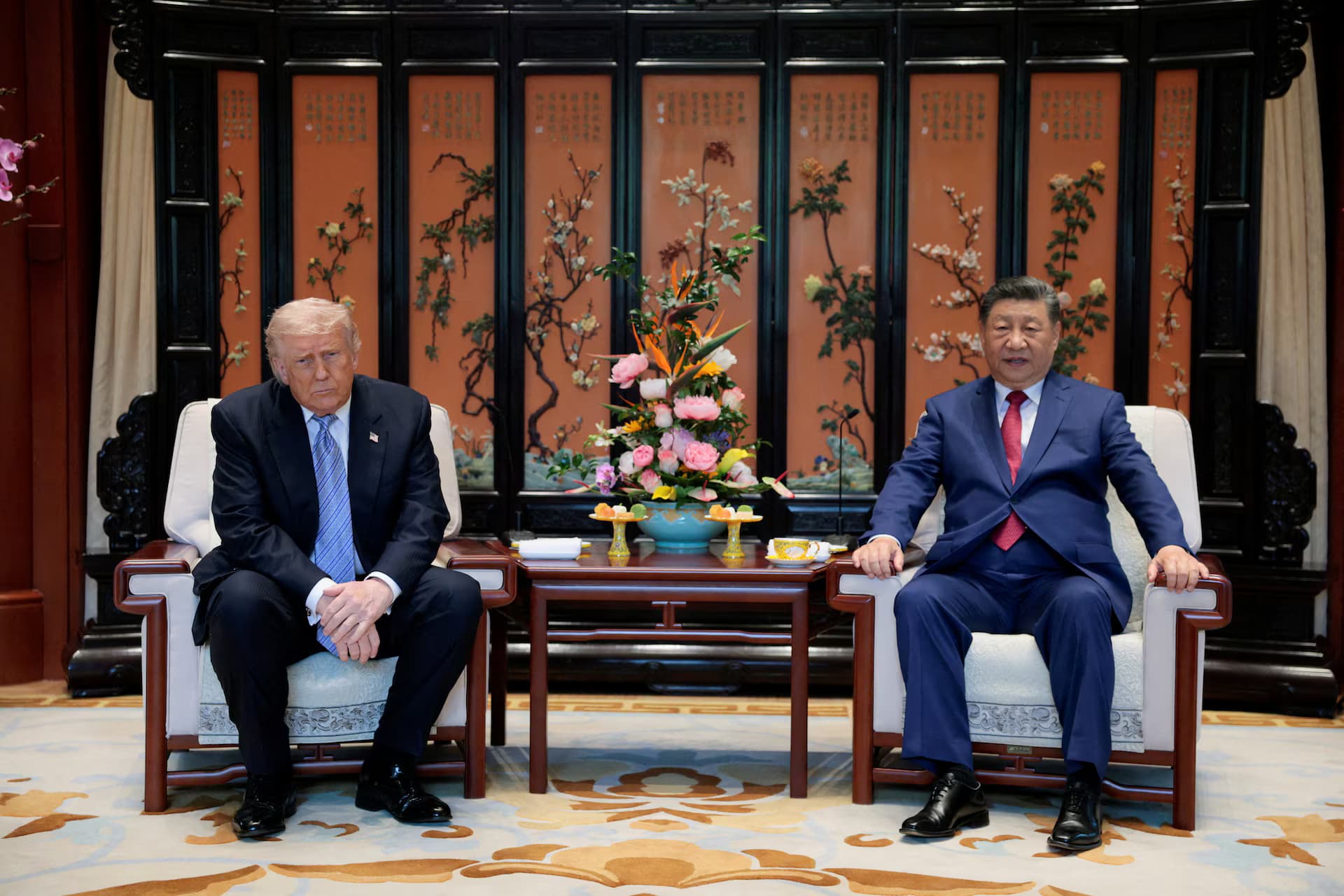
    • Bilateral Talks: Chinese President Xi Jinping arrived at the White House for discussions with US President Donald Trump. Xi emphasized the need for cooperation, promoting the notion that both nations should be partners rather than rivals.
    • Topics of Discussion: The talks encompassed trade relations, the situation in Iran and Taiwan, and advances in artificial intelligence (AI). Both countries have agreed to extend their trade truce by two months while significant disagreements remain regarding tariffs and technology exports.

    Economic Indicators

    • Oil Supply Dynamics: Despite disruptions in the Strait of Hormuz due to military actions, oil supplies remain stable at around $100 per barrel. Approximately 6-7 million barrels per day are still moving under US protection through alternative routes.
    • Global Oil Demand: Demand has decreased by an estimated 5 million barrels per day amid rising prices and slow economic growth, with US producers covering part of the supply deficit.

    Judicial Developments

    • Journalistic Access Restoration: A US federal judge ordered the Trump administration to restore access to the White House for CNN, MS NOW, and Politico, ruling that the prior ban was likely unconstitutional, thus reinforcing First Amendment rights.

    Military and Security Updates

    • US Navy Mental Health Issues: Eight sailors from the USS Abraham Lincoln reportedly attempted suicide during its deployment in the Middle East due to deteriorating mental health conditions, which has raised concerns among families. The Navy acknowledged issues related to living conditions but denied the existence of a broader mental health crisis.
    • Pakistan Airstrikes: Pakistan conducted airstrikes on ten sites in Afghanistan, claiming they were used for launching drone attacks against Pakistan. The operations were described as deliberate and proportional.

    Regional Conflicts

    • Iran-UAE Tensions: The UAE suspended flights from Iranian airlines in response to ongoing US sanctions against Iran, reflecting escalating tensions in the region.

    International Summits and Agreements

    • Russia-Ukraine Conflict: Ukrainian President Volodymyr Zelenskyy urged nations not to allow their citizens to be recruited into the Russian army, highlighting the involvement of personnel from 47 countries, including India.
    • Potential US-Russia Summit: The Kremlin indicated no decision had been made regarding a potential summit between Presidents Trump and Putin, following US invitations to the December G20 meeting.

    Environmental and Natural Events

    • Turkey Earthquake: A magnitude 5.5 earthquake occurred in eastern Turkey, although details regarding casualties or structural damages were not immediately available.

    Development in Military Infrastructure

    • US Defense Pact with Greenland: President Trump signed an agreement with Denmark and Greenland to enhance US military presence in Greenland and deepen its integration with NATO defense structures, despite prior criticisms of NATO.

    Government Schemes and Policies

    • Trade Discussions: The US aims to promote a balanced trading relationship with China, aiming for new market access for American farmers and ranchers as discussions progress.

    These notes encapsulate critical updates related to international relations, economic conditions, judicial rulings, regional security, and conflicting global situations, maintaining a clear and objective format suitable for examination purposes.

    India and France Collaborate on Energy
    International Relations25-Sep-2026

    India and France Collaborate on Energy

    Summary of India-France Cooperation in the Electrical Sector

    Key Facts and Discussions:

    1. Meeting Participants:

      • Indian side: Pankaj Agrawal (Secretary of Power), officials from the Ministry of Power, Ministry of External Affairs, Central Electricity Authority (CEA), NTPC Limited, and NPCIL.
      • French side: Bernard Fontana (Chairman and CEO of EDF) and officials from the French Embassy in India.
    2. Main Topics of Discussion:

      • Deployment of EPR (European Pressurized Reactor) technology.
      • Localization of the nuclear supply chain.
      • Collaboration on Pumped Hydro Storage Projects (PHSP).

    Government Policies and Regulatory Framework:

    1. Nuclear Regulatory Reforms:

      • Progress in finalizing the regulatory framework for India's nuclear energy sector.
      • Introduction of the "SHANTI" regulations (Sustainable Harnessing and Advancement of Nuclear Technology in India) aimed at efficient, timely licensing processes.
    India-EU FTA Signing Scheduled December 2026
    International Relations24-Sep-2026

    India-EU FTA Signing Scheduled December 2026

    Summary of India-EU Free Trade Agreement (FTA)

    1. Agreement Details:

      • Signing Date: Scheduled for December 16, 2026.
      • Location: Brussels, in the presence of Indian Prime Minister Narendra Modi.
      • European Parliamentary Process: Post-signing, the deal will undergo passage in the European Parliament, expected to take 1-2 months, facilitating a roll-out in early 2027.
    2. Negotiation History:

      • Negotiations resumed in June 2022 after a hiatus, concluding in January 2026.
      • The deal received “majority approval” in Europe, eliminating the need for individual ratification by EU member states, which streamlines the process.
    3. Context:

      • The FTA is referred to as the “mother of all deals” by leaders from both regions and aims to bolster economic ties without addressing contentious issues, thus maintaining a pragmatic approach.
    4. Related International Meetings:

      • Modi will first visit Canada around December 12 for trade negotiations, prior to attending the G20 Summit in Miami, hosted by the U.S.
      • Canadian Prime Minister Mark Carney emphasized the importance of the India-Canada relationship and the goal of concluding negotiations by mid-December.
    5. India-U.S. Relations:

      • Discussions at the G20 will include the Interim Agreement on trade and a Bilateral Trade Agreement (BTA), both of which have missed deadlines.
      • A joint statement in February 2026 established goals for these agreements, amidst tensions from new U.S. tariffs on Indian imports of Russian crude oil and natural gas.
    6. Economic Significance:

      • The FTA with the EU is critical for enhancing India’s trade relations and economic position globally.
      • It follows significant economic frameworks and discussions regarding bilateral trade and tariff impositions between India and the U.S., indicating a complex international trade environment.
    7. Additional Information:

      • Commerce Secretary Rajesh Agrawal confirmed the targeted timelines for the FTA with Canada and the U.S.
      • Ongoing negotiations signify India’s strategic diplomacy to strengthen trade partnerships amidst global economic challenges.

    This agreement is pivotal for India’s trade policy and strategic alignments in international markets, entailing significant economic implications and geopolitical dynamics.

    Ukraine Urges Global Support Against Russia
    International Relations24-Sep-2026

    Ukraine Urges Global Support Against Russia

    • Global Context: Ukrainian President Volodymyr Zelenskyy addressed the UN General Assembly, advocating for continued restrictions on Russia’s trade to diminish its war efforts against Ukraine.

    • Main Argument: Zelenskyy emphasized that financial support through trade to Russia prolongs the war, asserting that limiting trade with Russia should be a priority for global leaders.

    • Trade Restrictions: Ukraine is actively implementing measures to reduce Russian revenues associated with global trade, characterizing the act as essential for diminishing Russia's capacity to continue military operations.

    • Russian Position: Russian Foreign Minister Sergey Lavrov communicated Russia's willingness to negotiate a lasting peace; however, he rejected any notion of merely pausing the conflict, which he believes would allow Ukraine and its allies time to regroup militarily.

    • Duration of Conflict: The ongoing conflict between Russia and Ukraine has persisted for more than 4.5 years, following Russia's invasion of Ukraine.

  • These regulations are designed to facilitate the participation of private and foreign partners in India's nuclear energy program.
  • Local Ecosystem Development:

    • EDF's commitment to creating an ecosystem and supply chain for large-scale localization in India, promoting domestic industry capabilities.
  • Economic and Strategic Importance:

    1. NTP-EDF Joint Venture:
      • Discussion on the proposed NTPC-EDF joint venture to advance the Pumped Hydro Storage Project, emphasizing mutual benefits and partnership strength.
      • The establishment of multiple nuclear reactors is expected to enhance supplier confidence and leverage the capabilities of the Indian industry.

    International Cooperation:

    1. Bilateral Relations:
      • The meeting reflects ongoing commitments between India and France to strengthen cooperation in the energy sector, particularly nuclear energy and renewable technologies.
      • The partnership aims to foster sustainable energy solutions, contributing to both nations' energy security and economic growth.

    Conclusion:

    This meeting underscores the strategic partnership between India and France in the electrical sector, particularly focusing on nuclear energy and renewable technologies. The discussions highlight significant regulatory reforms and collaborative projects aimed at enhancing energy infrastructure and fostering local industry growth.

  • Casualty Statistics: Western analysts estimate over 500,000 casualties for Russian troops with a similar range for Ukrainian forces, including up to 140,000 deaths. Specific figures are undisclosed by both nations.

  • Global Economic Impact: The war has led to significant disruptions in global fuel, fertilizer, and grain shipments, exacerbating geopolitical tensions and deepening the divide between Russia and Western nations.

  • Military Developments: Despite static front-line positions in eastern and southern Ukraine, both sides have escalated long-range attacks utilizing drones and missiles.

  • This summary reflects the critical elements of the ongoing conflict between Russia and Ukraine, highlighting international responses, the humanitarian cost, and significant economic implications.