iAspirants
Jammu and Kashmir Statehood Debate
Published on:
Share this post
Article Summary
On July 23, 2025, Surinder Kumar Choudhary, the Deputy Chief Minister of Jammu and Kashmir (J&K), raised significant concerns during a public meeting regarding the ongoing security situation and governance in J&K. His remarks come in light of a terrorist attack in the Baisaran meadow of Pahalgam, where 26 civilians were killed on April 22, 2025. Choudhary questioned the effectiveness of the Union government's governance over J&K for the past 11 years, highlighting issues of security and corruption under central rule.
Key Points:
- The Pahalgam terror attack resulted in 26 civilian deaths on April 22, 2025.
- Choudhary criticized the Union government's inability to maintain security and curb corruption despite its long-standing governance.
- Former Chief Minister Farooq Abdullah emphasized the need for the "silent majority" to advocate for the restoration of J&K's Statehood.
- Abdullah also criticized electoral practices in Bihar, stating that certain communities are being disenfranchised.
- Congress MP Manish Tewari referred to a Supreme Court judgment which suggested that while the abrogation of Article 370 was legally valid, the procedure used for it was flawed.
- Sajjad Kargili from the Kargil Democratic Alliance (KDA) expressed discontent over the J&K Reorganisation Act, calling for its reversal and citing threats to land rights.
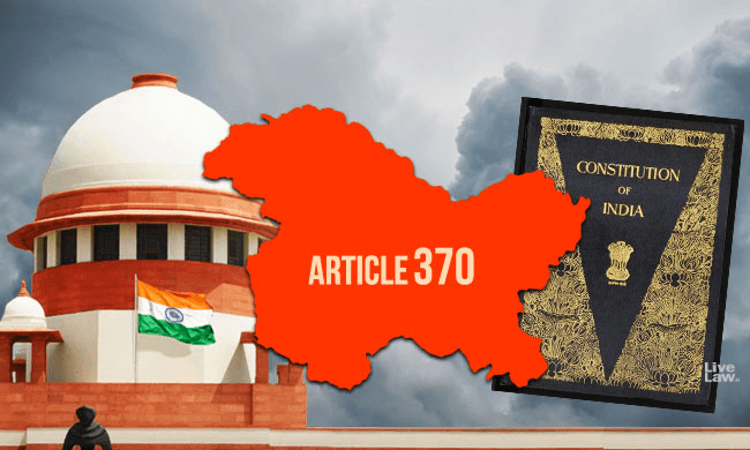
- Article 370 of the Indian Constitution, which granted special status to J&K, was abrogated on August 5, 2019, leading to the bifurcation of the region into two Union Territories: J&K and Ladakh.
- Assembly elections in the Union Territory of J&K took place in September 2024, but the restoration of Statehood, an assurance from the Union Government to the Supreme Court, has not yet been fulfilled.
- Former Union Home Secretary G.K. Pillai criticized the Supreme Court for not addressing Statehood restoration directly in its judgment.
Summary of Events and Context:
- The ongoing discourse around Statehood reflects a deep-seated political sentiment in the region, as local leaders call for restoration amid persistent concerns over security and governance.
- The Supreme Court's statements regarding Article 370's abrogation reflect a complex legal landscape where the procedure is called into question while upholding the final outcome.
- The remarks about disenfranchisement in Bihar reveal broader concerns about representation and civil rights in various regions of India.
- The historical context of the abrogation of Article 370 remains critical as it impacts the socio-political dynamics in Jammu and Kashmir, raising questions around governance, representation, and regional autonomy.
This meeting and accompanying statements highlight the multifaceted issues concerning Statehood, governance, electoral integrity, and regional security in Jammu and Kashmir that continue to resonate at both state and national levels.
Key Terms & Concepts
| Pahalgam | Location of terror attack |
| Pulwama | Previous terror attack location |
| J&K Reorganisation Act | Legislation affecting governance |
| Article 370 | Provision revoked by Parliament |
| Supreme Court | Judicial authority in verdict |
| Bihar | Reference for electoral concerns |
| Kargil Democratic Alliance | Political group expressing dissent |
| Union Territories | Current administrative division |