iAspirants
Judicial Appointments and Transparency Issues
Published on:
Source: The Hindu
Share this post
Article Summary
Notes on Judicial Appointments in India
Constitutional Articles and Rights
- Article 14: Guarantees equality before the law, applicable to public employment, including judicial appointments.
- Article 16: Provides for equality of opportunity in matters of public employment.
Judicial Precedents
- First Judges Case (1981): Established executive primacy in judicial appointments.
- Second Judges Case (1993, 4 SCC 441): Transferred primacy to Chief Justice of India (CJI) and senior judges’ opinion.
- Third Judges Case (1998, 7 SCC 739): Formed the current five-member collegium system.
- Secretary, State of Karnataka vs. Umadevi (2006, 4 SCC 1): Emphasized the need for transparent procedures in public appointments.
- CPIO vs. Subhash Chandra Agarwal (2019, 3 SCC 1): Affirms CJI's office is subject to the Right to Information Act.
Judicial Appointments and Transparency Issues
- Current collegium system criticized for lack of transparency, such as:
- No notifications of vacancies.
- Absence of an eligibility matrix.
- Non-disclosure of members who participated in decisions.
- Historical moves towards transparency regressed:
- Resolutions of the collegium ceased naming decision-making members and justification after November 2024.
- Recommendations rose to 30% for candidates related to sitting/retired judges (mainly in 2025).
Social Implications
- Accusations of "nepotism" among judicial appointments, labeled "Uncle Judges."
- Studies indicated that nearly one in three High Court judges and about 30% of Supreme Court judges had familial connections in the judiciary.
Reform Recommendations
- Suggested reforms for collegium:
- Public announcements regarding anticipated vacancies.
- Open invitation for applications from qualified candidates.
- Objective eligibility criteria.
- Documented reasoning for candidate selections to assure fairness and accountability.
International Comparisons
- United Kingdom: Uses a Judicial Appointments Commission that publicly advertises vacancies and conducts structured interviews.
- South Africa: Implements a Judicial Service Commission that invites public nominations and conducts televised interviews.
Underlying Philosophical Debate
- The ongoing discussion is about balancing judicial independence with the need for transparency and accountability.
- Institutions resisting reform may face legitimacy erosion, impacting public trust and confidence in the judicial system.
This summary highlights significant aspects of the debate concerning judicial appointments in India, focusing on constitutional obligations, legal precedents, transparency issues, social concerns of nepotism, and reform suggestions rooted in comparative international practices.
Key Terms & Concepts
| Supreme Court of India | Highest judicial forum in India |
| First Judges Case (1981) | Established executive primacy in appointments |
| Second Judges Case (1993) | Shifted primacy to Chief Justice and judges |
| Third Judges Case (1998) | Established five-member collegium system |
| MediaOne Judgment (2023) | Affirmed need for transparency |
| Articles 14 and 16 | Guarantee equality in public employment |
| Secretary, State of Karnataka vs Umadevi (2006) | Must follow transparent appointment procedures |
| CPIO vs Subhash Chandra Agarwal (2019) | CJI's office under RTI Act |
| Judicial Appointments Commission (UK) | Publicly advertises vacancies, structured interviews |
| Judicial Service Commission (South Africa) | Invites nominations publicly, televised interviews |
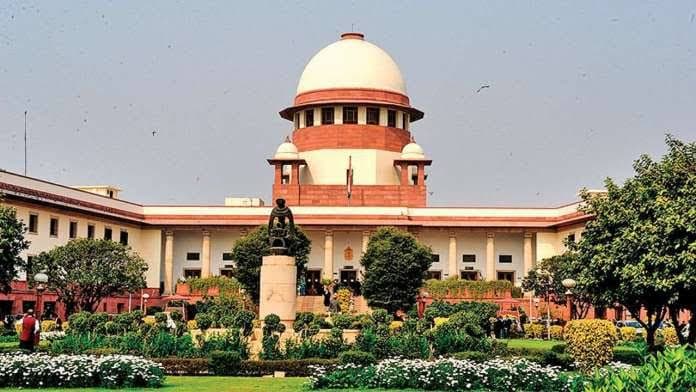
| 30% Supreme Court judges | Family links to former judges noted |