iAspirants
Karmayogi Sankalpa Enhances Leadership Practice
Published on:
Source: Indian Express
Share this post
Article Summary
Exam-Focused Notes on Karmayogi Sankalpa
1. Overview of Karmayogi Sankalpa:
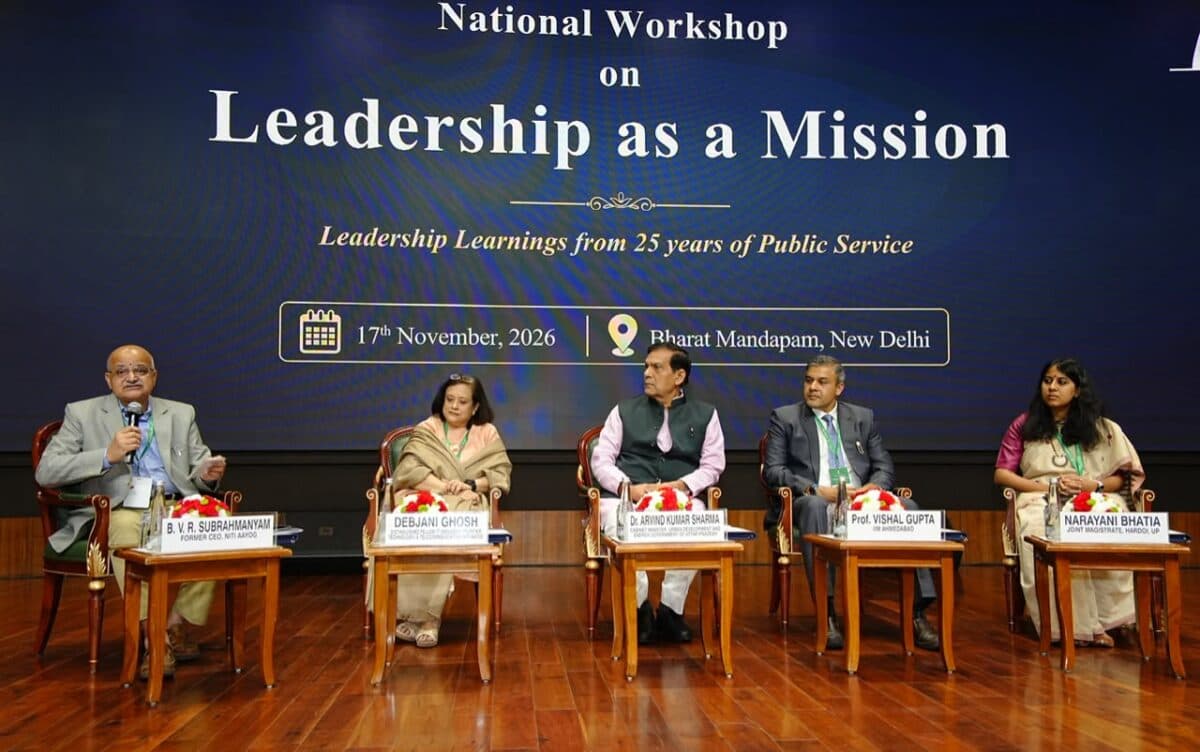
- Launched at Bharat Mandapam on November 17 as a result of the National Workshop on Leadership as Mission by NITI Aayog.
- The initiative aims to empower public servants to take individual responsibility for enhancing citizen services.
2. Key Features:
- Each officer commits to making one actionable change within their authority for the citizens they serve.
- Commitments are recorded on the iGOT platform, promoting accountability and follow-ups at 30, 60, and 90 days.
3. Objectives:
- Encourages actionable leadership by allowing officers to independently identify areas for improvement.
- Aims to change the perception that meaningful change requires external mandates or resources.
4. Workshop Insights:
- Focused on decision-making rather than theoretical leadership qualities.
- Included discussions on significant past events, like the reconstruction of Kutch after the 2001 earthquake and the Covid response.
- Emphasized attributes essential for effective public service: deep listening, equanimity, compassion, integrity, and fearlessness in difficult decision-making.
5. Mission Karmayogi:
- Launched in 2020 to transform civil service from rule-based to role-based engagement.
- The iGOT platform enhances learning for all government employees, aligning competencies with practical applications.
6. Framework and Learning:
- Introduces behavioural, functional, and domain competencies to guide civil servant development.
- Focus on converting learning into tangible citizen benefits, moving beyond course completion to actual effectiveness in service delivery.
7. Participation and Impact:
- Over 100,000 civil servants have engaged with the Karmayogi Bharat initiative.
- Emphasizes that sustainable progress (Viksit Bharat by 2047) relies on daily decisions impacting citizens’ lives at local levels.
8. Broader Implications:
- Illustrates the government’s shift towards accountability and citizen-centric service.
- Acknowledges that real improvements come from the micro-level efforts of public servants, not exclusively through overarching policy changes.
9. Conclusion:
- Successful implementation of Karmayogi Sankalpa signifies a cultural change in governance, framing civil service interactions through the lens of service to the citizenry.
- Promotes a collective movement toward enhancing governance and public service responsiveness in India.
Key Terms & Concepts
| Karmayogi Sankalpa | Leadership change commitment initiative |
| NITI Aayog | Organizer of the workshop |
| iGOT platform | Learning and development resource |
| Mission Karmayogi | Reforms for civil service efficiency |
| 25 years of public leadership | Milestone for leadership evaluation |
| Lakhpati Didi initiative | Case study of leadership impact |
| Earthquake of 2001 in Kutch | Historical leadership lesson |
| Covid Response | Recent case study for decision-making |
| Leadership attributes | Key qualities for effective governance |
| Bharat Mandapam | Venue for the workshop |
| 1 lakh civil servants | Participants in the initiative |
| Pradhan Sevak | Title of Prime Minister emphasizing service |