iAspirants
Launch of NASA-ISRO NISAR Satellite
Published on:
Share this post

Article Summary
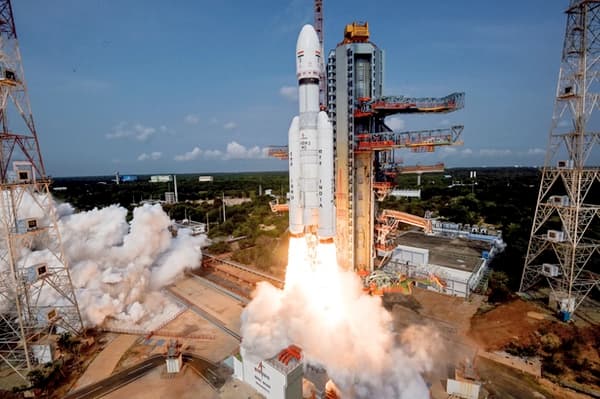
The successful launch of the NASA-ISRO Synthetic Aperture Radar (NISAR) satellite occurred on July 30, 2025, from the Satish Dhawan Space Centre in Sriharikota, Andhra Pradesh. The satellite was carried into orbit by the Geosynchronous Satellite Launch Vehicle (GSLV)-F16, lifting off at 5:40 p.m. and achieving its intended sun-synchronous orbit 18 minutes later.
Key details include:
Launch Vehicle: GSLV-F16 rocket weighed 2,392 kg.
Mission Life: NISAR has a mission life of five years and is a collaborative project between India’s Indian Space Research Organisation (ISRO) and the U.S. National Aeronautics and Space Administration (NASA).
Objectives and Capabilities:
- NISAR will provide comprehensive data for monitoring infrastructure, natural disasters (earthquakes, floods, landslides), and enhancing agricultural outputs.
- Capable of all-weather monitoring and day-and-night operation with a 12-day data acquisition interval.
- Applications include detecting ground deformations, ice sheet movements, sea ice classification, and water resource monitoring.
Technical Features:
- Utilizes a dual-frequency Synthetic Aperture Radar (SAR) with NASA’s L-band and ISRO’s S-band technologies.
- Equipped with a 12-meter unfurlable mesh reflector antenna, indicating advanced engineering collaboration between NASA's Jet Propulsion Laboratory (JPL) and ISRO.
Mission Phases:
- The NISAR mission encompasses four phases: launch, deployment, commissioning, and science operations.
- Deployment involves a complex multistage process for the antenna reflector occurring on the 10th day post-launch, followed by a 90-day commissioning phase to prepare the satellite for operational science activities.
Challenges Overcome: The successful launch provides a significant boost to ISRO following a series of setbacks, notably the technical glitch in the PSLV-C61/EOS-09 mission on May 18, 2025, and the orbit-raising failure of the NVS-02 satellite on January 29, 2025.
This mission marks a significant milestone, as it represents the first instance a GSLV has successfully placed a satellite in a sun-synchronous polar orbit, showcasing ISRO’s advancements in satellite deployment technology.
Important Points:
- Launch Date: July 30, 2025
- Satellite Name: NISAR
- Launch Site: Satish Dhawan Space Centre, Sriharikota, Andhra Pradesh
- Launch Vehicle: GSLV-F16
- Weight: 2,392 kg
- Mission Life: 5 years
- Monitoring Capabilities: Natural disasters, infrastructure, and agriculture.
- Radar Technology: Dual-frequency SAR (L-band and S-band).
- Antenna Technology: 12-meter unfurlable mesh reflector.
- Project Collaboration: Between ISRO and NASA.
- Phases of Mission:
- Successfully completed the launch phase.
- Upcoming phases include deployment, commissioning (90 days), and final science operations.
- Significance: First GSLV satellite in sun-synchronous orbit; strategic enhancement to ISRO's capabilities following previous setbacks.
Key Terms & Concepts
| NISAR | Earth observation satellite |
| GSLV-F16 | Launch vehicle |
| Satish Dhawan Space Centre | Launch site |
| Earth | Target of observation |
| Synthetic Aperture Radar | Observation technology |
| NASA | Collaborating space agency |
| ISRO | Indian space agency |
| Jet Propulsion Laboratory | Radar antenna built |