iAspirants
Current AffairsPrelims PYQsUPSC CSE SyllabusUPSC CSE StrategyBlogsPricing
Login
iAspirants
Current AffairsPrelims PYQsUPSC CSE SyllabusUPSC CSE StrategyBlogsPricingContact UsLoginSignUp
iAspirants

Your AI-powered companion for UPSC preparation.

Study Resources

  • Current Affairs
  • Prelims PYQs
  • UPSC CSE Syllabus
  • UPSC CSE Strategy
  • Blogs

Practice & Plans

  • Mains Answer Evaluation
  • Pricing
  • Sign Up
  • Login

Company

  • Home
  • About Us
  • Contact Us
  • FAQs

Legal

  • Privacy Policy
  • Terms & Conditions
  • Return Policy

© 2026 iAspirants, Inc. All rights reserved.

  1. Blogs
  2. Science and Technology

Mathematics and Chemistry of Homochirality

Published on: 09-Oct-2026

Source: The Hindu

Share this post

Mathematics and Chemistry of Homochirality

Article Summary

Summary of Key Points

Scientific Discovery and Awards

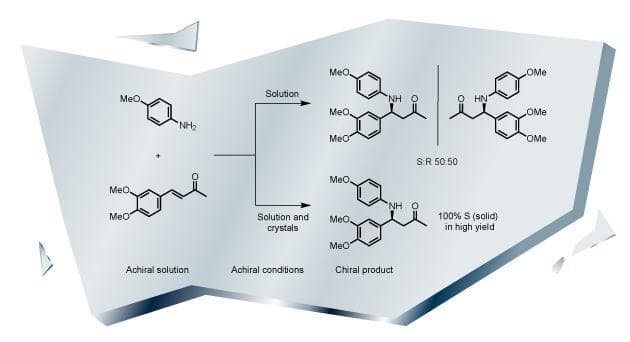
  • Nobel Prize in Chemistry: Awarded to Henri Kagan and Kenso Soai for their research on homochirality—the phenomenon where biological molecules favor one of two mirror-image forms.
  • Homochirality: Critical for biological functions—only the ‘L’ form of amino acids is used in proteins, while the ‘D’ form of sugars is found in DNA.

Historical Context

  • Thalidomide (1957-1961): A drug that had two mirror-image versions leading to severe congenital abnormalities in over 10,000 infants worldwide, highlighting the importance of molecular chirality in pharmaceuticals.

Economic and Sociological Insights

  • Matthew Effect: Refers to the phenomenon where "the rich get richer," suggesting that small advantages can accumulate over time, mirroring the behaviors observed in molecular biology.
  • Pareto Principle: In economics, often known as the 80/20 rule, where a small percentage of causes lead to a majority of effects.

Concepts in Chemistry

  • Chirality: Molecules have "handedness" or chirality, with life favoring one variant for functional efficacy—important in drug development.
  • Biological Implications: Understanding homochirality enhances insights into evolutionary biology and the processes underlying natural selection.

Research Applications and Future Directions

  • Synthesis of Desired Molecules: Kagan and Soai's methods enable reliable synthesis of specific molecular forms, essential for drug development and other applications in biochemistry.
  • Interdisciplinary Links: Their research connects chemistry and biology, illustrating how biochemical understanding can lead to significant advancements in practical applications.

Notes for Examination

  • Key Terms: Homochirality, chirality, Matthew effect, Pareto principle.
  • Judicial Reference: Thalidomide case emphasizes the importance of regulatory oversight in drug approvals—a historical precedent in pharmaceutical law.
  • Implications for Policy: Enhancing drug safety regulations and promoting research in chiral synthesis methods essential for future medical developments.

This summary encapsulates important scientific, historical, and socio-economic concepts that resonate with ongoing developments in chemistry and its real-world applications, making for an essential review point in understanding contemporary challenges and advancements in the field.

Key Terms & Concepts

HomochiralityMolecular handedness phenomenon
Louis PasteurResearch on mirror-image forms
ThalidomideDrug with mirrored forms
Nobel Prize in ChemistryAwarded for chirality research
Matthew EffectEconomic principle in sociology
Pareto PrincipleObservation on wealth distribution
Amino AcidsBuilding blocks of proteins
Kagan’s InsightParallel with evolutionary biology
Kenso SoaiResearch on molecular synthesis
Mirror-image formsConcept in molecular chemistry

Mind Map for UPSC Civil Services Revision

Turn UPSC Civil Services Current Affairs Into Exam-Ready Notes

Reading Science and Technology current affairs is half the work. Revise them with ready-made notes and test what actually stuck.

  • Daily UPSC Civil Services current affairs analysis
  • Revision notes, mind maps & MCQs
  • Prelims mock tests with instant results

Related UPSC Civil Services Current Affairs Articles

India's Clean Energy and Strategic Autonomy
Economic and Social Development23-Nov-2026

India's Clean Energy and Strategic Autonomy

Summary of Key Points on India's Strategic Shift Towards Clean Energy

1. Clean Energy Transition and Strategic Importance

  • India is moving from fossil fuels to clean energy, influencing industrial and strategic power centers.
  • China's dominance in clean energy production and critical minerals:
Practise Mains answer writingUpload a handwritten answer and get it evaluated
  • Controls 82% of global solar-module manufacturing.
  • Holds 91% of solar cells and 95% of wafers.
  • Dominates 80% of lithium-ion battery capacity and over 70% of cobalt and lithium processing.

2. Government Policies and Schemes

  • Export Ban on Lithium-Ion Battery Black Mass: Implemented on November 10 to prioritize domestic refining.
  • Capital Support Scheme: Rs 2,814-crore approved for establishing four domestic lithium and nickel processing plants.
  • Production Linked Incentive (PLI) Schemes: Encouraging domestic production of solar modules and battery components, though still reliant on Chinese supplies.
  • National Critical Mineral Mission (2025): Aims to enhance domestic capabilities in critical minerals.

3. International Relations and Resource Access

  • India seeks long-term partnerships with resource-rich countries (e.g., Argentina, Chile, DRC, Indonesia, Zambia, and Zimbabwe) to secure access to critical minerals.
  • Khanij Bidesh India Limited (KABIL): Exploring lithium brine blocks in Argentina.

4. Technological Advancements and Alternatives

  • Israel emphasizes the need for "technological multi-alignment" to develop alternatives such as:
    • Sodium-ion batteries.
    • Green hydrogen.
    • Solid-state batteries.
  • Importance of industry-academia partnerships, skilled manpower, and predictable domestic demand.

5. Environment and Recycling

  • Emphasis on scaling up recycling initiatives for batteries, solar panels, and e-waste to recover critical minerals.

6. Challenges and Strategic Autonomy

  • Current production of solar cells and wafers does not meet domestic needs; reliance on Chinese imports continues.
  • Proactive, state-supported industrial strategy is crucial for addressing vulnerabilities in supply chains.
  • Need for a resilient cleantech ecosystem to avoid dependencies, mirroring past vulnerabilities observed during the Ukraine crisis.

7. Judicial and Constitutional References

  • The need to develop a "technological sovereignty" reflects on India's constitutional commitment to sustainable growth as referenced in the Directive Principles of State Policy (DPSP) concerning the protection and improvement of the environment.

Conclusion

India's shift towards a clean energy paradigm not only impacts environmental sustainability but also its strategic independence. Balancing domestic production capabilities while managing external dependencies on technology and resources will be key in achieving true autonomy in the 21st century. Strategic investments, technological diversification, and international collaborations are crucial to this objective.

Air Quality Management Plans for NCR
Environment and Ecology22-Nov-2026

Air Quality Management Plans for NCR

Commission for Air Quality Management (CAQM) - Action Plans for Air Pollution Control

  • Overview: The CAQM has mandated the preparation of comprehensive State Action Plans for 2027 to control air pollution in Delhi and the National Capital Region (NCR), including district-level action plans for the first time.

  • Objectives of Action Plans:

    • Ensure grassroots-level pollution control through District-Level Action Plans.
    • Facilitate effective monitoring, identification of implementation gaps, and timely corrective measures.
    • Establish clear accountability by naming officials responsible for prescribed targets.
  • Targeted Outcomes:

    • Achieve a reduction of 15%-20% in annual average air pollution levels (AQI, PM2.5, and PM10) compared to 2026 through targeted measures across major pollution sources.
  • Key Pollution Sources Identified:

    • Vehicular emissions
    • Road dust
    • Industrial emissions
    • Construction and demolition (C&D) activities
    • Municipal solid waste (MSW) management
    • Agricultural practices such as crop residue burning
    • Usage of diesel generator (DG) sets
    • Crematoria operations and other local pollution sources
  • Implementation Monitoring:

    • The ongoing 2026 annual action plan is being monitored. Previous reports indicate that only 40%-60% of the promised measures were completed by the states involved (Delhi, Uttar Pradesh, Haryana, Rajasthan, and Punjab).
  • Technology Integration:

    • A private company showcased drone technology for spraying water to mitigate air pollution, demonstrated to the Delhi government. This technology aims to provide immediate relief in open areas, with further assessments planned over a week.
  • Contextual Importance: This initiative aligns with the CAQM’s aim to shift towards structured, measurable frameworks for achieving lasting improvements in air quality across regions affected by pollution.

Conclusion: The systematic development of comprehensive State and District Action Plans is critical for addressing air quality issues effectively, emphasizing accountability and innovative technologies. This effort reflects both a growing recognition of environmental responsibilities and an actionable framework to meet air quality targets established by governance policies.

AI Proves 167-Year-Old Riemann Hypothesis
Science and Technology21-Nov-2026

AI Proves 167-Year-Old Riemann Hypothesis

  • Riemann Hypothesis: Proposed by mathematician Bernhard Riemann in 1859, it addresses the distribution of prime numbers and the zeros of the Riemann zeta function. It states that all non-trivial zeros of the function have a real part of exactly 1/2.

  • Status: The Riemann Hypothesis is one of the seven Millennium Prize Problems recognized by the Clay Mathematics Institute, which offers $1 million for a correct solution. As of the latest reports, it remains unsolved.

  • Claim of Proof: Mathematician Levent Alpöge, working at AI company Anthropic, claims to have proven the Riemann Hypothesis using the AI model Claude. The claimed proof has yet to be independently verified and is available in a code format called Lean, used for formalizing mathematical arguments.

  • Collaborative Process: Alpöge indicated that the research collaboration involved guiding the research while the AI model contributed key mathematical ideas. A significant breakthrough was combining various approaches in number theory.

  • Technological Contributions:

    • Claude AI Model: Allegedly provided unexpected mathematical insights and approaches, allowing progress in a traditionally challenging area of mathematical theory. The AI substantially contributed towards the end of the proof development.
    • Stepanov’s Method: A technique previously used in mathematical settings which was adapted in this research.
  • Prior AI-assisted Progress: Earlier developments reported by Anthropic included an improvement in the lower bound of the proportion of zeros of the Riemann zeta function, from 41.6% to 67.2%, signifying progress in related but separate inquiries.

  • Mathematical Community Response: The mathematical community has recognized the ambitious nature of Alpöge's claim; however, the proof requires simplification and further explanation for peer verification.

  • Significance: A confirmed proof could lead to deeper insights into prime number distribution, a cornerstone of number theory, and has implications for areas such as cryptography and number theory research.

These developments underscore a significant intersection of mathematics and artificial intelligence, reflecting ongoing advancements in computational methods in resolving historical mathematical conjectures.

India's Strategic Shift to Clean Energy
Economic and Social Development21-Nov-2026

India's Strategic Shift to Clean Energy

Exam-Focused Notes on India’s Transition to Clean Energy and Strategic Autonomy

Key Developments

  1. Export Ban on Lithium-Ion Battery Black Mass:

    • Effective November 10, India imposed a ban on exporting lithium-ion battery black mass, which contains vital minerals like lithium, cobalt, nickel, and manganese.
    • This move aims to prioritize domestic refining for clean energy technologies.
  2. Government Scheme for Domestic Processing:

    • The Union Cabinet approved a ₹2,814 crore scheme to set up four lithium and nickel processing plants in India.
    • Focus on developing indigenous capabilities for critical materials essential for the clean energy transition.

Strategic Context

  1. China’s Dominance in Clean Energy:

    • China holds significant global shares:
      • 82% of solar-module manufacturing capacity.
      • 91% of solar cells.
      • 95% of wafers.
      • 80% of lithium-ion battery capacity.
  • Over 70% of cobalt and lithium processing.
  • Such proportions reflect China's state-driven industrial policy.
  • Dependency Issues:

    • India’s green energy initiatives depend heavily on Chinese imports for solar cells, components, and critical minerals.
    • Production Linked Incentive (PLI) schemes exist but do not fully address the structural dependency.
  • Future Directions

    1. Enhancing Domestic Capabilities:

      • Need for a proactive, state-backed industrial strategy to enhance domestic technological and manufacturing capabilities.
      • Focus on:
        • Upstream production and domestic value addition.
        • Investment in chemistry, metallurgy, and materials science.
    2. Partnerships for Mineral Access:

      • National Critical Mineral Mission (2025) and Khanij Bidesh India Limited (KABIL) aim to secure long-term partnerships and access to critical minerals.
      • KABIL is currently in exploration for lithium brine blocks in Argentina, emphasizing collaboration in mineral processing.
    3. Pursuing Technological Multi-Alignment:

      • A strategic push towards next-generation alternatives like sodium-ion batteries, green hydrogen, and solid-state batteries.
      • Importance of development translating research into production, necessitating:
        • Industry-academia partnerships.
        • Skilled manpower.
        • Predictable domestic demand through public procurement.
    4. Scale-Up of Recycling Initiatives:

      • Focus on recycling batteries, solar panels, and e-waste to recover critical minerals and enhance refining capacity.
    5. International Collaboration on Green Tech:

      • Building partnerships with advanced technological partners for research, manufacturing, and setting standards for green technologies.
      • Understanding the complexities of energy security to avoid heavy reliance on any single supply chain, particularly China.

    Strategic Autonomy

    • The overall goal is to loosen dependence on Chinese supply chains while enhancing India’s capacity in critical-mineral and clean-tech sectors.
    • A resilient cleantech ecosystem is vital for India, ensuring that sovereignty isn’t solely about military might but also economic independence in the clean energy sphere.

    Conclusion

    • India's transition to clean energy and strategic autonomy from fossil fuels necessitates a multi-faceted approach including domestic manufacturing capabilities, international partnerships, technological advancements, and enhanced recycling efforts. The emphasis on local production and innovation is crucial for securing India’s energy future and economic stability.