iAspirants
NISAR Satellite Mission Countdown Begins
Published on:
Share this post

Article Summary
The news article discusses the scheduled launch of the NISAR satellite, a collaborative effort between the Indian Space Research Organisation (ISRO) and the National Aeronautics and Space Administration (NASA). The mission signifies a significant milestone in international space collaboration, showcasing advancements in Earth observation technology.
Summary:
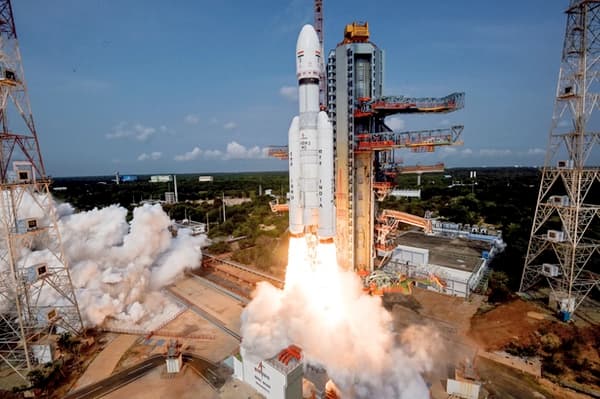
Launch Details: The countdown for the NISAR satellite began on July 29, 2025, at 2:10 p.m. IST. The actual lift-off is scheduled for July 30, 2025, at 5:40 p.m. IST from the Satish Dhawan Space Centre in Sriharikota, using a Geosynchronous Satellite Launch Vehicle (GSLV-F16) to deploy the satellite into a 743-km sun-synchronous orbit approximately 19 minutes post-launch.
Satellite Specifications: NISAR, which stands for NASA-ISRO Synthetic Aperture Radar, is a 2,392-kg satellite designed to provide all-weather, day-and-night data at 12-day intervals. It aims to support various applications including disaster response, land use management, and climate monitoring.
Partnership Significance: The NISAR mission marks the first joint satellite developed collaboratively by ISRO and NASA, demonstrating the efficacy of international cooperation in space exploration. The mission's development faced challenges due to the global COVID-19 pandemic, yet it strengthened the relationship between the two space agencies.
Contributions and Collaboration: ISRO's role included building the spacecraft bus and S-band radar while providing launch vehicle services and mission operations. NASA contributed by developing the L-band radar, the mission's radar reflector and boom, and a robust communication subsystem amongst other components.
Statements from Officials:
- Karen St. Germain, Director of Earth Science at NASA, praised the project as a model for future Earth observation capabilities, highlighting the shared learning and cooperation that enriched both agencies during the mission's development.
- Phil Barela, NISAR project manager at NASA’s Jet Propulsion Laboratory (JPL), emphasized the productive partnership over the past decade, through which both agencies exchanged considerable knowledge and expertise.
Operational Highlights: During the integration phase, approximately 65 ISRO engineers visited JPL to facilitate testing and integration processes, while NASA sent over 175 engineers to ISRO’s facilities to ensure seamless collaboration.
Consequences of the Mission: The mission is expected to foster advancements in Earth monitoring technologies and provide extensive data to support a wide range of scientific and governmental applications.
Important Points:
- The NISAR satellite’s launch is scheduled for July 30, 2025, from Sriharikota.
- The satellite will operate in a sun-synchronous orbit at 743 km altitude.
- NISAR is a result of collaboration between ISRO and NASA, showcasing international partnership.
- The satellite will provide data at 12-day intervals, enhancing Earth observation capabilities.
- The mission signifies an advancement in technological and scientific cooperation between India and the United States.
- NASA and ISRO's teams overcame the challenges posed by COVID-19 to advance the project's integration and preparations for launch.
This information encapsulates the crucial aspects of the NISAR mission and its implications, reflecting the collaborative efforts that have characterized contemporary space exploration initiatives.
Key Terms & Concepts
| NISAR | Satellite for Earth observation |
| GSLV | Launch vehicle for satellite |
| ISRO | Indian space agency |
| NASA | US space agency |
| Satish Dhawan Space Centre | Launch site in India |
| Earth Science | NASA's division involved |
| JPL | NASA's lab for missions |
| COVID-19 | Global pandemic affecting work |