iAspirants
NISAR Satellite Mission Launch Countdown
Published on:
Share this post

Article Summary
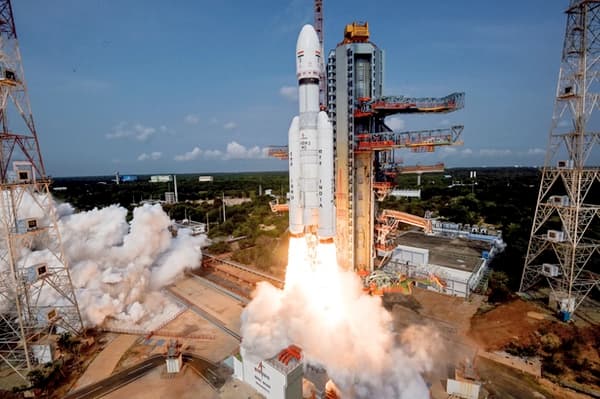
The NISAR (NASA-ISRO Synthetic Aperture Radar) satellite mission is set to launch on July 30, 2025, with a countdown that began on July 29, 2025. The satellite, weighing 2,392 kg, will be lifted off by a Geosynchronous Satellite Launch Vehicle (GSLV) from the Satish Dhawan Space Centre in Sriharikota at 5:40 p.m. Following the lift-off, the GSLV-F16 rocket will deploy the NISAR satellite into a sun-synchronous orbit at an altitude of 743 km approximately 19 minutes later.
Key Features of the NISAR Mission:
- The NISAR satellite is a pioneering joint venture between the Indian Space Research Organisation (ISRO) and NASA.
- It is designed to provide comprehensive Earth observation data, capturing all-weather, day-and-night information at 12-day intervals.
- The data derived from NISAR will serve a multitude of applications, enhancing our understanding of Earth's systems.
Collaborative Aspects:
- This mission represents a significant collaboration, integrating engineering capabilities from both ISRO and NASA.
- ISRO has constructed the spacecraft bus, S-band radar, and is responsible for the launch vehicle, launch services, and overall mission operations.
- NASA's Jet Propulsion Laboratory (JPL) has developed the L-band radar and mission components such as the radar reflector and boom, alongside critical subsystems for scientific data transmission, GPS receivers, and a solid-state data recorder.
Response and Significance:
- NASA officials remarked that this partnership with ISRO has notably strengthened ties between the two agencies, especially during challenges posed by the COVID-19 pandemic.
- Karen St. Germain, Director of Earth Science at NASA Headquarters, emphasized the significant learning curve and cooperative efforts during the mission's development.
- Phil Barela, the NISAR project manager at JPL, noted the robust exchange of engineers between both organizations, with over 175 NASA engineers working at ISRO, and 65 ISRO engineers visiting JPL during late 2020 to conduct integration tests.
Broader Implications:
- The NISAR mission is seen as a model for future Earth observation projects, highlighting the benefits of international collaboration in space technology.
- It is expected to enhance Earth-monitoring capabilities and provide vital data for various scientific, environmental, and resource management applications.
Summary of Key Dates:
- July 29, 2025: Countdown begins at 2:10 p.m.
- July 30, 2025: Scheduled launch time at 5:40 p.m.
Important Sentences:
- The NISAR satellite mission marks the first collaboration of its kind between ISRO and NASA.
- The satellite will utilize advanced radar technology to monitor Earth, aiming to provide critical data for various applications.
- Both NASA and ISRO have expressed satisfaction with their collaborative efforts and the lessons learned during the project's execution.
- The launch represents a significant milestone in international cooperation in space exploration and Earth science.
This mission exemplifies the fusion of capabilities and scientific research across nations, boosting global efforts in Earth observation and environmental stewardship.
Key Terms & Concepts
| NISAR satellite | Earth observation satellite |
| GSLV | Launch vehicle for satellite |
| NASA | Collaborating space agency |
| ISRO | Indian space agency |
| Satish Dhawan Space Centre | Launch site location |
| Earth Science | NASA directorate involved |
| Jet Propulsion Laboratory | NASA's research center |
| COVID-19 pandemic | Impacting global collaboration |