iAspirants
Regulation of Pallikaranai Marshland Construction
Published on:
Source: The Hindu
Share this post

Article Summary
Summary of the Decision on Pallikaranai Marshland Construction Regulations
Context:
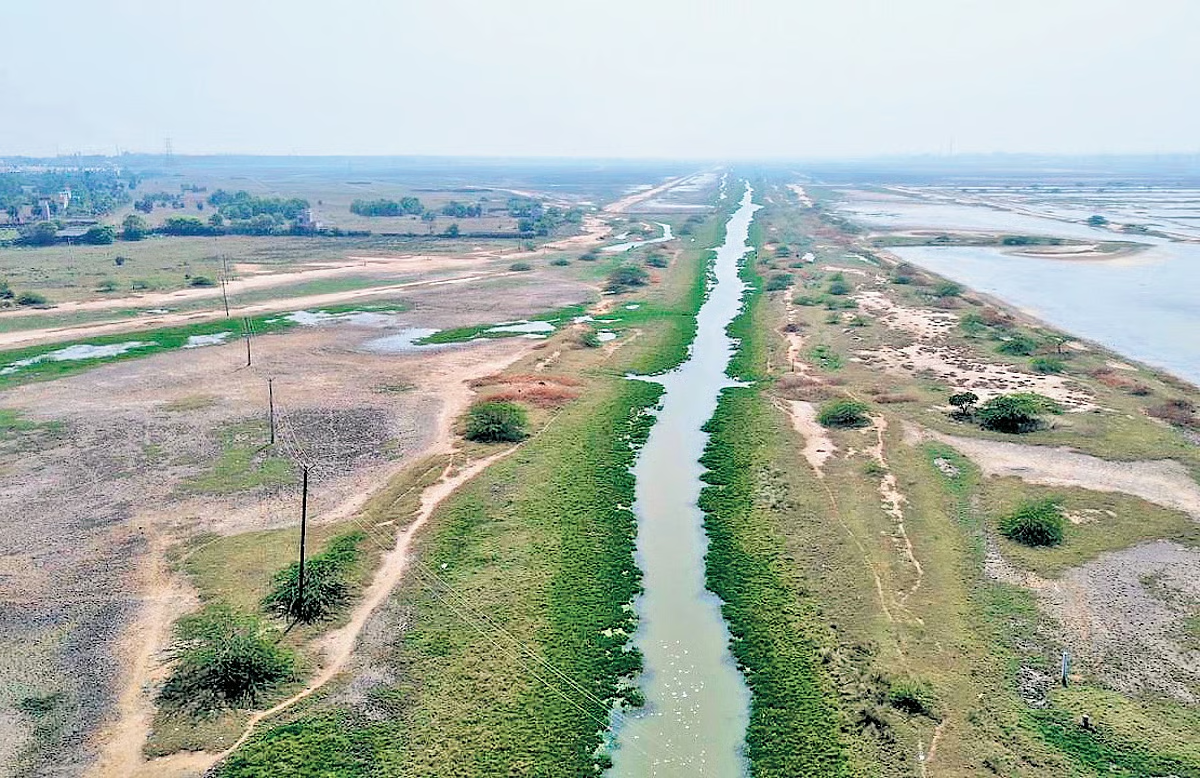
- The Tamil Nadu State Wetlands Authority (TNSWA) has informed the Madras High Court regarding the regulation of construction in the 'zone of influence' (ZoI) of the Pallikaranai marshland in Chennai, which spans approximately 1,247.54 hectares.
Judicial Authority:
- The case is being heard by the First Division Bench comprising Chief Justice Sushrut Arvind Dharmadhikari and Justice G. Arul Murugan.
Key Findings:
- The National Centre for Sustainable Coastal Management (NCSCM) has proposed an interim ZoI plan, indicating varying widths around the marshland based on scientific studies of hydrological and land use characteristics.
- Proposed widths of the interim ZoI:
- 0 m: 30.14 km (38.7% of the total boundary)
- 0 to 20 m: 16.16 km (20.7%)
- 20 to 50 m: 3.20 km (4.1%)
- 50 to 100 m: 3.80 km (4.9%)
- Above 100 m: 24.55 km (31.5%)
- Approximately 46.30 km (59.5%) of the boundary has a proposed width of 0-20 m, while 24.55 km (31.5%) has a width exceeding 100 m.
Legal Background:
- The TNSWA’s response is in context of a ban previously imposed by the National Green Tribunal (NGT) that restricted construction within a 1 km radius around the marshland, based on potential adverse ecological effects.
Regulatory Framework:
- The proposed interim ZoI plan aligns with the Wetlands (Conservation and Management) Rules, 2017, issued by the Union Ministry of Environment, Forest and Climate Change.
- According to these guidelines, the ZoI is defined as the area where developmental activities may adversely impact the wetland ecosystem.
Considerations for the Interim ZoI:
- The NCSCM used a variable-width, site-specific approach rather than a uniform distance due to the urbanized landscape surrounding Pallikaranai marsh, which has diffused drainage and extensive built-up areas adjacent to the marsh.
- Existing drainage systems, low-lying areas, and other natural features that maintain water connectivity with the marsh have been accounted for in determining the interim ZoI.
Next Steps:
- The High Court has allowed two weeks for stakeholders, including representatives of the Confederation of Real Estate Developers Association of India (CREDAI) - Chennai chapter, to review and respond to the NCSCM report.
- The case is scheduled for the next hearing on September 7, 2026.
This development points towards a potential shift in how construction regulations around wetlands may be determined, favoring a more nuanced approach in densely populated urban areas while adhering to ecological protections.
Key Terms & Concepts
| Pallikaranai marshland | Ecological area under regulation |
| Tamil Nadu State Wetlands Authority | Regulatory authority in charge |
| Madras High Court | Judicial body presiding over case |
| National Centre for Sustainable Coastal Management | Prepared interim zone plan |
| Guidelines for Implementing the Wetlands (Conservation and Management) Rules, 2017 | Regulatory framework for wetlands |
| National Green Tribunal | Imposed construction ban |
| Confederation of Real Estate Developers Association of India | Challenged the construction ban |
| interim zone of influence (ZoI) | Defined area for construction regulation |
| Ecological connectivity | Relationship between habitats |
| Status report | Document submitted to court |
| September 7, 2026 | Next hearing date scheduled |