iAspirants
Role of English in Indian Society
Published on:
Share this post

Article Summary
The article explores the multifaceted journey of the English language in India, examining its historical, social, and cultural implications from colonial times to contemporary society. The narrative includes personal anecdotes, historical accounts, and scholarly insights to illustrate how English has transitioned from a colonial imposition to a vital linguistic tool that signifies aspiration, modernization, and sometimes, a means of social mobility.
Key Points:
Personal Experiences: In Haryana, students like Abhay Singh Monga take English courses, perceiving it as a class marker essential for professional progress, particularly in legal careers. Similarly, government school teacher Shivani Chandel notes that English serves as a key to modern participation for students from lower middle classes.
Historical Introduction: English was introduced to India in the 17th century initially as a commercial language by the East India Company, not merely as a tool for governance. The need for communication in trade resulted in the adoption of English among Indian merchants.
Evolving Role of English: The British Parliament debated the role of education in India from 1818 to 1835, culminating in Macaulay’s Minute on Indian Education, which established English as a language of governance and an elite class identity.
Cultural Repercussions: English became associated with modernity and rational thought, creating a dichotomy where Indian languages were regarded as inferior or outdated, as noted in the policies of figures like Macaulay.
Resistance to English: Social reformers and nationalists, including Mahatma Gandhi and Rabindranath Tagore, critiqued English for detaching Indians from their cultural roots. Gandhi warned against the assimilative forces of English education, while Tagore lamented that it hindered genuine education.
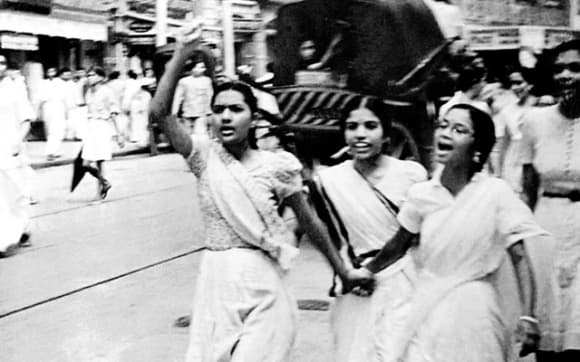
Post-Independence Language Governance: Following 1947, India faced the challenge of establishing a national language, leading to heated debates over Hindi's promotion versus retaining English. Protests erupted in Tamil Nadu against the imposition of Hindi, illustrating the ongoing complexities of language politics.
Current English Landscape: Today, English functions as a crucial parameter of privilege and opportunity, dividing socio-economic strata. A significant portion of India remains illiterate in any language, disproportionately affecting rural populations. English is often viewed as a means of upward mobility, especially among women facing societal pressures regarding marriage prospects.
Caste and Class Dynamics: The article highlights the evolving nature of English, noting how Dalits and other marginalized groups reclaim it as a tool for empowerment and social ascension. Instances of Dalits constructing temples to 'Angrezi Devi' symbolize a shift in perception, where English represents liberation from traditional caste hierarchies.
Transformation of English: Indian English, or ‘Chutnified English,’ is now viewed as a vibrant, hybrid linguistic form rather than a colonial relic. This evolution underscores a broader acceptance of hybrid language forms as both legitimate and vital for expression in a multilingual society.
Aspirational Language: The article concludes by emphasizing that English has become integral to job markets, even among marginalized groups, thus transcending its colonial past to embody the aspirations and realities of contemporary India.
Conclusion:
The historical trajectory and present status of English in India illustrate its complex relationship with identity, power, and opportunity. It serves both as a gatekeeper of privilege and a potential avenue for empowerment across various segments of society, making its relevance in Indian life profound and multi-layered.
This exploration evidences the language's continued importance, reflective of broader socio-economic landscapes and cultural shifts within India.
Key Terms & Concepts
| Panjab University | Educational institution for law |
| East India Company | Historical trade organization |
| Hind Swaraj | Gandhi's critique on English |
| Indian Constitution | Foundation of Indian law |
| English Education Act 1835 | Policy establishing English's primacy |
| Bharatiya Janata Party | Political party in India |
| Dalits | Socially marginalized community |
| Chutnified English | Indianized form of English |