iAspirants
Severe Rainfall Causes Landslides in Uttarakhand
Published on:
Share this post

Article Summary
Summary of Extreme Rainfall and Its Impact in Uttarakhand
Heavy Rainfall and Landslides:
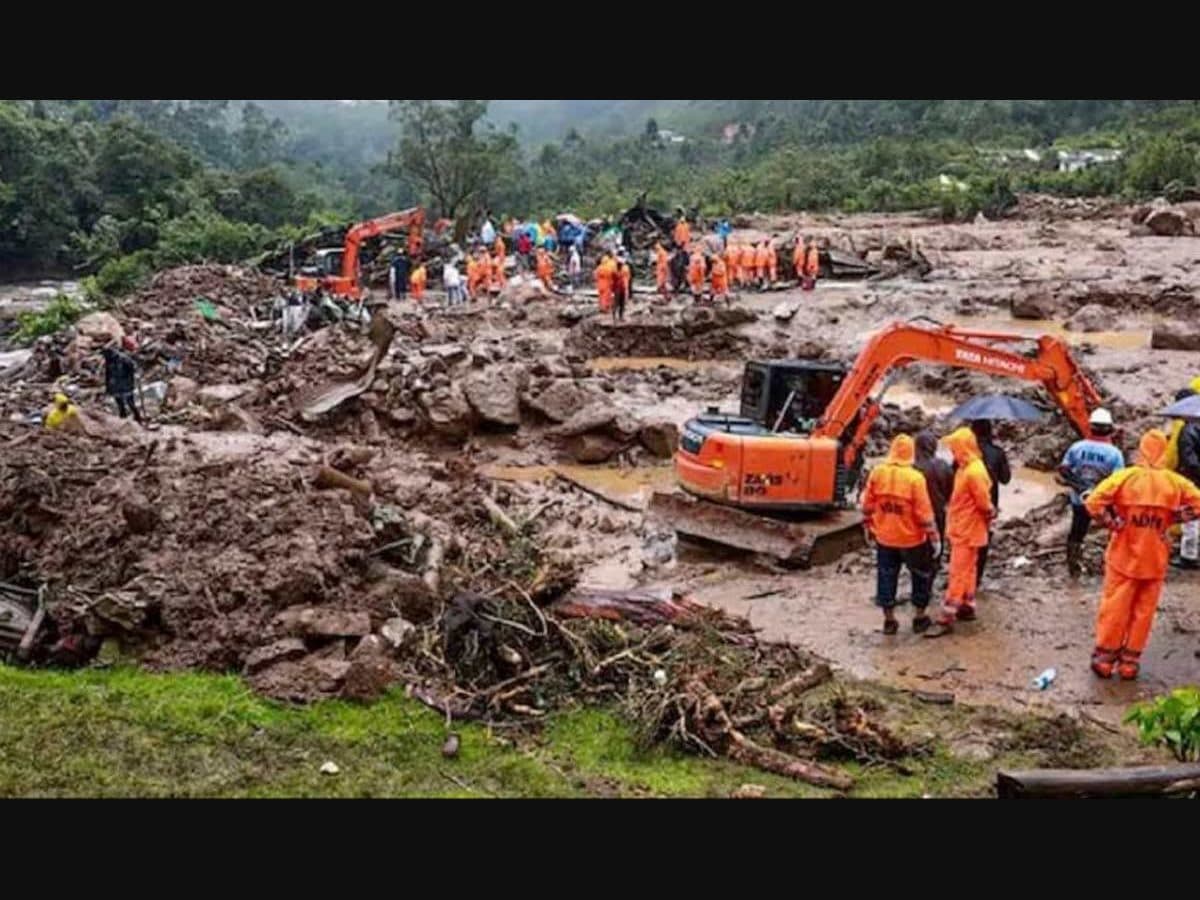
- Recent heavy rainfall in Dehradun and other districts of Uttarakhand has triggered landslides, resulting in at least 15 reported deaths.
- The region has experienced successive extreme weather events over the past month, with significant mudslides and flash floods.
Rainfall Statistics:
- The northwestern region of India, including Uttarakhand, saw a 34% surplus rainfall in August and over 30% surplus since the onset of the monsoon (June-September).
- In the first half of September, rainfall was recorded at more than 67% above normal.
- Udhampur in Jammu and Kashmir reported 630 mm of rainfall in 24 hours on August 27, a figure comparable to an entire year’s rainfall in Rajkot, Gujarat.
- Leh in Ladakh recorded 59 mm of rain in 48 hours from August 24 to 26, a record since 1973.
Geographical Factors:
- Mountainous regions are more vulnerable to disasters due to the topography, which doesn't allow for adequate drainage during extreme rainfall events.
- Intense rainfall can lead to landslides and mudslides as the descending water carries loose soil and debris, demonstrated by incidents in Mandi, Kullu, and Dharali.
Disaster Mechanics:
- In mountainous areas, rainwater contributes to landslides and mudslides, especially when major river streams become blocked.
- Disasters can be avoided if extreme rainfall occurs in non-prone areas; conditions have to align precisely for disasters to happen.
Climate Considerations:
- The southward shift of large-scale weather systems, particularly western disturbances, is altering rainfall patterns.
- This shift is attributed to global warming and has implications for rainfall prediction in hilly regions.
- Future climate trends suggest an increase in extreme rainfall events, coupled with longer dry spells during the monsoon season.
Role of Western Disturbances:
- Western disturbances originating from the Mediterranean Sea contribute to precipitation patterns in northern India, particularly during winter.
- The interaction of these disturbances with southwest monsoonal systems is complicating predictive models for rainfall in regions like the Himalayas.
Implications of Climate Change:
- Emerging patterns indicate that global warming is a significant factor affecting weather patterns, leading to increased frequency and intensity of rain-related disasters in mountainous regions.
- Arctic sea ice melting may further exacerbate anomalies in monsoon behavior over the Himalayas.
Key Data Points
- Rainfall Surplus: 34% in August, over 30% in monsoon season (June-September).
- Udhampur Rainfall: 630 mm in 24 hours (August 27).
- Leh Rainfall Records: 59 mm in 48 hours, a historical record since 1973.
General Understanding
- Disaster Preparedness: The increase in rainfall intensity signals a need for improved disaster risk management in vulnerable regions.
- Climate Adaptation: Research and policies addressing the effects of climate change on precipitation and disaster risk in hilly regions are critical for safeguarding lives and infrastructure.
Key Terms & Concepts
| Uttarakhand | Affected region by rainfall |
| Himachal Pradesh | Nearby affected region |
| Bay of Bengal | Source of low-pressure systems |
| Leh | Recorded extreme rainfall |
| Udhampur | Recorded significant rainfall |
| Western Disturbances | Weather pattern causing precipitation |
| Arctic Sea Ice | Influencing climate patterns |
| Global Warming | Driver of climate change |