iAspirants
The Evolution of English in India
Published on:
Share this post

Article Summary
Summary of the Article on the Role of English in India
The article explores the evolution and significance of the English language in India, tracing its historical roots, socio-economic implications, and roles in education and employment.
Current Context:
- Individuals from various backgrounds, such as Abhay Singh Monga, a law student, and his classmate Pankaj Bansal, an advocate, express the necessity of English for career advancement, perceiving it as a gatekeeper to societal status and opportunity.
- Teachers like Shivani Chandel emphasize the dream of English fluency among lower-middle-class students, linking the language to modern life participation.
Historical Overview:
- English arrived in India with the East India Company in the 17th century as a language of trade, not just colonial governance.
- Debates in the British Parliament from 1818 to 1835 involved British Orientalists and Evangelicals, culminating in Macaulay’s influential 1835 educational reforms which established English as a tool for creating a class of "interpreters" between the British and Indians.
- The English Education Act 1835 further solidified the language's status, associating English with modernity, clarity, and reason.
Cultural Resistance:
- Indian voices of dissent emerged by the 19th century, with reformers like Mahatma Gandhi and Rabindranath Tagore critiquing English for alienating Indians from their cultural roots.
- Despite criticism, English became entrenched in the legal and educational systems, with independence in 1947 and subsequent debates on national language highlighting the complexities of linguistic politics.
Post-Independence Language Dynamics:
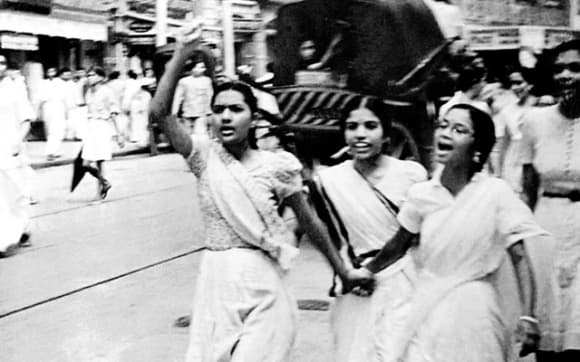
- The question of a national language led to tensions, particularly regarding the promotion of Hindi over regional languages. Anti-Hindi agitations surfaced, notably in Tamil Nadu during the 1960s.
- Prominent leaders like Atal Bihari Vajpayee and Manmohan Singh acknowledged the nuanced significance of English in modern India.
Modern Implications:
- English serves as both a privilege and an obstacle; it continues to perpetuate social divides, particularly affecting rural, lower-caste, and female populations.
- Communities, including Dalits in Uttar Pradesh, have embraced English as a means of empowerment, viewing it as a pathway to escape caste-based oppression.
Evolution of ‘Indian English’:
- The language has evolved into a regional form known as ‘Chutnified’ English, marked by the incorporation of Indian idioms and cultural expressions. This linguistic hybridization reflects the social dynamics across India.
- The significance of English transcends the elite; it is increasingly perceived as essential across various socio-economic classes, representing a means to access better employment opportunities.
Conclusion:
- English in India is no longer viewed solely as a colonial remnant but rather as a tool of empowerment and a symbol of aspirational mobility. Its widespread utility underscores a collective negotiation of identity and opportunity, enabling diverse populations to engage in the global economy.
Important Points:
- English is considered a class marker, essential for career advancement in India.
- Historical roots of English in India trace back to the East India Company and the 1835 English Education Act.
- Indian reformers expressed concerns over English alienating people from their cultural roots.
- Post-independence debates on a national language led to significant linguistic tensions.
- The language is seen as both a privilege and a barrier, especially affecting marginalized communities.
- ‘Indian English’ has evolved, incorporating Indian cultural nuances, and is increasingly recognized beyond elite circles.
- English is viewed as a vehicle for empowerment and social mobility across various socio-economic strata.
Key Terms & Concepts
| Panjab University | Educational institution for law |
| East India Company | Historical trade organization |
| English Education Act 1835 | Established English as primary language |
| Indian Constitution | Foundational legal document |
| Bharatiya Janata Party | Political party referenced |
| Dalits | Socio-economic class context |