iAspirants
The Role of English in India
Published on:
Share this post

Article Summary
The article delves into the complex role of the English language in India, tracing its historical journey from a colonial tool of the British Empire to its current perception as a marker of opportunity, aspiration, and, paradoxically, dislocation within Indian society.
Historical Context
- Arrival of English in India: English first came to India in the early 17th century through trade, subsequently solidifying its presence with the establishment of the East India Company.
- Key Figures: British Orientalist William Jones and utilitarians like Thomas Babington Macaulay played significant roles in promoting English. Macaulay's 1835 "Minute on Indian Education" prioritized English, arguing it was superior to Indian languages. This laid the groundwork for the English Education Act of 1835.
English as a Language of Power and Inequality
- English as a Class Marker: Current experiences of young Indians, such as Abhay Singh Monga and Pankaj Bansal, highlight English as often indicative of social status and a prerequisite in professional settings.
- Economic Implications: Proficiency in English is vital for upward mobility in various fields, particularly in law, education, and business. However, the divide persists, with a significant portion of the Indian population, especially rural communities, lacking access to English education.
The Post-Independence Language Debate
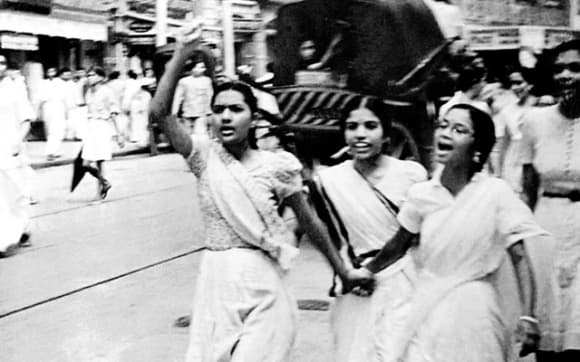
- Post-1947 Linguistic Challenges: After India's independence, the country faced the dilemma of choosing a national language that would not favor any particular regional or caste group. Hindi was contested, particularly in South India, leading to major anti-Hindi agitations.
- Bilingual Compromise: While Hindi was promoted, English continued to be utilized in official avenues, evidenced by its use in the drafting of the Indian Constitution.
Resistance and Reclamation
- Figures like Mahatma Gandhi and Rabindranath Tagore critiqued the alienation caused by English, arguing for a return to indigenous languages to preserve cultural roots. Yet, English had become entrenched in Indian society, offering social mobility despite concerns over cultural dislocation.
The Modern English Landscape
- Dynamic Evolution: English has transformed into a multifaceted tool, often characterized by hybrid forms that integrate local idioms and linguistic styles. This evolution is recognized as a sign of a language's vitality rather than a flaw.
- Class and Caste Dynamics: The struggle for English fluency remains acutely felt among marginalized communities. English is viewed by some, particularly Dalits, as a means to escape caste-based hierarchies, reflecting a shift from its colonial legacy to empowerment.
Conclusion and Contemporary Implications
- English's Role Today: English persists as a crucial determinant of social and economic opportunities. Its influence spans across classes, with the aspiration to achieve fluency extending even to traditionally marginalized groups.
- Continued Importance: As a language that embodies both colonial history and the dreams of modern India, English is positioned uniquely at the intersection of opportunity, empowerment, and cultural identity.
Key Points
- English entered India primarily as a commercial language in the early 17th century.
- Macaulay's 1835 Minute placed English at the center of Indian education.
- English is perceived as a barrier and a gateway, dictating social mobility.
- Post-independence, English's role in governance and education solidified amid regional language debates.
- English's current form is a “hybrid” language, reflective of India's diverse sociolinguistic landscape.
- Access to English education remains uneven, disproportionately affecting marginalized communities.
- The pursuit of English fluency signifies both aspiration and societal divides in contemporary India.
Key Terms & Concepts
| Panjab University | Institution for law education |
| East India Company | Trade and colonial governance |
| English Education Act 1835 | Established English primacy in education |
| Indian Constitution | Document drafted in English |
| BR Ambedkar | Advocated for English as equalizer |
| Nivedita Gupta | Educator on societal language dynamics |
| Mahatma Gandhi | Critic of English alienation |
| Rabindranath Tagore | Concerns over cultural dislocation |