iAspirants
Yamuna Floods Displace Thousands in Delhi
Published on:
Share this post
Article Summary
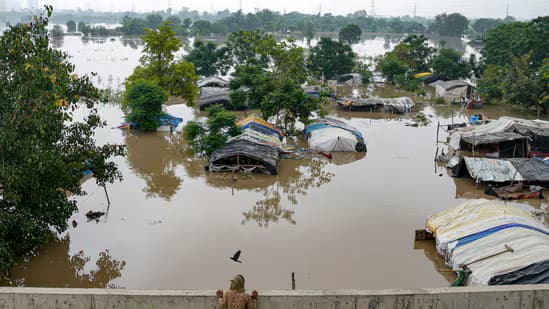
On September 3, 2025, the Yamuna River in Delhi reached a critical level of 207.39 meters, leading to severe flooding that affected thousands of residents and significantly disrupted daily life across the national capital. This marked the fifth significant flood event since 1963 when the river breached the 207-meter mark.
Key Points:
Flood Levels: As of September 3, the Yamuna River rose to 207.39 meters by 8 p.m., with expectations for further increases. In comparison, the river had reached 208.66 meters during significant flooding in 2023, surpassing the previous highest level of 207.49 meters noted in 1978.
Impact on Infrastructure: The floods inundated homes and businesses, particularly affecting the Nigambodh Ghat, Delhi’s oldest cremation ground, which had to cease operations for the day due to water ingress. The Geeta Colony crematorium also faced flooding, forcing staff to conduct cremations in alternative locations.
Evacuations and Relief Efforts:
- Approximately 8,018 individuals were temporarily relocated to tents, and 2,030 were moved to 13 permanent shelters, indicating extensive displacement.
- The government established relief efforts across 38 locations with 522 tents set up to host affected individuals.
- The National Disaster Response Force (NDRF), along with local police and fire services, was deployed for rescue operations and to facilitate the evacuation of families stranded due to floodwaters.
Safety Measures: All 13 regulator drains in Delhi were closed to prevent backflow into the city, indicating a proactive approach to flood management. The Delhi government was collaborating with the Uttar Pradesh Irrigation and Flood Control Department to manage water discharge from the Okhla Barrage effectively.
Public Health Concerns: Local authorities emphasized the need to spray insecticides in affected areas to avert outbreaks of mosquito-borne diseases due to standing water. The Chairperson of the Standing Committee in the Municipal Corporation of Delhi directed the public health department to carry out these preventive measures.
Traffic Disruptions: The Delhi Traffic Police issued advisories concerning diversions in traffic flow due to the rising water levels of the Yamuna, especially affecting the Outer Ring Road and other connecting routes. Heavy congestion was anticipated as a result of the situation.
Personal Accounts: Residents shared their experiences, such as shopkeeper Anup Thapa, who had to evacuate goods amidst the rising water. Families displaced from slum areas expressed dire living conditions, underscoring the urgent need for infrastructure improvements to prevent future flooding.
Animal Rescues: Animal welfare activists reported rescuing injured stray animals from flooding areas, highlighting the broader community efforts amid the disaster.
Historical Context:
- Previous significant flood events were recorded in 2010 (207.11 meters), 2013 (207.32 meters), and the catastrophic situation in 2023 which required the evacuation of over 25,000 people. Each event has contributed to the ongoing challenge of flood management in the national capital.
This widespread flooding demonstrates the vulnerabilities faced by urban areas in dealing with natural disasters, necessitating improved infrastructure, regular maintenance of drainage systems, and effective governmental coordination to provide immediate relief and long-term solutions to mitigate such occurrences in the future.
Key Terms & Concepts
| Yamuna River | Source of flooding |
| Nigambodh Ghat | Cremation ground affected |
| NDRF | Rescue operation involvement |
| Okhla Barrage | Water discharge monitoring |
| MCD | Local governance response |
| Delhi Traffic Police | Traffic management during floods |
| Outer Ring Road | Affected roadway |
| Relief camps | Shelters for displaced people |
| Hathnikund Barrage | Water release point |