iAspirants
Decentralized Grain Storage Initiative in India
Published on:
Source: PIB
Share this post
Article Summary
Decentralized Grain Storage Scheme in Cooperative Sector - Key Facts and Insights
Overview
- Scheme Launch: Initiated in May 2023 under the Ministry of Cooperation.
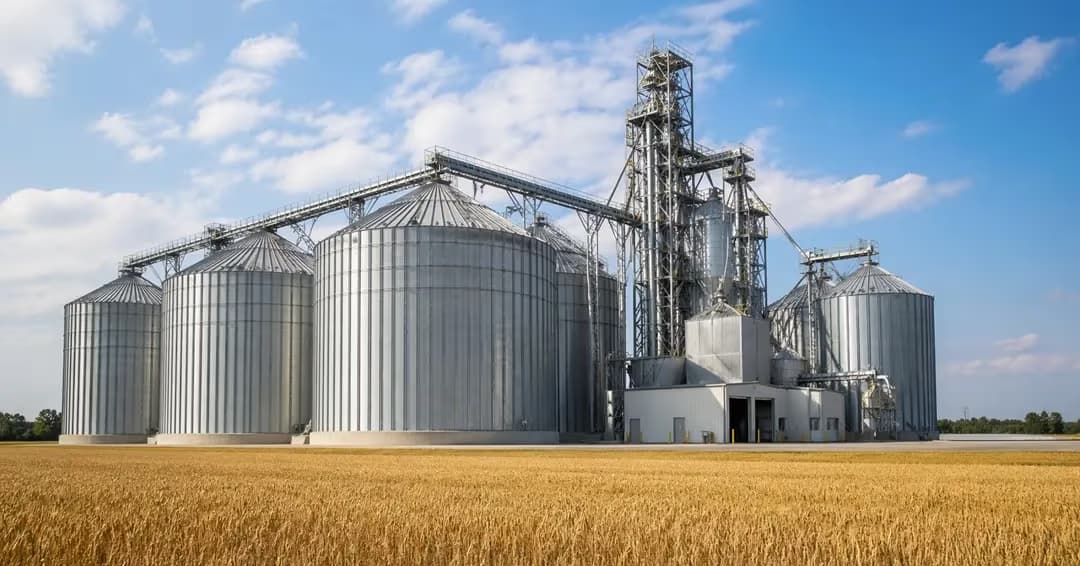
- Objective: To enhance storage, processing, procurement, and distribution systems via Primary Agricultural Credit Societies (PACS).
- Target: Improve food security and reduce grain wastage.
Capacity and Implementation
- Initial Capacity: 9,750 metric tons across 11 states as pilot projects.
- Expansion by July 2026: Construction of warehouses in 313 PACS completed, yielding over 180,000 metric tons of storage capacity.
- Participating States: Maharashtra, Uttar Pradesh, Gujarat, Rajasthan, Madhya Pradesh, Uttarakhand, Tamil Nadu, Telangana, Assam, Karnataka, Tripura.
Economic Data
- Projected Food Grain Production (2025-26): Estimated at 376.563 million tons, up from 357.732 million tons in the previous year (increase of 5.3%).
- National Food Security Act, 2013: Covers approximately 800 million people, representing the world’s largest food security program.
Government Schemes and Financial Support
Supporting Schemes:
- Agricultural Infrastructure Fund (AIF): Provides financial support for post-harvest infrastructure.
- Agricultural Marketing Infrastructure Scheme (AMI): Offers capital subsidy for storage facilities.
- Sub-Mission on Agricultural Mechanization (SMAM): Facilitates access to agricultural machinery.
- PM Micro Food Processing Enterprises Scheme (PM-FME): Aims to formalize and promote micro food processing units.
Financial Assistance:
- Subsidy under AMI increased from 25% to 33.33%.
- Margin money requirement reduced from 20% to 10%.
- Effective interest rate for PACS can be as low as 1% after subsidies.
Implementation Framework
- Implementing Agency: National Cooperative Development Corporation (NCDC).
- Coordination: Inter-ministerial committee for overall implementation; state and district cooperative development committees for local coordination.
- Quality Assurance: Standardization of storage infrastructure, regular inspections, and adherence to quality norms.
Benefits and Impact
- Reduced Transportation Costs: Facilities located closer to production centers decrease costs.
- Enhanced Farmer Income: Allows farmers to avoid distress sales and obtain better prices.
- Job Creation: Local employment opportunities arise from improved storage facilities.
- Community Support: PACS provide short-term loans and financial services to enhance farmers’ income.
Quality Standards and Transparency
- Branding Guidelines: Each storage unit must display an approved 'Grain Storage Logo' for identification.
- Environmental Considerations: Storage structures must comply with local environmental conditions and maintain grain quality.
Conclusion
The decentralized grain storage scheme in the cooperative sector represents a significant step towards improving agricultural infrastructure, enhancing food security, and strengthening rural economies. By integrating various government initiatives and focusing on local needs, the scheme aims to create a robust network for grain management in India.
Key Terms & Concepts
| Decentralized Grain Storage Scheme | Enhancing grain storage capacity |
| Primary Agricultural Credit Societies (PACS) | Local storage and distribution |
| 1.80 lakh metric tons | Total storage capacity created |
| 376.563 million tons | Total food grain production estimate |
| National Food Security Act, 2013 | Largest food security program |
| Agriculture Infrastructure Fund (AIF) | Financial support for infrastructure |
| Agricultural Marketing Infrastructure Scheme (AMI) | Capital subsidy for storage |
| NABARD | Subsidy agency for projects |
| 9,750 metric tons | Initial storage capacity established |
| 313 PACS | Warehouses construction completion |
| 1 percent | Effective loan interest rate |
| 3,000 metric tons | Capacity of Nerpinglai PACS warehouse |