iAspirants
Delhi's Pollution Challenges and Solutions
Published on:
Source: Indian Express
Share this post

Article Summary
Summary Notes on Air Quality and Pollution Control in India
Air Quality Dynamics
- Key Observations: Policymaker highlights that PM₁₀ contributes less to pollution than PM₂.₅, emphasizing the importance of vehicle emissions which account for approximately 40% of PM₂.₅ emissions in Delhi.
- Historical Context: The SAFAR (System of Air Quality and Weather Forecasting and Research) report from nearly a decade ago emphasized transportation as a major pollution contributor.
- National Clean Air Programme (NCAP): Metrics assess performance based on PM₁₀ reduction, leading to resource misallocation towards dust control instead of addressing vehicular emissions.
Government Actions and Plans
- Delhi’s Winter Action Plan: Measures include:
- Narrow road-sweeping machines.
- Doubling of parking charges.
- Work-from-home provisions under GRAP (Graded Response Action Plan).
Climate Factors Influencing Air Quality
- Super El Niño: An exceptionally strong climate event that is anticipated to:
- Reduce wind speeds over North India, trapping pollutants.
- Lead to a scarcity of westerly disturbances (rain), allowing pollution to accumulate.
- Contribute to milder winters that may exacerbate air pollution through shallow temperature inversions.
Agricultural Impact
- Rainfall Data: India experienced a 13% monsoon deficit—the highest in a decade—while Delhi had a 17% surplus.
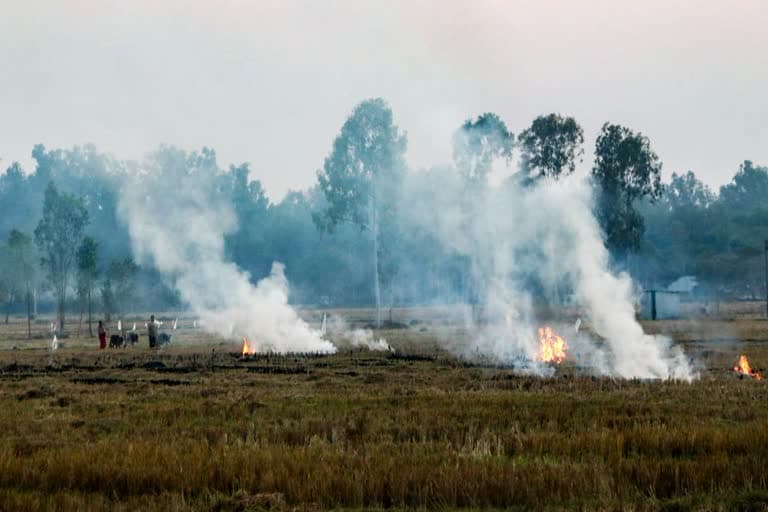
- Stubble Burning: Early paddy sowing allows for harvests potentially beginning in early October, but stubble burning practices have shifted timing, complicating air quality management.
Pollution Trends
- Historical Patterns: November is traditionally a period of severe pollution for Delhi, particularly between November 5-10, exacerbated by stubble burning during festivals.
- Emissions from Multiple Sources: Increased emissions from stubble burning, vehicular transport, and waste burning are anticipated to worsen pollution levels.
Scientific Recommendations
- Airshed-based Approach: The transition from city-centric air quality measures to airshed-based management, as recommended in the NARFI (National Air Quality Resource Framework of India) project, is crucial.
- Importance of Comprehensive Strategy: Calls for an integrated, science-driven approach for short, medium, and long-term pollution management, moving beyond incremental measures.
Conclusion
- Complexity of India's Air Quality Challenge: Worsening emissions compounded by the effects of climate change necessitate immediate and coordinated action to mitigate air quality deterioration, particularly in the Indo-Gangetic region.
Relevant Constitutional Framework
- No specific articles or amendments mentioned, but implicit reference to the responsibilities of the State in safeguarding public health, an alignment with Directive Principles of State Policy (DPSPs) in the Constitution.
This summary provides a concise overview of the current air quality management issues in India, highlighting significant scientific observations and necessary policy adaptations amidst evolving environmental challenges.
Key Terms & Concepts
| PM10 | Particulate matter measurement |
| PM2.5 | Harmful air pollutant |
| SAFAR | Air quality forecasting framework |
| NCAP | National Clean Air Programme |
| GRAP | Graded Response Action Plan |
| Super El Niño | Climate event affecting weather |
| ENSO | El Niño Southern Oscillation |
| National Institute of Advanced Studies (NIAS) | Research institution for studies |
| MODIS | Fire detection satellite system |
| NARFI | National Air Quality Resource Framework |
| Indo-Gangetic Region | Area affected by pollution |