iAspirants
India and U.S. Collaboration in Space
Published on:
Source: The Hindu
Share this post
Article Summary
Summary of Key Facts and Initiatives in Moon Exploration and International Space Cooperation
India-U.S. Space Cooperation:
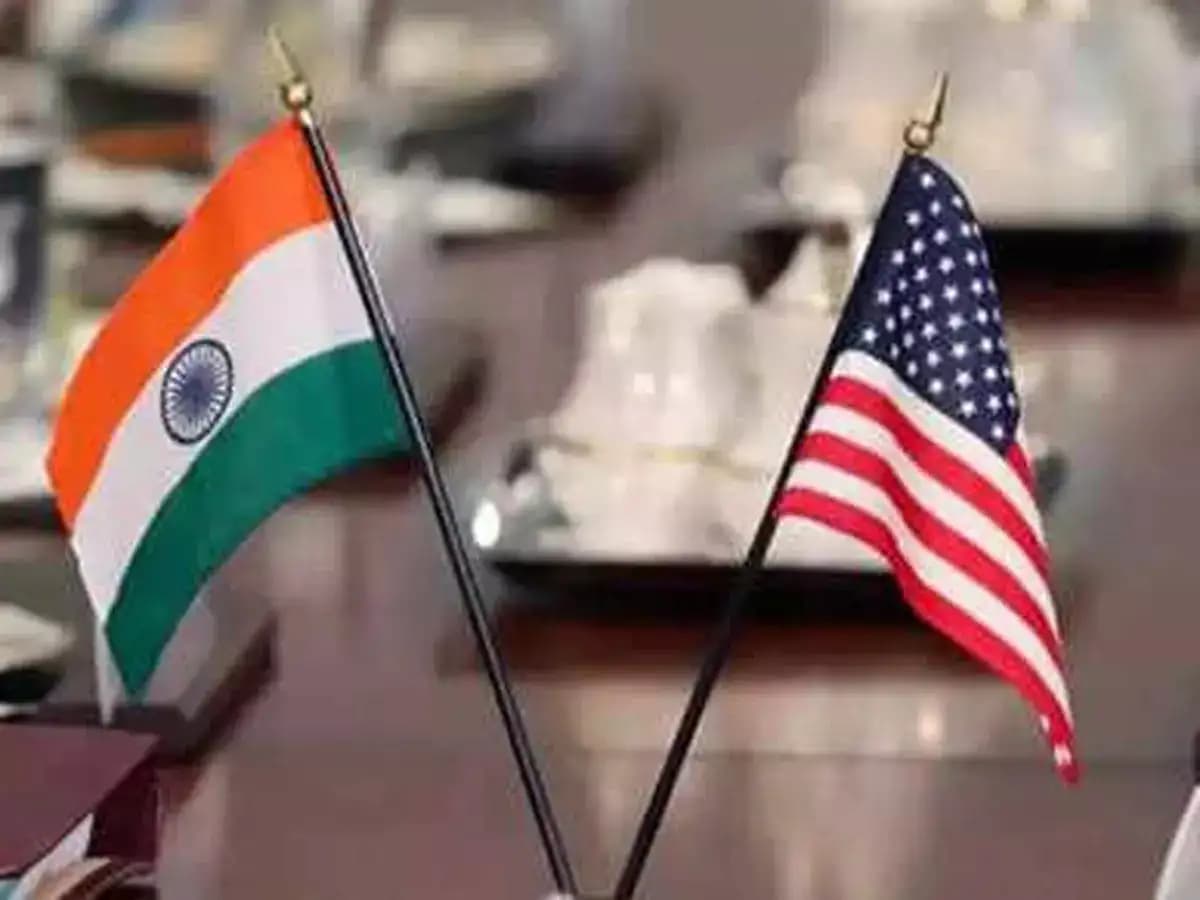
- The recent ninth India-U.S. Civil Space Joint Working Group meeting took place at ISRO headquarters, focusing on joint participation in NASA’s 'Moon Base' program under the Artemis Accords partnership.
- India signed the Artemis Accords in 2023, which outline principles for international cooperation in lunar exploration.
NASA's Artemis Program:
- The 'Moon Base' program aims to establish a human outpost on the Moon by around 2030, near the lunar south pole where sunlight is abundant, and significant water-ice deposits exist.
- Artemis III is set to be a crewed test flight in Earth orbit in 2027, while Artemis IV aims for the first lunar landing in 2028.
- NASA has contracted several private companies for lunar missions, including Astrolab ($219 million) and Lunar Outpost ($220 million) for vehicle technology, and Astrobotic, Firefly Aerospace, and Intuitive Machines for lunar equipment delivery ($600 million total).
International Rivalry in Space:
- The U.S. seeks to counter China’s growing space capabilities, particularly after China and Russia announced their plan for the International Lunar Research Station (ILRS), aimed for completion by 2035 and involving 17 countries.
- NASA's FY2027 budget explicitly states intentions to establish U.S. superiority on the Moon, motivated by strategic competition with China.
Technological and Strategic Challenges:
- The increasing polarization of the U.S.-China relationship could complicate India’s future engagements with both nations regarding lunar exploration.
- India may face challenges integrating technologies developed under different frameworks (U.S. vs. Chinese systems) that require substantial investment in capabilities for compatibility.
ISRO's Ongoing Missions:
- ISRO launched the NASA-ISRO Synthetic Aperture Radar, representing significant collaborative progress, and NASA instruments will appear on upcoming Chandrayaan missions.
Strategic Autonomy in Space:
- India is encouraged to maintain strategic autonomy in the space sector while deepening ties with NASA, avoiding over-dependence on any single technological ecosystem that could limit collaborative opportunities with other nations, particularly China.
- There is a call for the development of open international standards in space technology to maintain sovereign control and foster interoperability among different nations' space assets.
Conclusion:
- The ongoing rivalry between the U.S. and China in space exploration affects international collaborations and India’s position therein. To maximize benefits and opportunities, active participation and development of standards is essential for India’s role in future lunar endeavors.
Key Terms & Concepts
| Artemis Accords | International agreement on lunar exploration |
| NASA | U.S. space agency leading Moon Base initiative |
| ISRO | India's space agency collaborating with NASA |
| Gaganyaan | India's human spaceflight mission |
| International Lunar Research Station (ILRS) | China and Russia's lunar science facility |
| 2025 | Year of U.S. space policy announcement |
| 2030 | Target year for Moon Base completion |
| 2035 | Target year for ILRS construction |
| $219 million | Contract for lunar terrain vehicles |
| $220 million | Contract for lunar terrain vehicles |
| $188 million | Contract for delivery task orders |
| $600 million | Contracts for robotic Moon missions |