iAspirants
Current AffairsPrelims PYQsUPSC CSE SyllabusUPSC CSE StrategyBlogsPricing
Login
iAspirants

Your AI-powered companion for UPSC preparation.

Quick Links

  • Home
  • About Us
  • Current Affairs
  • Prelims PYQs
  • UPSC CSE Syllabus
  • UPSC CSE Strategy
  • Blogs

Company

  • Pricing
  • FAQs
  • Contact Us
  • Login

Legal

  • Privacy Policy
  • Terms & Conditions
  • Return Policy

© 2025 iAspirants, Inc. All rights reserved.

  1. Blogs
  2. International Relations

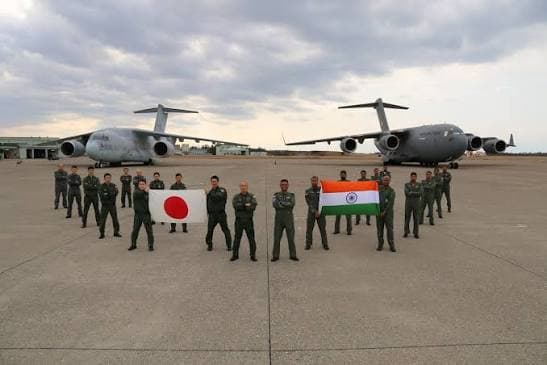
India-Japan Air Defense Exercise 2026

Published on: 08-Sep-2026

Share this post

India-Japan Air Defense Exercise 2026

Article Summary

Exam-Focused Notes on Japan-India Air Defense Exercise

Exercise Overview:

  • Name: Veer Guardian-2026
  • Dates: September 9, 2026 - September 22, 2026
  • Location: Jodhpur Air Force Station, India
  • Participants:
    • Indian Air Force (IAF): Involvement of indigenous Light Combat Aircraft (LCA) Tejas, Sukhoi-30 MKI, and Rafale.
    • Japan Air Self-Defense Force (JASDF): Participation with F-2A fighter jets.

Objectives of the Exercise:

  • Conduct advanced operational missions.
  • Engage in extensive professional dialogue and exchange of expertise.
  • Focus on mission planning conferences and discussions on engineering and space security aspects.
  • Enhance operational synergy between the two air forces.

Strategic Significance:

  • The exercise aims to showcase and deepen the strategic partnership between India and Japan.
  • It reflects the long-standing friendship and strategic cooperation between the two nations.
  • Enhances tactical proficiency and aerospace operational integration.

Key Takeaways:

  • The exercise is part of broader defense cooperation efforts, indicating an increasing focus on joint military preparedness amidst regional security challenges.
  • Strengthening ties through military exercises is pivotal for both nations in the context of geopolitical dynamics in the Indo-Pacific region.

International Context:

  • The Veer Guardian-2026 exercise is indicative of the growing military collaboration between India and Japan, aligning with shared interests in maintaining regional security and stability.

This exercise emphasizes the importance of international partnerships in defense and security, aligning with broader strategic goals of both countries.

Key Terms & Concepts

Veer Guardian-2026Bilateral air exercise
Indian Air ForceParticipating military force
Japan Air Self-Defense ForceParticipating military force
Light Combat Aircraft (LCA) TejasIndigenous fighter aircraft
Sukhoi-30 MKIAdvanced fighter aircraft
RafaleAdvanced fighter aircraft
F-2AJapanese fighter aircraft
September 9-22, 2026Exercise duration
Operational synergyObjective of the exercise
Strategic partnershipLong-term cooperation goal

Mind Map for UPSC Civil Services Revision

Turn UPSC Civil Services Current Affairs Into Exam-Ready Notes

Reading International Relations current affairs is half the work. Revise them with ready-made notes and test what actually stuck.

  • Daily UPSC Civil Services current affairs analysis
  • Revision notes, mind maps & MCQs
  • Prelims mock tests with instant results

Related UPSC Civil Services Current Affairs Articles

Japan-India Defense Cooperation Strengthens
International Relations09-Sep-2026

Japan-India Defense Cooperation Strengthens

India-Japan Defence Cooperation Highlights (August 2026)

Strategic Developments

  • Defence Minister Visit: Japan's Defence Minister Shinjiro Koizumi visited India, marking a significant evolution in India-Japan defence relations.
  • Key Agreements: Focus on enhancing operational capabilities and translating strategic convergence into actionable military cooperation.

Maritime Security and Information Sharing

  • Maritime Domain Awareness: Emphasis on information sharing to improve maritime security in the Indo-Pacific region, addressing concerns over coercive actions and the militarization of these waters.
  • Geographical Importance: India and Japan's strategic locations at opposite ends of the Indo-Pacific enhance their maritime security collaboration.

Naval Cooperation

  • Joint Shipbuilding Initiatives: Discussions on collaborative naval shipbuilding, integrating Japanese technology with Indian manufacturing capabilities under the 'Make in India' initiative.
  • Repair Facilities: Plans for reciprocal ship repair arrangements to strengthen defence-industrial cooperation.

Defence Equipment Transfer

  • UNICORN System: Proposed transfer of Japan's UNICORN integrated communications antenna system, marking a significant step in defence equipment collaboration.
  • Previous Agreements: Commitment to implement the 2015 defence equipment and technology transfer agreement, with a focus on tangible outcomes.

Military Exercises

  • Veer Guardian Exercise: Japan's fighter aircraft participated in this exercise for the first time, enhancing bilateral military engagement.
  • Increased Complexity: Future exercises to include unmanned systems and special operations forces coordination.

Regional Context and Security Concerns

  • Joint Statement: Reiterated opposition to unilateral actions that threaten freedom of navigation, indirectly addressing concerns related to China without explicit mention.
  • Wider Security Architecture: Cooperation extends beyond military aspects to include economic security and resilient supply chains.

Broader Bilateral Engagement

  • Strategic Partnerships: The visit follows the July 2026 Annual Summit, which aimed to deepen cooperation across various sectors including technology and economic security.
  • Implementation Focus: Both nations are committed to converting strategic discussions into practical capabilities, highlighting a shift from theoretical agreements to actionable military readiness.

Conclusion

The developments from Koizumi's visit signal a strengthening of India-Japan relations, particularly in defence, with a focus on operational preparedness, maritime security, and industrial collaboration. The emphasis on implementation marks a crucial step towards enhancing regional stability in the Indo-Pacific.

Impact of Flash Floods in Himalayas
Environment and Ecology08-Sep-2026

Impact of Flash Floods in Himalayas

Natural Disasters and Climate Impact in the Himalayas

  1. Recent Flooding Events:

    • Significant flash floods occurring in Kedarnath, Chamoli, Sikkim (India), and Rasuwa (Nepal).
    • Casualties reported: 1,356 confirmed dead in Nepal as of September 7; 4,994 people remain missing.
  2. Scientific Terminology:

    • Terms like "hazard cascades" and "GLOF" (glacial lake outburst flood) are central to understanding the nature of these disasters.
  3. Cultural Context:

    • Historical knowledge within local communities highlights the dangers of overcrowding in narrow valleys and unsustainable infrastructure development.
  4. Climate Compensation:

    • Nepal's Prime Minister addresses global climate compensation amid demands for recognition of losses due to climate injustice.
    • Increasing discourse around the impacts of global warming and climate agreements (e.g., Paris Agreement) seeming ineffective against rising global temperatures, exceeding the target of 1.5 degrees Celsius.
  5. Political and Economic Repercussions:

    • The floods showcase the need for a unified climate response among South Asian countries, shifting the focus toward ecological diplomacy.
    • The socio-political landscape in Nepal is influenced by previous disasters like the 2015 earthquake, which claimed 8,000 lives and provoked a surge in national unity, though subsequent political expectations were unmet.
  6. Judicial and Political Commentary:

    • Nepal's politics of disaster aid involves debates around legitimacy and the effectiveness of political parties in response efforts.
    • Criticism arises regarding delays in rescue operations and the management of relief funds, raising concerns about the ethics of social media conduct amidst disasters.
  7. Future Direction:

    • The floods signify an urgent call for a reimagining of ecological governance and political unity in addressing climate issues.
    • The emphasis on not merely reconstructing infrastructure but integrating environmental considerations and community welfare into developmental policies.
  8. Broader Cultural and Historical Narrative:

    • The legacy of past revolutions in Nepal shapes current political discourse and responses to natural calamities, reinforcing a cycle of transition that requires resolution.
  9. Global Alliances for Ecological Governance:

    • A proposition for South Asian countries to forge new international alliances focused on ecological governance, connecting diverse ecological zones (e.g., Himalayas, Arctic, and Antarctic) to combat climate change collectively.
  10. Ecological Significance of the Himalayas:

    • Recognition of the Himalayas as the "Third Pole" emphasizes its critical role in global climate systems and the need for united efforts in environmental conservation.

In summary, the severe flash floods in the Himalayan region highlight the intersections of climate change, socio-political dynamics, and cultural histories, calling for immediate and coordinated actions on both local and global scales.

Indian Navy Chief Visits Australia, New Zealand
International Relations08-Sep-2026

Indian Navy Chief Visits Australia, New Zealand

Summary of Indian Navy Chief's Official Visit to Australia and New Zealand

Objective of the Visit:

  • Strengthen bilateral cooperation between the Indian Navy, Royal Australian Navy (RAN), and Royal New Zealand Navy (RNZN).
  • Enhance maritime security and regional cooperation.

Context:

  • This visit follows the 3rd India-Australia Annual Summit held in July 2026 and the 2nd India-Australia Defence Ministers' Dialogue in June 2026, highlighting the growing India-Australia relations.

Key Activities:

  • Bilateral Discussions: Meetings with top leadership of the RAN and senior Australian defence officials to review ongoing naval cooperation.
  • Focus Areas:
    • Operational discussions.
    • Interoperability and information sharing.
    • Training and professional exchanges.
  • Visits to Operational and Training Establishments: Engagements with RAN personnel to discuss maritime capabilities, emerging technologies, and professional military education.
Upcoming 18th BRICS Summit Insights
International Relations07-Sep-2026

Upcoming 18th BRICS Summit Insights

Summary of the 18th BRICS Summit Highlights

Dates and Location

  • Event: 18th BRICS Summit
  • Dates: September 12-13, 2026
  • Location: New Delhi, India

Key Themes and Principles

  • Chinese Support: China expresses full support for India's BRICS presidency.
  • ** BRICS Vision**: Emphasis on multipolarity, economic globalization, and the Global South's collective rise.
  • UN Charter Allegiance: BRICS should uphold the principles of the UN Charter, including sovereign equality and non-interference.

Key Areas of Cooperation

  1. Openness in Global Economy:

    • Protectionism Concerns: Acknowledgment of rising protectionism disrupting international trade and supply chains.
    • WTO Principles: Commitment to the multilateral trading system with the WTO at its core.
    • Energy and Infrastructure Cooperation: Importance of collaboration in energy, minerals, and industrial supply chains.
  2. Win-Win Development:

    • UN Sustainable Development Goals: Focus on accelerating implementation and formulating the post-2030 global development agenda.
    • Mutual Benefit Agreements: Stronger coordination on macroeconomic policies and promotion of local currency cooperation.
  3. Economic Synergy:

    • Statistical Insights: BRICS accounts for nearly 50% of the world population, 30% of global economic output, and 20% of global trade.
    • Future Growth: Forecasted growth of greater BRICS expected to be three times faster than G-7 by 2028.
  4. Technological Advancements:

    • AI Integration: Promotion of AI integration across sectors like agriculture, health, and education.
    • Research Centers: Establishment of the China-BRICS AI Development Center and Quality Productive Forces Research Center.
  5. Shared Responsibilities:

    • Peace and Cooperation: Emphasis on BRICS as a force for fairness and justice in international relations.
    • Enhancing China-India Relations: Noted improvement in bilateral relations, including restored trade routes and travel links.

Economic Indicators

  • Growth Statistics: Greater BRICS growth projected to triple that of G-7 by 2028, highlighting significant roles in global economic dynamics.

International Relations

  • China-India Coordination: Importance of sound coordination between India and China during consecutive presidencies for enhancing BRICS cooperation.
  • COVID-19 Resilience: Resumption of flight routes and border trade after prior suspensions, reflecting enhanced connectivity and economic ties.

Strategic Insights

  • China's Global Initiatives: Four global initiatives proposed by China for addressing human challenges and promoting collective development.

Conclusion

  • The 18th BRICS Summit aims to cement greater cooperation among member countries while promoting a stable global environment characterized by unity, openness, and shared growth opportunities.

Significance of the Visit to New Zealand:

  • Follows PM Narendra Modi's visit to New Zealand in July 2026, which elevated India-New Zealand relations to a strategic partnership level.
  • Discussions with senior RNZN leadership and New Zealand defence officials to enhance operational cooperation, information sharing, and training exchanges.

Recent Agreements:

  • The visit is significant in light of the recently concluded Maritime Cooperation Agreement between India and New Zealand, which provides a framework for practical maritime collaboration.

Overall Importance:

  • The visit underscores India's commitment to strengthening defence and maritime cooperation with Australia and New Zealand, contributing to peace, security, and stability in the Indo-Pacific region.

Conclusion:

  • The Indian Navy's engagement with its Australian and New Zealand counterparts reflects a proactive approach to regional security and cooperation in maritime affairs.