iAspirants
India Tackles Food Loss and Waste
Published on:
Share this post

Article Summary
Exam-Focused Notes on Food Loss and Waste in India
Overview of Food Loss and Waste
- Food loss and waste significantly impact climate change, food security, economic costs, and sustainable resource use.
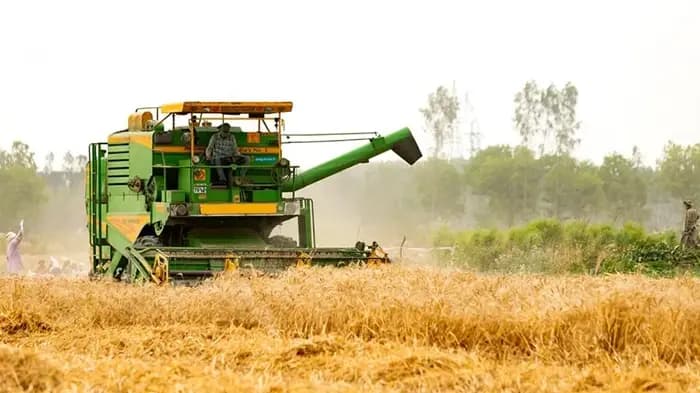
- India, home to 1.4 billion people, has the capacity to feed its population but suffers substantial food loss throughout the production and distribution chain.
National Initiatives
- India is the only country to conduct three national post-harvest loss surveys assessing losses across various commodities for:
- 2005-07: 45 commodities
- 2012-14: 45 commodities
- 2020-22: 54 commodities
- A fourth survey is currently planned.
- These efforts support the country's obligations under the Sustainable Development Goals (SDGs), specifically reporting under the Food Loss Index.
Data and Findings
- Data mainly focus on post-harvest losses, with less developed data on food waste in retail, hotels, and households.
- Major wholesale markets can produce up to 100 tonnes of organic waste daily, contributing to an estimated 3.5 million tonnes of waste annually.
- Organic waste treatment could offset roughly 3.3 million tonnes of CO2-equivalent emissions yearly, worth approximately $30 million in carbon credits.
Technologies and Strategies
- Emphasized the importance of digital traceability systems and improved methods for storage, drying, and cooling to enhance supply chain management.
- Use of bio-CNG plants, such as the 50-tonne-a-day plant in Surat, Gujarat, reducing methane emissions by approximately 7,500 tonnes per year exemplifies successful private-sector partnerships.
Government Schemes and Support Structures
- The Food and Agriculture Organization (FAO) collaborates with India’s government, research, and financial institutions to implement practices reducing food waste.
- The Small Industries Development Bank of India (SIDBI) is pivotal in linking food-loss hotspots with technologies for climate resilience, including:
- Moisture control
- Energy-efficient cooling
- Storage solutions
Urban Food Loss and Waste Management
- The FAO is working towards equipping Indian cities with a practical “Package of Practices” for efficient urban food loss and waste management, targeting municipalities for:
- Measurement
- Prevention
- Redistribution
- Valorization of waste from households to wholesale markets
Environmental Impact and Policy Integration
- Advocated for integrating food loss and waste management into agricultural planning, climate action, and investment decisions.
- Suggested circular economy approaches: redistributing surplus food and converting organic waste to compost or energy to create added economic value.
Future Directions
- Emphasize the need for connected national approaches with prioritized financing.
- Importance of closing data gaps and embedding food loss reduction strategies within agricultural, food-processing, urban, and climate policies.
Conclusion
- India possesses the necessary data, technology, and viable economic models to systematically reduce food loss and waste, thereby enhancing food security and promoting sustainability. Progress requires a collaborative effort across various sectors, equitable resource distribution, and innovative technological adoption.
Key Terms & Concepts
| International Day of Awareness of Food Loss and Waste | Highlights food waste issues |
| Food Loss Index | Measures food loss internationally |
| Sustainable Development Goals | Global framework for sustainability |
| Food and Agriculture Organization of the United Nations (FAO) | Works on food loss initiatives |
| National Council of Agriculture Marketing Boards (COSAMB) | Assesses organic waste generation |
| 3.5 million tonnes | Estimated annual organic waste |
| 3.3 million tonnes of CO2-equivalent | Emissions offset potential |
| $30 million in carbon credits | Value of carbon offset |
| 50-tonne-a-day bio-CNG plant | Reduces methane emissions |
| Small Industries Development Bank of India (SIDBI) | Funds food-loss interventions |
| 5 years | Duration of bio-CNG plant operation |
| September 29, 2026 |