iAspirants
Current AffairsPrelims PYQsUPSC SyllabusBlogsPricing
Login
iAspirants

Your AI-powered companion for UPSC preparation.

Quick Links

  • Home
  • About Us
  • Current Affairs
  • Prelims PYQs
  • UPSC Syllabus
  • Blogs

Company

  • Pricing
  • FAQs
  • Contact Us
  • Login

Legal

  • Privacy Policy
  • Terms & Conditions
  • Return Policy

© 2025 iAspirants, Inc. All rights reserved.

  1. Blogs
  2. Environment and Ecology

Landslide in Guinea Claims Lives

Published on: 24-Aug-2026

Share this post

Landslide in Guinea Claims Lives

Article Summary

Landslide Incident in Guinea

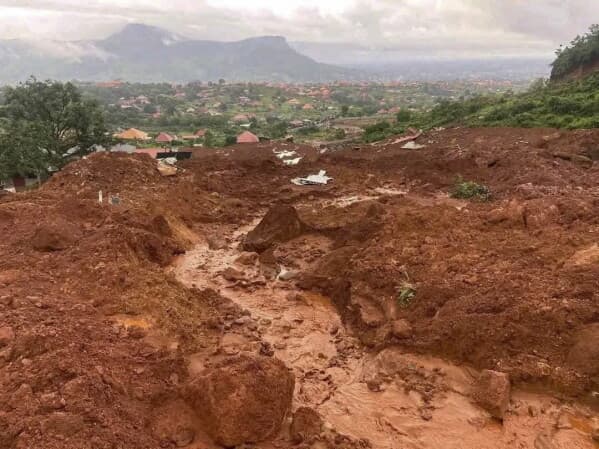
  • Event Details: On August 23, 2026, a landslide at a landfill in Conakry, Guinea, resulted in 30 fatalities, with 6 individuals seriously injured and 16 others sustaining lighter injuries. The disaster occurred around 2 a.m. in the Gbessia commune, reportedly large enough to engulf multiple structures, including a building.

  • Government Response:

    • Djenab Toure, Guinea’s Minister of Territorial Administration, announced plans to close the landfill due to safety concerns exacerbated by the ongoing rainy season.
    • The government committed to relocating waste outside the capital to mitigate future risks.
  • Economic Context:

    • Guinea is rich in natural resources, holding the world's largest bauxite reserves and significant untapped iron ore deposits, particularly at Simandou, where a major mining project was initiated in November 2025.
    • Despite these resources, the country faces infrastructural challenges and poverty, with approximately 3.7 million out of 15.1 million citizens living below the poverty line, defined as earning less than $4.20 per day, according to an April World Bank report.
  • Social Impact: The emotional toll on affected families is profound, illustrated by the tragic account of a mother who lost all five of her children in the disaster.

  • Disaster Management: Ongoing rescue operations are in effect to search for survivors, reflecting the need for improved disaster response mechanisms in the context of natural calamities exacerbated by environmental conditions.

This incident underscores the pressing issues of urban planning, waste management, and disaster preparedness within the context of Guinea's socioeconomic challenges.

Key Terms & Concepts

ConakryLocation of the landslide
August 23, 2026Date of the incident
30Number of fatalities
3.7 millionPeople living in poverty
15.1 millionTotal population of Guinea
$4.20Daily income threshold
Djenab ToureMinister closing the landfill
World BankSource of poverty report
SimandouLocation of iron ore deposit
bauxite reservesResource in Guinea
GuineaCountry experiencing disaster
August 20, 2026Date landfill announcement

Mind Map for UPSC Civil Services Revision

Turn UPSC Civil Services Current Affairs Into Exam-Ready Notes

Reading Environment and Ecology current affairs is half the work. Revise them with ready-made notes and test what actually stuck.

  • Daily UPSC Civil Services current affairs analysis
  • Revision notes, mind maps & MCQs
  • Prelims mock tests with instant results

Related UPSC Civil Services Current Affairs Articles

Impact of Climate and Electricity Issues
Environment and Ecology23-Aug-2026

Impact of Climate and Electricity Issues

The content provided primarily narrates personal experiences and reflections on weather and living conditions rather than delivering key facts, statistics, policies, or international events relevant to examinations. However, there are several themes that can be distilled for study:

Climate Change & Weather Patterns

  • El Niño Effect: Mentioned as a contributor to erratic weather patterns globally.
  • Impact of Heavy Rains: Causes destruction, fatalities, and disruptions in daily life.
  • Energy and Electricity

    • Electricity Supply Challenges: Highlights frequent power outages and dependency on electricity for cooling.

    Historical Living Conditions

    • Traditional Housing: Use of thatched roofs and natural ingredients for construction and cooling.
    • Community Bonding during Construction: Collective activities around home building and maintenance, showing strong social ties.

    Agriculture and Nature

    • Local Flora: Mango and cashew trees are part of community life, serving both practical and social purposes (e.g., shade and fruit consumption).

    Local Cultural Practices

    • Community Lifestyle: Improved bonding and traditional practices with communal meals and social interactions around everyday tasks.

    Additional Notes

    • While the narrative includes reflections on indoor climate management (use of AC and fans), it serves more to illustrate personal discomfort rather than technical advancements or governmental policies.

    • The details on past living conditions serve as cultural insight rather than pertinent data points or governmental activities directly related to current socio-economic indicators.

    Conclusion

    The recognized themes touch upon crucial societal issues involved with climate adaptation, energy policy dependence, and traditional lifestyles. However, for exam relevance, detailed data, constitutional references, and specific policies related to energy, climate adaptation strategies, or community development schemes could not be deduced from the provided text. Thus, more focused sources would be necessary for robust study material in these areas.

    Regulation of Pallikaranai Marshland Construction
    Environment and Ecology21-Aug-2026

    Regulation of Pallikaranai Marshland Construction

    Summary of the Decision on Pallikaranai Marshland Construction Regulations

    1. Context:

      • The Tamil Nadu State Wetlands Authority (TNSWA) has informed the Madras High Court regarding the regulation of construction in the 'zone of influence' (ZoI) of the Pallikaranai marshland in Chennai, which spans approximately 1,247.54 hectares.
    2. Judicial Authority:

      • The case is being heard by the First Division Bench comprising Chief Justice Sushrut Arvind Dharmadhikari and Justice G. Arul Murugan.
    3. Key Findings:

      • The National Centre for Sustainable Coastal Management (NCSCM) has proposed an interim ZoI plan, indicating varying widths around the marshland based on scientific studies of hydrological and land use characteristics.
      • Proposed widths of the interim ZoI:
        • 0 m: 30.14 km (38.7% of the total boundary)
        • 0 to 20 m: 16.16 km (20.7%)
        • 20 to 50 m: 3.20 km (4.1%)
        • 50 to 100 m: 3.80 km (4.9%)
        • Above 100 m: 24.55 km (31.5%)
      • Approximately 46.30 km (59.5%) of the boundary has a proposed width of 0-20 m, while 24.55 km (31.5%) has a width exceeding 100 m.
    4. Legal Background:

      • The TNSWA’s response is in context of a ban previously imposed by the National Green Tribunal (NGT) that restricted construction within a 1 km radius around the marshland, based on potential adverse ecological effects.
    5. Regulatory Framework:

      • The proposed interim ZoI plan aligns with the Wetlands (Conservation and Management) Rules, 2017, issued by the Union Ministry of Environment, Forest and Climate Change.
      • According to these guidelines, the ZoI is defined as the area where developmental activities may adversely impact the wetland ecosystem.
    6. Considerations for the Interim ZoI:

      • The NCSCM used a variable-width, site-specific approach rather than a uniform distance due to the urbanized landscape surrounding Pallikaranai marsh, which has diffused drainage and extensive built-up areas adjacent to the marsh.
      • Existing drainage systems, low-lying areas, and other natural features that maintain water connectivity with the marsh have been accounted for in determining the interim ZoI.
    7. Next Steps:

      • The High Court has allowed two weeks for stakeholders, including representatives of the Confederation of Real Estate Developers Association of India (CREDAI) - Chennai chapter, to review and respond to the NCSCM report.
      • The case is scheduled for the next hearing on September 7, 2026.

    This development points towards a potential shift in how construction regulations around wetlands may be determined, favoring a more nuanced approach in densely populated urban areas while adhering to ecological protections.

    Supreme Court Ruling on Environmental Clearance
    Environment and Ecology21-Aug-2026

    Supreme Court Ruling on Environmental Clearance

    Supreme Court Judgment on Environmental Clearance (29 July 2026) - Vanashakti vs Union of India

    Key Findings:

    • Mandatory Requirement: Prior Environmental Clearance (EC) is a mandatory legal requirement under the Environment Impact Assessment (EIA) Notification, 2006.
    • Violation Cases: Project proponents who started without prior EC and did not apply under previous violation frameworks (2017 Notification, 2021 Operating Procedure) cannot seek regularization.

    Legal Framework:

    • Environment (Protection) Act, 1986: The Court reaffirmed that the central government retains the power under Section 3 to develop new statutory mechanisms for violating projects if it benefits the public interest.

    Distinctions Made:

    • Office Memorandum vs Statutory Notification: The Court differentiated between an administrative office memorandum (deemed legally unsustainable) and a statutory notification (which remains permissible) under the Environment (Protection) Act.

    Policy Implications:

  • Many industrial and infrastructure projects currently in violation face closure. The judgment acknowledges this reality while emphasizing that prior EC remains essential.
  • The Court did not mandate the government to create a new regularization scheme but stated it could consider issuing a new notification, under strict guidelines.
  • Proposed Regulatory Framework:

    • Any future regulatory mechanism should:
      • Be a one-time option.
      • Be backed by statutory authority.
      • Include essential environmental safeguards such as:
        • Environmental damage assessments.
        • Remediation measures.
        • Environmental compensation.
        • Strict compliance protocols.

    Objectives and Balances:

    • Aim to prevent routine post-facto approvals to avoid encouraging violations.
    • Maintain a balanced approach which does not enforce indiscriminate closures but rather offers solutions for environmentally acceptable projects with significant investments.

    Outcome for Stakeholders:

    • The judgment signifies an end to old regulatory frameworks but leaves avenues open for potential new legislation to address genuine legacy violations in a legally compliant manner.

    This landmark ruling influences the trajectory of environmental law enforcement in India, reinforcing the responsibility of the central government to manage ongoing regulatory challenges and uphold environmental integrity.