iAspirants
Supreme Court Critiques Medicine Pricing
Published on:
Source: Indian Express
Share this post
Article Summary
Supreme Court Rulings on Medicine Pricing
Judicial Remarks and Context:
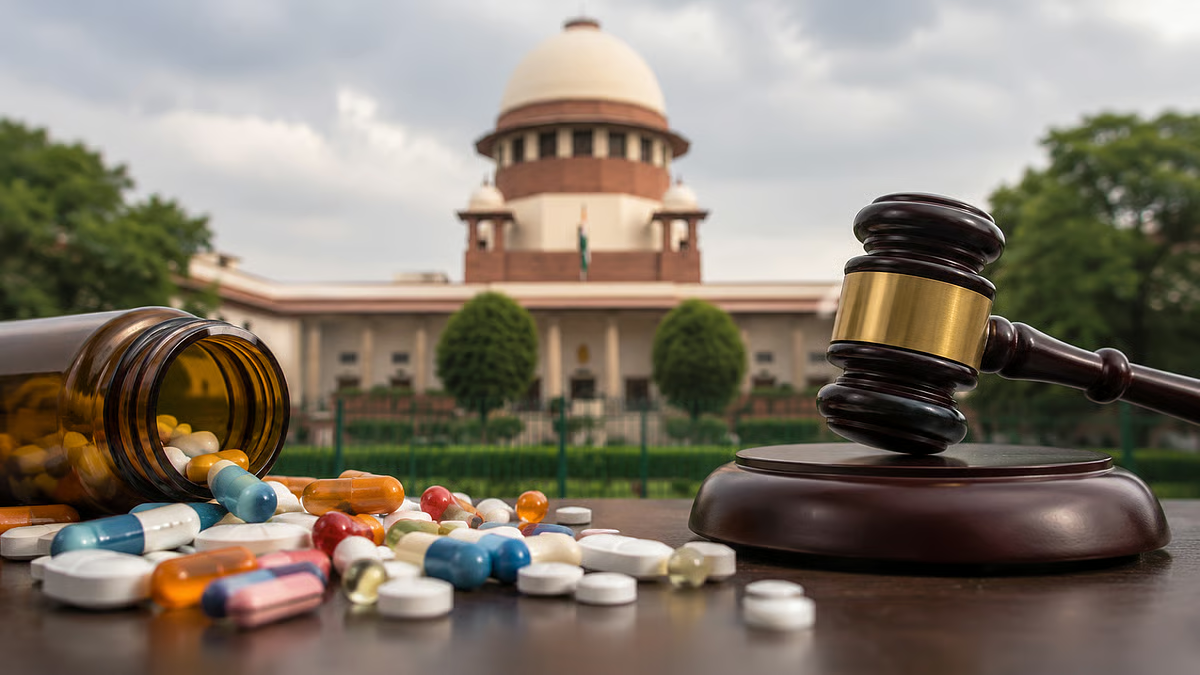
- The Supreme Court described the markup between retail and printed medicine prices as “broad daylight dacoity with patients.”
- Highlighted a significant example where a cancer drug has an MRP of nearly ₹27,000 but is supplied to retailers for ₹2,700, indicating a markup of tenfold.
Legal Framework Governing Medicine Prices:
- Essential Commodities Act, 1955:
- Section 3(1): Grants the Centre power to regulate essential goods, including medicines, for equitable distribution and fair pricing.
- Section 3(2)(c): Authorizes price control orders.
- Drugs (Prices Control) Order (DPCO), 2013:
- The primary regulatory framework for medicine pricing in India.
- Empowers the National Pharmaceutical Pricing Authority (NPPA) to fix and revise ceiling prices, monitor compliance, and address overcharging.
Categories of Medicines:
- Scheduled: Medicines included in Schedule I of the DPCO, which are subject to government price controls (384 medicines currently listed).
- Non-Scheduled: Medicines not included in Schedule I, exempt from price ceilings yet restricted from increasing the MRP by more than 10% annually.
Price Calculation Process:
- Ceiling prices are calculated based on existing market prices (Price to Retailer - PTR), using the average of formulations that capture at least 1% market share.
- Retailer's margin of 16% is added to the calculated average to determine the ceiling price.
- Annual revisions of ceiling prices are aligned with the Wholesale Price Index (WPI), allowing price adjustments without prior approval.
Concerns Raised in Petitions:
- Petitioners argue current regulations lead to inflated initial launch prices for non-scheduled medicines.
- Right to health under Article 21 (Right to Life) is invoked in challenges against lack of control over initial MRPs of medicines, granting manufacturers considerable pricing power.
- Claims of excessive markups by retailers and hospitals (10-16 times higher than the permissible margin) significantly inflate medicine costs.
- Example cited: An antibiotic (Tigebax 50mg) with an MRP of ₹5,635 sold at ₹350 in the open market, indicating disparities in pricing across sales channels.
Economic Impact:
- Retail pricing constitutes a significant aspect of healthcare costs in corporate hospitals, often constituting 30-40% of bills for critically ill patients.
- Comparison between generic and branded medicines indicates that generics can be up to 90% cheaper.
Overview of Current Challenges:
- The Supreme Court is examining the need for stricter enforcement of price controls under the DPCO and better regulation of drug pricing mechanisms, requesting explanations from the Centre on these disparities.
Summary
The Supreme Court's deliberations emphasize pressing issues around the pricing of essential medicines, highlighting legal frameworks, economic disparities, and the constitutional right to health. The challenges present a critical examination of the existing regulatory tools, urging potential reforms to ensure access to affordable healthcare for all citizens while maintaining the balance in pharmaceutical profitability.
Key Terms & Concepts
| Supreme Court | Judicial authority reviewing pricing |
| Drugs (Prices Control) Order, 2013 | Framework regulating medicine prices |
| Essential Commodities Act, 1955 | Legislation regulating essential goods |
| National Pharmaceutical Pricing Authority (NPPA) | Authority fixing and revising ceiling prices |
| National List of Essential Medicines (NLEM) | List of essential medicines for control |
| Wholesale Price Index (WPI) | Indicator for price revision allowance |
| Tigebax 50mg | Example of price disparity |
| 16% retailer margin | Maximum allowed profit for retailers |
| Article 21 | Right to health and life |
| April 1 | Date for annual price revision |