iAspirants
Current AffairsPrelims PYQsUPSC SyllabusBlogsPricing
Login
iAspirants

Your AI-powered companion for UPSC preparation.

Quick Links

  • Home
  • About Us
  • Current Affairs
  • Prelims PYQs
  • UPSC Syllabus
  • Blogs

Company

  • Pricing
  • FAQs
  • Contact Us
  • Login

Legal

  • Privacy Policy
  • Terms & Conditions
  • Return Policy

© 2025 iAspirants, Inc. All rights reserved.

  1. Blogs
  2. Polity and Governance

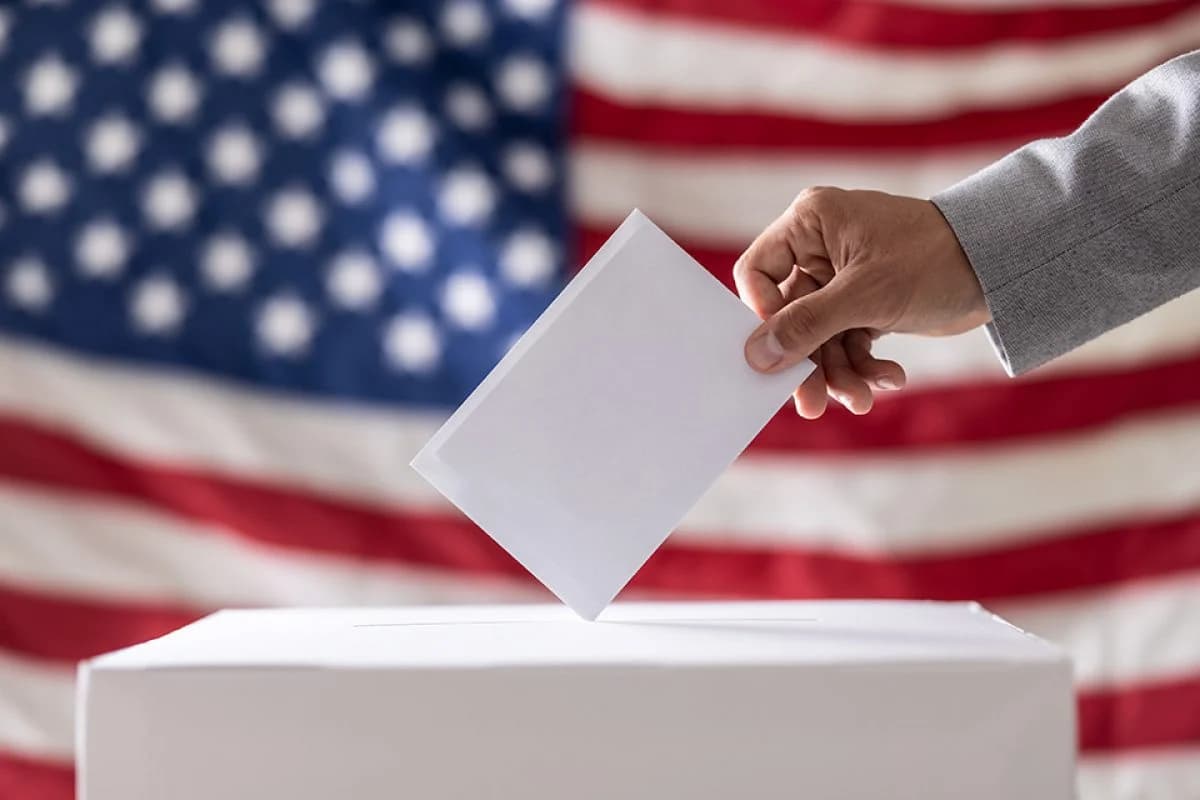
US Voter Registration and Election Process

Published on: 23-Aug-2026

Share this post

US Voter Registration and Election Process

Article Summary

Key Points Summary

Constitutional References:

  • U.S. Constitution, Article I, Section 4: Empowers state legislatures to determine the “times, places, and manner” of federal elections, allowing Congress to make regulations.
  • No central election authority like India's Election Commission; regulated at state level.

Election Laws and Acts:

  • National Voter Registration Act, 1993: Requires states to offer voter registration at motor vehicle and public assistance offices.
  • Help America Vote Act, 2002: Provides funding for new voting machines and mandates state-wide elector databases.
  • SAVE America Act: Proposed by Trump, requiring proof of citizenship and photo ID for voter registration, passed the House along party lines but stalled in the Senate.

Voter Registration and Identification:

  • In the U.S., voter registration is initiated by the elector and varies by state.
  • Identification Requirements: 36 states require some identification at polling places; 23 require photo ID.
  • Election officials not complying with document requirements could face up to five years in prison.

Economic Data and Public Opinion:

  • Bipartisan Policy Center estimates that over 20 million eligible citizens lack ready access to a passport or birth certificate.
  • Surveys show majority support for photo ID at polls but hesitance over citizenship proof requirements.

India’s Electoral Process:

  • The Election Commission of India (ECI) conducts house-to-house enumeration for voter registration.
  • Voter identification can include Electoral Photo Identity Card (EPIC) and Aadhaar.
  • The Systematic Voter's Education and Electoral Participation (SVEEP) initiative aims to enhance voter participation and electoral integrity.

Supreme Court Rulings:

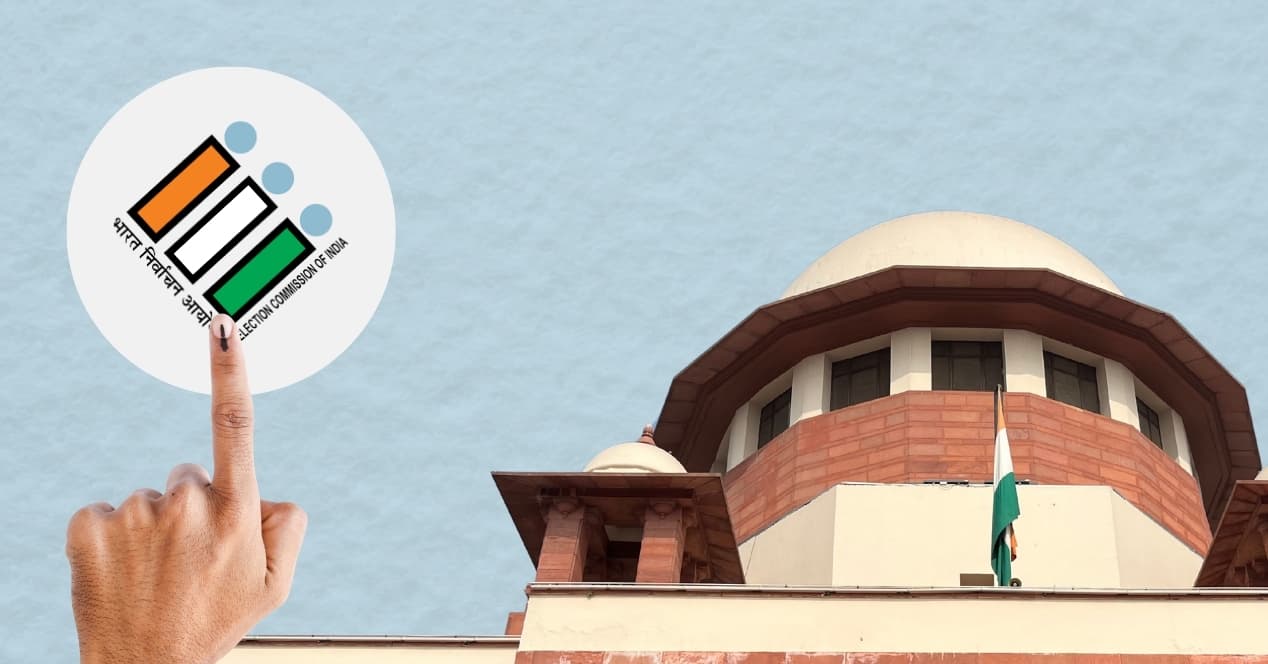
  • The Supreme Court upheld the validity of the electoral rolls updated through the Special Intensive Registration (SIR) exercise of the ECI despite anomalies noted during the process.
  • The SIR enforced self-enumeration of voters, allowing those who wish to register to take initiative in the verification process, contrasting with past practices.

Statistical Data:

  • Approximately 1% of 64.64 crore Indian electors used mail voting in the last election, indicating low prevalence compared to the U.S.
  • Over 7 crore names deleted in the SIR phase 2 across states highlighted discrepancies leading to concerns over gender ratios and religious bias in registration.

International Context:

  • The differing election processes in India and the U.S. draw significant attention, illustrating contrasting governance models—India's quasi-federal system versus the U.S.'s strong federal framework.

Opposition and Criticism:

  • Critics of the SAVE America Act argue it mirrors concerns raised in India about shifting the responsibility of verifying voter eligibility to individuals rather than an administrative body.

Conclusion: The electoral processes in India and the U.S. reveal significant differences in voter registration, identification requirements, and oversight. Both jurisdictions are grappling with integrity and access issues, but the legislative responses vary significantly based on their constitutional frameworks and electoral demands.

Key Terms & Concepts

Truth SocialSocial media platform of Trump
Electoral Photo Identity Card (EPIC)ID used for voting in India
SAVE America ActProposed voter ID legislation
Article I, Section 4US Constitution Elections Clause
National Voter Registration Act, 1993Federal voter registration law
Help America Vote Act, 2002Funding for voting machines
Department of Homeland SecurityIdentifies non-citizen voters
Bipartisan Policy CentreEstimate access to identification
Supreme CourtJudged ECI actions lawful
Self-Enumeration MethodologyVoter eligibility verification method
7 crore namesNames deleted in SIR phase 2

Mind Map for UPSC Civil Services Revision

Turn UPSC Civil Services Current Affairs Into Exam-Ready Notes

Reading Polity and Governance current affairs is half the work. Revise them with ready-made notes and test what actually stuck.

  • Daily UPSC Civil Services current affairs analysis
  • Revision notes, mind maps & MCQs
  • Prelims mock tests with instant results

Related UPSC Civil Services Current Affairs Articles

Supreme Court Judgment on Labour Rights
Polity and Governance22-Aug-2026

Supreme Court Judgment on Labour Rights

Supreme Court Judgment on Industrial Relations Code

  • Judgment Overview: A nine-judge bench of the Supreme Court ruled that the definition of "industry" established by a 1978 judgement will not apply to the recently enacted Industrial Relations Code (IRC).

Historical Context: The seminal case, Bangalore Water Supply & Sewerage Board v. R. Rajappa & Others (1978), established a "triple test" to determine what qualifies as an industry under labour law. The criteria include:

  1. Systematic activity
  2. Employer-employee relationship
  3. Production or distribution of goods/services for human wants
  • New Code Implications: The IRC has replaced the Industrial Disputes Act and includes exclusions for:

    • Sovereign functions
    • Charitable, social, or philanthropic institutions
    • Concerns regarding the interpretation as it affects worker rights and collective bargaining.
  • Constitutional Concerns:

    • Trade unions argue that the new definition could undermine the rights guaranteed under the Constitution, particularly regarding workers' rights (Article 21 – Right to life and personal liberty).
    • Unions suggest that a narrow interpretation could potentially favor management interests over workers’ rights, which contrasts with the principles enshrined in the Constitution.
  • Trade Union Responses:

    • All India Trade Union Congress (AITUC): Criticized the judgment for reopening settled jurisprudence and expressed fears about future litigation which may disadvantage workers.
    • Centre of Indian Trade Unions (CITU): Asserted the ruling provides immunity to the IRC from a broader interpretation of "industry", thereby weakening labor protections.
    • Trade Union Centre of India (TUCI): Highlighted risks of increased labor disputes, potentially reverting labor rights to pre-independence conflicts.
  • Legislative and Judicial Assertions: Trade unions claim both legislative and judicial actions fail to protect workers' rights, drawing attention to the pro-corporate implications of the ruling. They emphasize the need to reconsider how governmental activities and the status of charitable organizations inform the definition of industrial relations.

  • Fundamental Points:

    • Labor Rights: The evolving definition of labor relations reflects ongoing tension between regulatory frameworks and the protection of worker rights.
    • Judicial Impact: The decision highlights an ongoing judicial discourse regarding labor laws and the implications of economic shifts such as privatization and outsourcing.
    • Economic Dynamics: Changes in labor law definitions impact both economic stability and workforce rights, accelerating the need for legal frameworks that balance corporate and worker interests.

    This ruling marks a significant shift in labor law interpretation, suggesting heightened vulnerabilities for workers and potential instability in labor relations in the evolving economic landscape.

    Supreme Court Reviews Rural Employment Scheme
    Polity and Governance22-Aug-2026

    Supreme Court Reviews Rural Employment Scheme

    Supreme Court Ruling on Employment Guarantee Schemes

    Key Points:

    1. Supreme Court Remarks on MGNREGA:

      • The Supreme Court praised the Mahatma Gandhi National Rural Employment Guarantee Act (MGNREGA) as a “salutary scheme” that effectively supported rural employment.
      • Chief Justice Surya Kant emphasized that MGNREGA was neither a "freebie" nor an exploitation of rural workers.
    2. VB-G RAM G Act Concerns:

      • The successor to MGNREGA, the Viksit Bharat Guarantee for Rozgar and Ajeevika Mission (Gramin) or VB-G RAM G Act, reportedly led to a 50% decline in employment generation.
      • Despite an increase in guaranteed work days from 100 to 125 days per household annually, the effectiveness of the new scheme is questioned.
      • The funding burden on states increased significantly, changing from a 90:10 to a 60:40 ratio.
    3. Legal Proceedings:

      • The court was hearing a petition from activist Aruna Roy regarding delayed wages under MGNREGA and the possibility of establishing a minimum wage as a fundamental right.
      • The petition argued for elevating the statutory guarantee of rural work to a fundamental right under Article 21 of the Indian Constitution (Right to Life).
    4. Constitutional Context:

      • Article 21: Provides the Right to Life, which includes the right to live with dignity.
      • Part IV: Directive Principles of State Policy, which includes the aspiration for the state to provide work.
      • The court noted that while the right to work is an aspiration, it is not explicitly a fundamental right under the Constitution.
    5. Judicial Opinions:

      • Justice Joymalya Bagchi questioned if minimum wage laws could be aligned with the existing legal framework without risking employment opportunities.
      • Chief Justice Kant noted the importance of local conditions in determining wage levels.
      • Justice V. Mohana emphasized the need for fresh analysis and data under the new law rather than relying on MGNREGA metrics.
    6. Funding and Employment Issues:

      • Advocates highlighted that states were expected to provide nearly half of the funding under the new VB-G RAM G Act while facing budget constraints.
      • Concerns were raised about the reduction in employment opportunities and financial viability for states.
    7. Next Steps:

      • The court instructed Mr. Bhushan to file a new petition addressing the issues raised in light of the VB-G RAM G Act.

    Conclusion:

    The Supreme Court's ruling and discussions reflect a critical examination of employment guarantee schemes in India, highlighting the constitutional implications of labor rights and the challenges posed by changing government policies. The shift from MGNREGA to VB-G RAM G Act raises significant questions about employment generation, state funding, and the legal categorization of the right to work.

    Surveillance and Facial Recognition Issues
    Polity and Governance22-Aug-2026

    Surveillance and Facial Recognition Issues

    Key Highlights on Biometric Surveillance and Facial Recognition Technology

    Constitutional and Legal Framework

    1. Right to Protest: Article 19 of the Indian Constitution guarantees the right to assemble peacefully without arms. However, its exercise is now potentially impacted by surveillance technologies.
    2. Proportionality Test: The state must prove a legitimate objective when interfering with rights like privacy and assembly as per judicial precedents.
    3. Data Security & Privacy Laws:
      • The Digital Personal Data Protection Act is yet to be fully implemented, particularly concerning its obligations on data processing.
      • There are concerns over the lack of specific statutes governing the use of facial recognition technology by law enforcement bodies.
      • The Criminal Procedure (Identification) Act, 2022 has expanded police powers regarding data collection from specified individuals.

    Technology Utilized

    1. Facial Recognition Systems: Deployed by Delhi Police during protests, which included:

      • Real-time scanning with AI-enabled cameras against a database.
      • Use of a mobile surveillance van, smart glasses for identifying individuals, and drones.
    2. Scopes of Use: The Automated Facial Recognition System from the National Crime Records Bureau is used for identifying criminals and unidentified bodies but raises issues with indiscriminate data collection.

    Concerns Raised

    1. Data Handling: Issues regarding the accountability to private contractors who may access surveillance data without clear legal parameters are concerning.
    2. Chilling Effect: The pervasive use of surveillance technology may deter individuals from exercising their right to protest, contradicting democratic principles.
    3. Data Processing Agreements: Questions remain unanswered about who accesses data gathered during surveillance, terms of engagements with contract workers, and potential false positives.
    4. Indiscriminate Capture: Facial recognition technology at gatherings marks individuals indiscriminately, failing to target any specific groups effectively.

    Implications

    The deployment of these technologies without legislative and judicial safeguards poses significant challenges to the constitutional rights of citizens, especially the right to protest peacefully and the right to privacy. The need for governance and clear legal frameworks is paramount to address the complexities introduced by advanced surveillance technologies.

    Summary

    In conclusion, while India's law enforcement has begun utilizing advanced biometric technologies for surveillance during public protests, substantial questions regarding legal oversight, data privacy, and individual rights arise. The current lack of comprehensive legislation governing these actions calls for urgent policy review and reform to safeguard citizens’ constitutional rights against rampant state surveillance practices.

    Free Online Coaching Initiative Unveiled
    Polity and Governance21-Aug-2026

    Free Online Coaching Initiative Unveiled

    Summary of Key Points from Prime Minister Modi's 2026 Independence Day Address on Free Online Coaching

    Government Initiative

    • Announcement: Initiative to provide free online coaching for competitive exams, targeting Gen-Z youth amid protests against NEET paper leak.
    • Objective: Alleviate financial burdens on poor and middle-class families and facilitate exam preparation from home.

    Educational Context

    • National Education Policy (NEP) 2020: Encourages the establishment of skill hubs to bridge gaps in education delivery and exam preparation, noting the difference between school curricula and competitive exam requirements.
    • Dependency on Coaching: Significant reliance on coaching centers for preparation for exams like JEE and NEET due to gaps in school education.

    Challenges and Solutions

    • Current Limitations: Existing online resources (e.g., Swayam) deemed traditional; call for development of Agentic AI-based systems for personalized, mobile-friendly learning experiences.
    • Personalized Feedback: Highlighted as a critical aspect of effective learning that may be overlooked in a purely online coaching model.

    Structural Proposals

    • Common Competitive Learning Stack: Suggestion to create a national competitive learning grid due to overlapping requirements in about 70-80% of national-level exams.
    • Examination Accessibility: Proposal of satellite technology for remote areas to enable reliable access to exams and digital resources.

    Economic Implications

    • Cost of Coaching: Current market dynamics show varying costs, with some players offering affordable solutions as low as ₹700-800, suggesting potential government-funded alternatives.

    Technical Infrastructure Requirements

    • Internet Penetration: Advocates for the deployment of satellite technology to bridge connectivity gaps in rural and secluded regions.
    • Innovative Exam Delivery: Conceptualization of a ground antenna model for exam monitoring and data transmission, reducing the dependence on conventional internet infrastructure.

    Stakeholder Perspectives

    • Experts’ Views: Conversations with educational technologists highlight the necessity for hybrid learning environments to enhance engagement and effectiveness of online education.

    This initiative marks a substantial shift towards improving educational equity and accessibility in India, aiming to address systemic challenges in competitive exam preparation.

    Supreme Court Ruling on Industrial Relations
    Polity and Governance21-Aug-2026

    Supreme Court Ruling on Industrial Relations

    Supreme Court Verdict on Industrial Relations Code

    Background:

    • The judgment refers to the 1978 Supreme Court ruling in Bangalore Water Supply and Sewerage Board v. R. Rajappa, which provided a broad definition of ‘industry’ under the Industrial Disputes Act, 1947. This historic ruling allowed workers in various sectors to engage in collective bargaining and claim labor rights.
    • The original definition exempted core sovereign activities (e.g., judiciary, law enforcement, defense).

    Key Points from the Verdict (August 20, 2026):

    1. New Definition under Industrial Relations Code (IRC), 2020:

      • The Supreme Court ruled that the expansive interpretation of 'industry' from the 1978 verdict will not apply under Section 2(p) of the IRC, which came into effect in November 2025.
      • This decision is significant as it delineates the legal landscape for industrial disputes going forward, expressing a 'clean slate' approach.
    2. Judicial Opinions:

      • Chief Justice Surya Kant: Led the majority opinion indicating that the 1978 judgment would not serve as the "sheet anchor" for future interpretations of the industry under IRC.
  • He acknowledged the enduring principles of the 1978 triple test for defining 'industry' but suggested a refinement without retroactively impacting existing legal cases.
  • Dissenting Views:

    • Justice B.V. Nagarathna: Argued that the expansive definition of 'industry' should remain to protect workers’ rights amid India's transition towards privatization and liberalization. She cautioned that narrowing this definition could undermine labor rights in a privatized economy.
    • Supported the continuation of the ‘Dominant Nature Test’ for organizations performing multiple activities.
  • Implications of the Judgment:

    • The ruling confines the interpretation of 'industry' to legacy cases under the 1947 Act and signifies a departure from the broader protections previously available, potentially impacting workers in privatized sectors.
    • The majority emphasized not burdening the IRC with past interpretations, aiming for clarity and a new legal framework for labor relations.
  • Constitutional Context:

    • The judgment is crucial for understanding Article 21 (Right to Life and Personal Liberty) regarding labor rights in the context of privatization and economic reforms in India.
    • Issues concerning labor rights also tie into the Directive Principles of State Policy (DPSP) encouraging the state to secure just and humane conditions of work.
  • Economic and Industry Impact:

    • As India's industrial landscape transitions to a more privatized sector, this ruling is likely to affect labor relations, collective bargaining capabilities, and employment patterns significantly.
  • Conclusion:

    The Supreme Court's judgment marks a pivotal change in labor law, creating distinct paths for interpreting 'industry' under the new IRC as compared to the legacy definitions established by prior rulings. The differing opinions among judges highlight the ongoing debate about the balance between economic reform and protection of worker rights in a changing globalized economy.