iAspirants
Current AffairsPrelims PYQsUPSC CSE SyllabusUPSC CSE StrategyBlogsPricing
Login
iAspirants

Your AI-powered companion for UPSC preparation.

Quick Links

  • Home
  • About Us
  • Current Affairs
  • Prelims PYQs
  • UPSC CSE Syllabus
  • UPSC CSE Strategy
  • Blogs

Company

  • Pricing
  • FAQs
  • Contact Us
  • Login

Legal

  • Privacy Policy
  • Terms & Conditions
  • Return Policy

© 2025 iAspirants, Inc. All rights reserved.

  1. Blogs
  2. Economic and Social Development

India's Economic Growth Surprises Analysts

Published on: 02-Sep-2026

Share this post

India's Economic Growth Surprises Analysts

Article Summary

Economic Overview of India's Q1 Performance (April-June 2026)

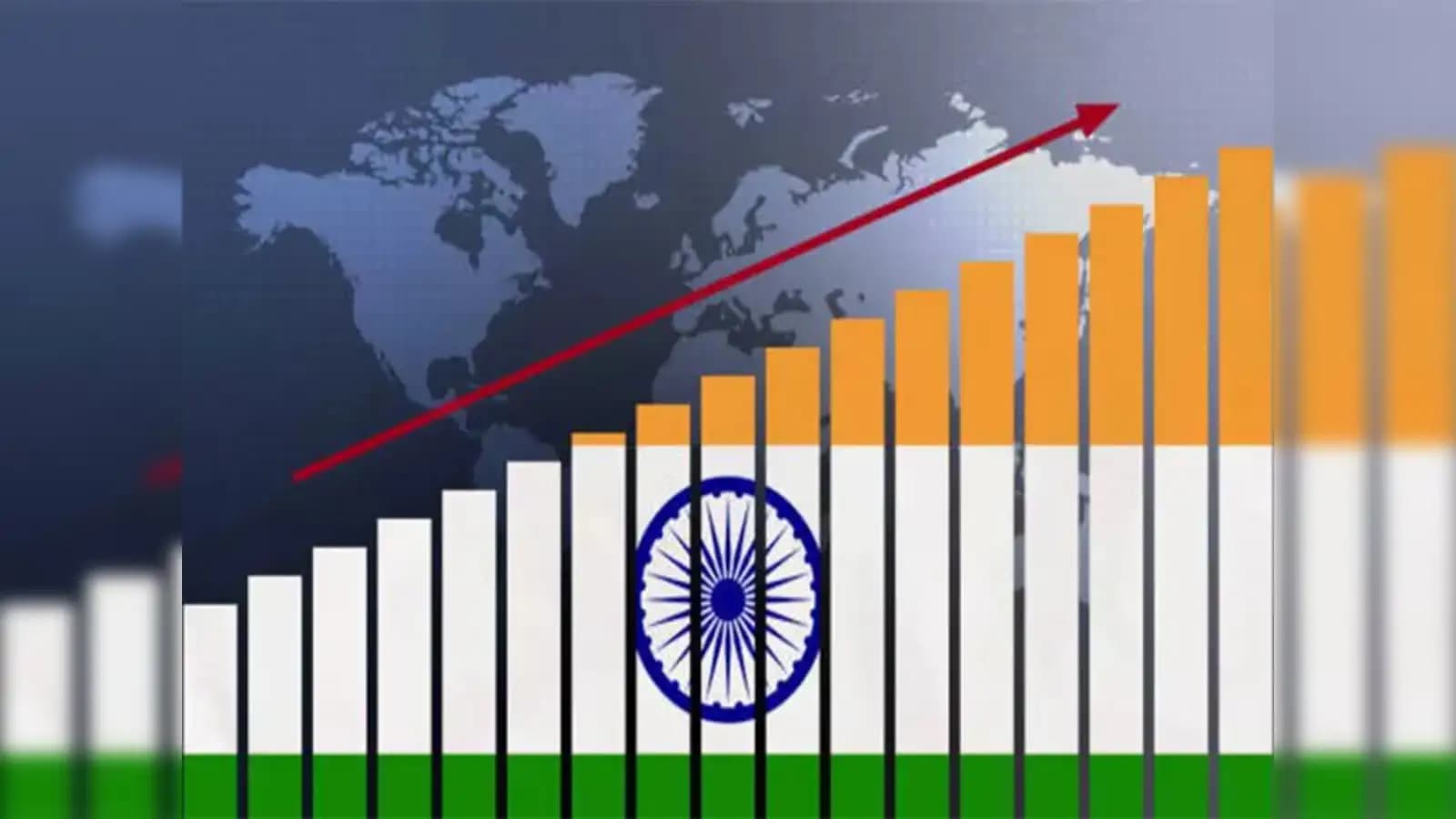
  • Real GDP Growth: Q1 growth recorded at 7.8%, surpassing expectations of 6%-7% due to West Asia crisis impacts.

  • Sector Performance:

    • Manufacturing Sector: Grew by 9.2%, marking a three-quarter high. Benefited from:
      • Goods and Services Tax (GST) rate cut implemented in September 2025.
      • Reserve Bank of India (RBI) interest rate cuts totaling 125 basis points through 2025.
      • Anticipation of inflationary pressures leading companies to front-load production.
    • Services Sector: Continued to demonstrate robust growth, contributing positively to the economy.
  • Capital Creation: There is an uptick in capital creation; the precise breakdown between government and private sector contributions is unclear but suggests a multiplier effect on the economy.

  • Trade Dynamics: India continues to face pressure to maintain a reasonable trade deficit, with services exports currently cushioning the impact. However, global economic slowdown and rising competition from other nations' AI services may jeopardize the future of Indian service exports.

  • Inflation: Currently within RBI's comfort zone but rising, with projections estimating inflation rates at 5.9% by October-December 2026. This elevating inflation may negatively influence consumption patterns, especially in rural areas suffering from a deficient monsoon.

  • Government Measures: Prime Minister Narendra Modi urged citizens to:

    • Purchase local products.
    • Limit non-essential spending, especially on foreign travel and gold.
  • Rural Demand: Index of Industrial Production (IIP) data for July indicated sluggish rural demand linked to the monsoon's adverse impact.

  • More Challenges Ahead: Despite a strong showing in Q1, economists caution that replicating this growth in subsequent quarters will be challenging due to factors like:

    • Persistently high oil prices (above $80 per barrel).
    • Potential slowdown in rural demand due to monsoon deficiencies.
    • Global economic uncertainty.

In summary, Q1 of FY 2026 presented a strong economic performance driven by manufacturing and services growth, yet threats from global markets, inflation, and dependency on rural consumption underscore the need for vigilance in ongoing economic policy and planning.

Key Terms & Concepts

7.8%real growth in Q1 2026
9.2%manufacturing sector growth
Goods and Services Taxrate cut impact
Reserve Bank of India (RBI)interest rate cuts influence
125 basis pointscumulative interest rate cut
85%-90%oil import dependency
$80 a barreloil price concern
5.9%expected inflation in Q3 2026
Index of Industrial Productionmeasure of industrial performance
Hormuz uncertaintyoil price influencer
Artificial Intelligence servicesemerging competitive demand

Mind Map for UPSC Civil Services Revision

Turn UPSC Civil Services Current Affairs Into Exam-Ready Notes

Reading Economic and Social Development current affairs is half the work. Revise them with ready-made notes and test what actually stuck.

  • Daily UPSC Civil Services current affairs analysis
  • Revision notes, mind maps & MCQs
  • Prelims mock tests with instant results

Related UPSC Civil Services Current Affairs Articles

Defence PSUs Performance Review Meeting
National and International Importance02-Sep-2026

Defence PSUs Performance Review Meeting

Defence Public Sector Undertakings (PSUs) Review Highlights

  1. Ministerial Review:

    • On September 1, 2026, Union Defence Minister Rajnath Singh conducted a performance review of all 16 defence PSUs.
    • Calls made for reducing import dependence, enhancing R&D capabilities, and ensuring the timely delivery of major projects.
  • Performance Metrics:

    • Defence PSUs collectively contributed ₹1.29 lakh crore to India's total defence production of ₹1.8 lakh crore during 2025-26.
    • Dividend payout to the government: ₹3,951 crore presented by seven PSUs.
  • Strategic Objectives:

    • Emphasis on developing a robust indigenous defence industrial base to support the vision of "Aatmanirbhar Bharat" (Self-Reliant India).
    • Urgency for timely delivery, reduction of import reliance, enhanced defence exports, and increased productivity through capital expenditure.
  • Economic and Innovation Imperative:

    • Defence PSUs urged to convert R&D investments into technological leadership and improve product quality to meet international standards.
    • The importance of assured supply chains and surge production highlighted as national security necessities.
  • Global Competitiveness:

    • Aiming for a transition where PSUs transform into globally competitive entities under the "Make in India, Make for the World" initiative.
    • Identification of niche technology areas to enhance self-reliance and global leadership potential in defence.
  • Publications Released:

    • Four publications on themes such as self-reliance, indigenisation, innovation, and future defence capabilities have been launched.
  • Policies and Governance:

    • Focus on supporting start-ups and micro, small, and medium enterprises (MSMEs) within the defence sector to foster innovation and growth.
    • Encouragement for establishing operational benchmarks that reflect tangible outcomes from R&D activities, such as new technology and intellectual property developments.
  • Judicial & Constitutional Reference:

    • Not specifically mentioned, but implicitly ties to the constitutional responsibility to ensure national defense (Article 51).
  • These notes encapsulate the significant outcomes and strategic direction set by the Defence Minister for PSUs, reflecting India's commitment toward enhanced self-reliance and quality improvements in its defence manufacturing sector.

    India's Impressive GDP Performance 2026-27
    Economic and Social Development01-Sep-2026

    India's Impressive GDP Performance 2026-27

    Economic Performance of India (2026-27)

    GDP Growth

    • Real GDP Growth: 7.8% in Q1 2026-27, surpassing RBI's estimate of 7.0%.
    • Nominal GDP: Estimated at ₹88.27 lakh crore, marking a 10.3% increase from the previous year.
    • Gross Value Added (GVA): Real GVA expected at ₹73.82 lakh crore, showing an 8.2% increase.

    Investment and Consumption

    • Investment Growth: Increased by 11.9%.
    • Domestic Consumption: Rose by 7.1%.
    • Exports: Grew by 12.0%, with total exports in July 2026 reaching $80.14 billion.

    Industrial Production

    • Industrial Output: Increased by 6.7% in July 2026 compared to 5.4% in July 2025.
    • Cumulative Growth: April-July 2026-27 saw a 6.3% rise in industrial output year-on-year.

    Sectoral Performance

    • Tertiary Sector Growth: 10.0% in Q1 2026-27, up from 8.0% in Q1 2025-26, driven by financial, real estate, IT, and professional services.
    • Secondary Sector Growth: 8.6%, with manufacturing up by 9.2%.
    • Key Manufacturing Sectors: Significant growth in electrical equipment (27.0%), transportation (19.5%), and computer/electronic products (12.4%).

    International Monetary Fund (IMF) Insights

    • India recognized as one of the fastest-growing economies and a key driver of global growth.

    Credit Growth

    • Bank Lending:
      • Agriculture: 17.0% increase year-on-year.
      • Industrial sector: 20.0% increase.
      • Services sector: 22.9% increase.

    Government Policies and Schemes

    • Mobile Phone Manufacturing Scheme: Budget of ₹62,500 crore until 2030-31.
    • Semiconductor 2.0 Plan: ₹1,27,500 crore budget for chip design and manufacturing.
    • Emergency Credit Line Guarantee Scheme (ECLGS 5.0): Aims for an additional ₹2.55 lakh crore loan flow.
    • PM Kisan Scheme: Continued support with a budget allocation of ₹3.15 lakh crore from 2026-27 to 2030-31.

    Agricultural Initiatives

    • Minimum Support Price (MSP): Increased for 14 Kharif crops, including notable rises for sunflower seeds, cotton, and niger seeds.
    • Cotton Productivity Mission: Approved budget of ₹5,659.22 crore from 2026-27 to 2030-31.

    Energy and Infrastructure

    • National Offshore Exploration Plan: ₹84,084 crore budget until 2030-31 aimed at enhancing offshore energy capabilities.
    • Coal Gasification Projects: Approved with a budget of ₹37,500 crore to support the goal of 100 metric tons of coal gasification by 2030.

    International Agreements

    • India-UK Comprehensive Economic Partnership Agreement (CEPA): Implemented on July 15, 2026, allowing duty-free access for 99% of Indian exports.
    • India-Israel Bilateral Investment Agreement: Effective from July 4, 2026.

    Economic Outlook

    • Revised GDP Estimates: Adjusted upward for previous years, indicating a stronger growth trajectory.
    • Government Support: Ongoing policy measures are expected to sustain economic momentum.

    Conclusion

    India's economic performance at the start of 2026-27 reflects robust growth across key sectors, driven by increased investment, consumption, and exports, alongside supportive government policies. The outlook remains positive as structural reforms continue to bolster economic activity.

    Lepchas of Sikkim Begin Land Survey
    Economic and Social Development01-Sep-2026

    Lepchas of Sikkim Begin Land Survey

    Key Facts and Notes on Lepcha Community and Land Reforms in Sikkim

    • Demographics: The Lepcha community constitutes approximately 15% of Sikkim's total population.

    • Geographical Context: The Lepchas primarily inhabit Dzongu, located in North Sikkim, which is characterized by its remote location and limited connectivity to the rest of the state.

    • Land Reforms: A detailed land survey has commenced in Dzongu. This initiative is significant for the effective implementation of land reforms aimed at addressing the historical exploitation of the Lepcha community by the former royal family.

    • Lack of Land Rights: Historically, the Lepchas have lacked proper records of their land rights, leading to ongoing issues of exploitation and marginalization.

    • Economic Activities: The community traditionally engages in agriculture, with cardamom being a primary produce. Economic challenges persist, with many families struggling to manage their finances, often spending earnings primarily on basic sustenance.

    Inclusion Festival for Nomadic Communities
    Economic and Social Development31-Aug-2026

    Inclusion Festival for Nomadic Communities

    Exam-Focused Notes on Inclusion Festival for Denotified, Nomadic, and Semi-Nomadic Communities

    Event Overview:

    • Name: Inclusion Festival (समावेश उत्सव)
    • Organized by: Development and Welfare Board for Denotified, Nomadic, and Semi-Nomadic Communities (डीडब्ल्यूबीडीसी)
    • Location: Dr. Ambedkar International Centre (DAIC), New Delhi
    • Date: (Specific date not provided)
    • Participants: Approximately 700 artisans and beneficiaries from Denotified, Nomadic, and Semi-Nomadic (DNT) communities.

    Key Officials:

    • Central Minister of Social Justice and Empowerment: Dr. Virendra Kumar
    • Minister of State for Social Justice and Empowerment: Shri B.L. Verma
    • Board Members: Shri Bharatbhai Babubhai Patni and Shri Praveen Shivajirav Ghuge

    Objectives of the Festival:

    • Promote inclusion, empowerment, and progress of DNT communities.
    • Showcase traditional skills and products of DNT artisans.
    • Highlight success stories of economic empowerment under the SEED scheme.

    Government Schemes and Initiatives:

    • Economic Empowerment Scheme (SEED): Launched to provide welfare and development for DNT communities.
    • Establishment of DWBDC: Formed through a notification on February 21, 2019, to implement welfare and development programs specifically for DNT communities.
    • Focus Areas: Education, health, livelihood, and housing for DNT communities.

    States of Implementation:

    • The SEED scheme is operational in several states including:
      • Gujarat
      • Maharashtra
      • Madhya Pradesh
      • Rajasthan
      • Uttar Pradesh
      • Haryana
      • Tamil Nadu
      • Andhra Pradesh

    Program Highlights:

    • Stalls showcasing products and crafts by DNT artisans.
    • Displays of success stories related to economic empowerment.
    • Focus on traditional skills, crafts, and products of DNT communities.

    Importance of the Event:

    • Aims to ensure the welfare and development of marginalized DNT communities in India.
    • Provides a platform for artisans to gain visibility and economic opportunities.

    Conclusion:

    The Inclusion Festival is a significant step towards the empowerment and inclusion of Denotified, Nomadic, and Semi-Nomadic communities in India, supported by targeted government initiatives aimed at improving their socio-economic status. The festival not only provides a platform for showcasing their skills but also reinforces the government's commitment to their welfare as mandated by various policies and schemes.

    Mental Health Writing Award Launched
    Economic and Social Development31-Aug-2026

    Mental Health Writing Award Launched

    Dr. Parasuraman Lived Experience Writing Award

    • Institutions Involved: The Banyan Academy of Leadership in Mental Health, The Banyan, Aaldamara Foundation.

    • Purpose of the Award:

      • To support and promote writing from individuals with lived experiences of mental health issues, focusing on diverse perspectives within India.
      • Established in memory of Dr. Parasuraman, former director of Tata Institute of Social Sciences, known for advocating transformative higher education aimed at addressing deprivation and inequity.
    • Award Recipients:

      • Sunitha Shirly:

        • Roles: Social entrepreneur, lyricist, musician, author.
        • Works: Author of over 18 books across various genres including novels, short stories, poetry, essays, and children's science books.
        • Founder of Root Trust, an organization likely focused on social issues.
      • Sasisekar Menon:

    Opportunities and Challenges in Jammu
    Polity and Governance31-Aug-2026

    Opportunities and Challenges in Jammu

    Key Points on Jammu and Kashmir's Current Status and Future Directions

    Constitutional References:

    • Article 370: Abrogated in August 2019, which granted special status to Jammu and Kashmir. Post-abrogation, the focus is on integration and development.

    Economic and Social Development:

    • Focus Areas: Emphasis on building universities, supporting entrepreneurship, and investing in sectors such as horticulture, tourism, and creative industries.
    • Youth Retention: A call to create an environment where talented youth can thrive in Jammu and Kashmir, reversing the trend of migration for better opportunities.

    Security and Governance:

    • Security Improvements: Post-abrogation, the security environment has reportedly improved, leading to more predictable daily life for residents.
    • Democratic Engagement: The upcoming 2024 Assembly elections are seen as pivotal for normalizing governance and fostering democratic practices. The elections are expected to focus on local issues such as jobs, healthcare, and infrastructure rather than sovereignty debates.
  • Cultural Practices: There is a noted cultural aspect where community elders have recently advocated for changes in traditional practices, particularly concerning marriage expenses.

  • Historical Context: The Lepchas have faced historical socio-economic challenges, with limited recognition and support leading to an impoverished lifestyle.

  • Government Schemes: While specific government schemes are not mentioned in the article, the initiation of land surveys signals a potential alignment with broader government policies aimed at land reform and support for indigenous communities.

  • Community Engagement: Recent community meetings reflect a growing awareness and desire for change among the Lepchas, indicating a shift towards more proactive community engagement in socio-economic reforms.

  • Implications and Importance

    • Social Justice: The land survey is a crucial step towards achieving social justice for the Lepcha community, enabling them to secure their land rights and improve their overall living conditions.

    • Policy Development: The situation in Dzongu may prompt further government attention and the development of specific policies aimed at supporting marginalized communities in Sikkim.

    • Cultural Preservation: As the community seeks to modernize certain practices, there is potential for balancing cultural preservation with economic development, ensuring that the Lepcha identity remains intact while improving living standards.

    • Future Prospects: The success of these land reforms and community engagement initiatives could serve as a model for other indigenous communities in India, highlighting the importance of tailored approaches to land rights and socio-economic development.

    This summary encapsulates the critical aspects of the Lepcha community's current situation and the ongoing land reforms in Sikkim, providing a comprehensive overview for examination purposes.

    • Role: Librarian, recognized as a Disability Awardee on Republic Day 2026.
    • Health Conditions: Lives with Schizophrenia and Parkinson’s disease.
  • Support Structure for Awardees:

    • Each awardee will receive mentorship and editorial support to assist in their writing endeavors, focusing on narratives of distress and resilience.
  • Significance of the Award:

    • Aims to create a platform for stories that reflect personal experiences with mental health, contributing to greater awareness and understanding of mental health issues in society.
  • Judicial and Legislative Context:

    • The initiative aligns with the broader movement for mental health awareness and rights, potentially reflecting the provisions under Article 21 of the Indian Constitution, which guarantees the right to life and personal liberty, including mental health care.
  • Economic and Social Impact:

    • By promoting mental health narratives, the award may contribute to social change and reduce stigma associated with mental health conditions, thus improving community support systems and mental health resources.
  • This initiative showcases the intersection of mental health advocacy, literature, and education, encouraging a more inclusive dialogue around mental health in India.

    Societal Integration:

    • Belonging vs. Integration: The discourse has shifted from merely integrating territory to ensuring that every citizen feels a sense of belonging. This reflects the complex relationship between the state and its citizens in Jammu and Kashmir.

    Challenges Ahead:

    • Prolonged Hopelessness: Mr. Mattoo warns that continued despair in a conflict-affected society can lead to dangerous outcomes, underscoring the need for proactive measures to foster hope and engagement.

    Educational and Technological Investments:

    • Infrastructure Development: The need for building educational institutions and promoting technology as a means to empower the local population and foster innovation.

    Overall Vision:

    • Future of Jammu and Kashmir: The next decade is critical for transforming Jammu and Kashmir into a region that retains its talent and promotes growth, rather than being a place where ambition must leave.

    This summary encapsulates the current discourse surrounding Jammu and Kashmir, focusing on the importance of statehood restoration, economic development, security improvements, and the need for a sense of belonging among its citizens.