iAspirants
Killer Whales Share Prey with Humans
Published on:
Share this post
Article Summary
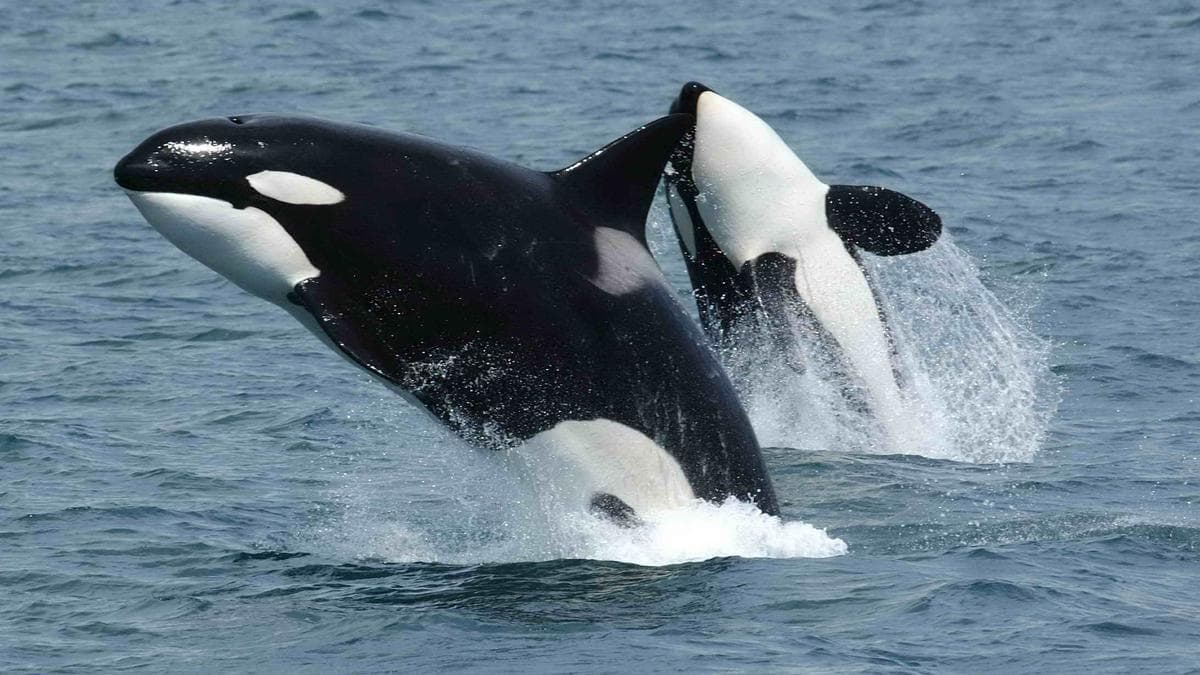
The reported study delves into the unusual behavior exhibited by killer whales (Orcinus orca), particularly their propensity to share prey with humans. This phenomenon has perplexed researchers and raises questions regarding the cognitive and social abilities of these marine mammals.
Summary:
Research Context: The investigation stems from the experiences of marine biologist Jared Towers, who observed killer whales offering prey to humans. The study was published in the Journal of Comparative Psychology and spans data from 2004 to 2024 across five oceanic regions: Eastern North Pacific, Eastern Tropical Pacific, Western South Pacific, Western South Atlantic, and Eastern North Atlantic.
Methodology: Data compilation involved interviews, photographs, and videos. Only instances where the humans maintained a distance of at least 15 meters from killer whales before interaction were included in the analysis. The researchers identified 34 relevant instances where whales waited for a human response after presenting prey, which included species such as fish, reptiles, mammals, seaweed, and invertebrates.
Findings:
- In 33 out of 34 instances, killer whales awaited a human reaction before either retrieving or abandoning the offered prey.
- 76% of the time, when humans rejected the offerings, the whales shared the prey with other members of their pod.
- The study highlights the advanced cognitive abilities of killer whales, underscoring their high levels of encephalization, which correlates with improved cognition and social behaviors.
Social Structure: Killer whales operate under matriarchal leadership, with the behavior of pods influenced by the eldest female. Their social dynamics can be friendly or aggressive, depending on the matriarch's demeanor.
Play vs. Exploration: While some experts suggest the behavior might be playful, the study posits it reflects exploration driven by cognitive needs rather than mere play, indicative of their sophisticated intelligence.
Machiavellian Traits: The researchers caution that while the observed behaviors could be construed as altruistic, they might also represent Machiavellian strategies aimed at personal gain, as seen in instances where killer whales manipulate situations to steal from fishing lines.
Citizen Science Project Contribution: The study benefited from recordings by amateurs, marking the significance of citizen science in documenting rare behavioral occurrences. This approach boosts sample sizes and helps understand these unusual interactions.
Future Implications: Increased interactions between humans and killer whales are seen as potential catalysts for both friendly coexistence and hostility depending on the pod dynamics. Moreover, enhanced understanding and empathy towards killer whales may stimulate conservation efforts as human interest grows.
Published Date: The study findings were released on September 1, 2025, highlighting the importance of ongoing research in understanding the relationship between oceanic predators and humans.
Important Sentences:
- Killer whales have been observed sharing prey with humans, raising questions about their social behavior and cognition.
- The research sampled data from five major ocean regions, collecting inputs from 2004 to 2024.
- In most documented cases, killer whales waited for a response from humans before retrieving the prey they offered.
- The study suggests that this behavior may denote exploration rather than simple play, reflecting the species' evolved intelligence.
- Although the behavior appears altruistic, it may also exhibit manipulative traits akin to Machiavellian behavior.
- Citizen science played a pivotal role in gathering evidence, showcasing the value of contributions from non-professionals in scientific research.
- The interactions between killer whales and humans could potentially drive conservation initiatives as they enhance public interest and empathy towards marine life.
Key Terms & Concepts
| killer whales | sharing prey with humans |
| Journal of Comparative Psychology | publication of study |
| Bay Cetology research institute | research organization |
| Eastern North Pacific | data collection region |
| Eastern Tropical Pacific | data collection region |
| Western South Pacific | data collection region |
| Western South Atlantic | data collection region |
| Eastern North Atlantic | data collection region |
| marine biologist | study participant |
| citizen science projects | engaging public in research |
| conservation efforts | goal of human-dolphin interactions |