iAspirants
NASA Rover Finds Potential Ancient Life Signs
Published on:
Share this post
Article Summary
NASA's Mars rover Perseverance has identified rock formations in a dry river channel that may indicate the presence of ancient microscopic life, according to a report released on Wednesday. However, experts caution that thorough analyses—preferably conducted in laboratories on Earth—are necessary before reaching any definitive conclusions regarding this potential discovery.
Key Details:
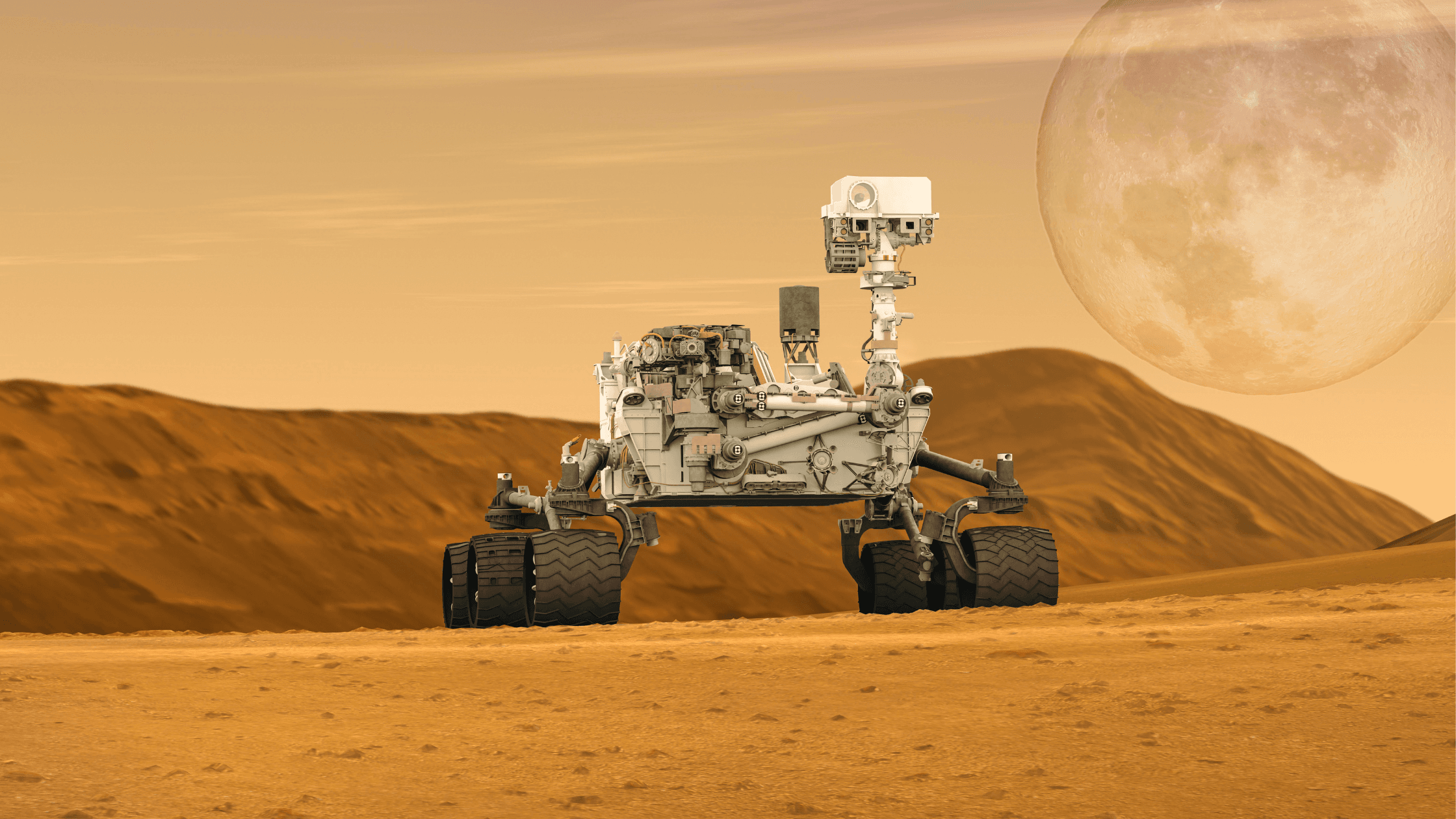
- Perseverance’s Mission: The rover has been exploring Mars since its landing in February 2021, with the objective of searching for signs of past life. The rover is equipped with a drill to extract rock samples, which it stores in titanium tubes, waiting for future return missions to Earth.
- Sample Analysis: The current findings involve the 25th sample collected, now totaling 30 samples, gathered from reddish, clay-rich mudstones located in Neretva Vallis, a former river channel leading into Jezero Crater. This area is of particular interest due to its historical significance related to water flow on Mars.
- Scientific Insights: The findings include organic carbon presence and mineralized structures described as "poppy seeds" and "leopard spots," rich in iron phosphate and iron sulfide. On Earth, these minerals typically arise when microorganisms decompose organic matter.
- Expert Opinions: Lead researcher Joel Hurowitz from Stony Brook University emphasized caution, stating, “We can’t go so far as to say, ‘A-ha, this is proof positive of life.’” He acknowledged that while microbial life could be a plausible explanation, non-biological mechanisms might also be responsible for the observed features.
- Significance of the Discovery: Despite uncertainties, Hurowitz referred to the findings as the most compelling evidence yet in the pursuit of signs of ancient life on Mars. He articulated a broader scientific perspective, suggesting that potential misinterpretations of natural phenomena offer valuable lessons regarding life detection.
Operational Challenges:
- Sample Retrieval Delays: NASA's plans for retrieving samples from Mars have been complicated by rising costs, escalating to $11 billion, which has postponed the return timeline previously anticipated for the early 2030s to now potentially the 2040s. Until retrieval occurs, scientists will continue to conduct laboratory experiments on Earth to determine the nature of Martian life and its historical context.
- Comparison with Earth Conditions: There are no current signs of life on Mars; however, researchers note that ancient microbial activity could have existed during more favorable conditions. The microbial behavior observed in Earth’s Antarctic lakes serves as a point of reference for understanding potential similar processes on ancient Mars.
Publication:
- The results of this study were reported in the journal Nature, further influencing the scientific discourse on extraterrestrial life and Mars exploration.
Conclusion:
In summary, the ongoing analysis of Martian samples by Perseverance has opened new avenues for understanding the planet’s ancient environmental conditions and the potential for past life. This discovery is part of a broader exploration strategy aiming to unravel the mysteries of Mars and the possibility of life beyond Earth.
Important Points:
- Perseverance is exploring Mars since 2021 and collecting samples for future analysis.
- The potential discovery relates to ancient life due to organic compounds found in sedimentary rocks.
- Mandatory further studies are needed to verify findings.
- NASA's sample return mission faces delays and budget increases.
- No direct evidence of current life on Mars has been reported; focus remains on ancient conditions.
Key Terms & Concepts
| Mars | Planet of exploration |
| Perseverance | NASA's Mars rover |
| Jezero Crater | Site of ancient water |
| Neretva Vallis | River channel on Mars |
| Nature | Scientific journal |
| Titanium sample tubes | Backup sample storage |
| SETI Institute | Research organization |
| University of Massachusetts Amherst | Research institution |
| Stony Brook University | Research university |